About Silene bernardina S.Watson
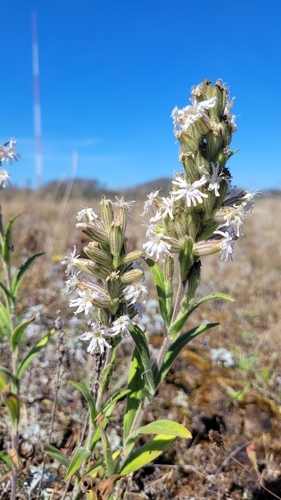
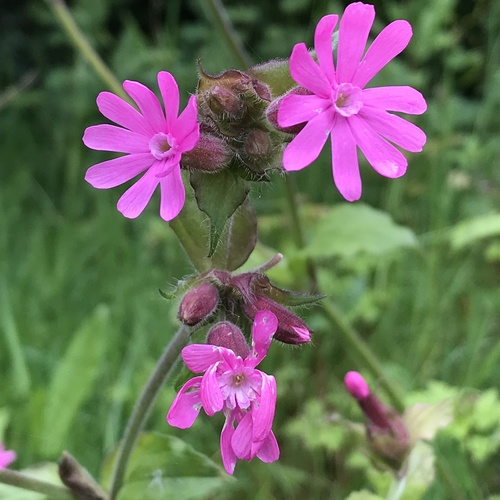
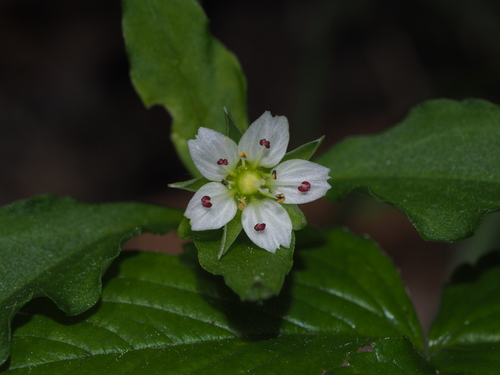
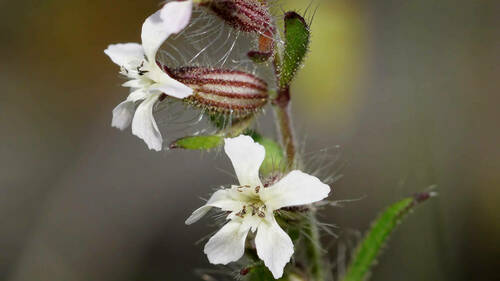
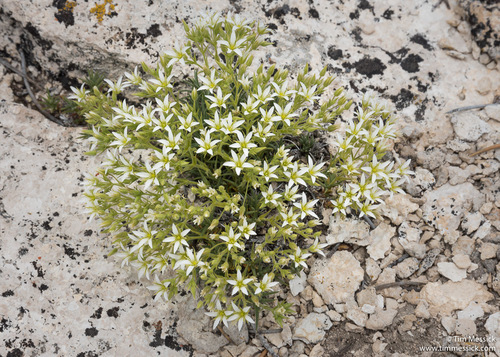
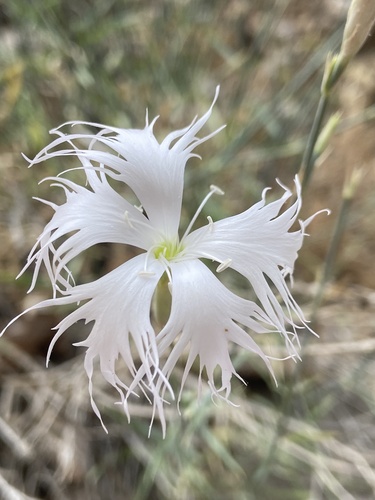
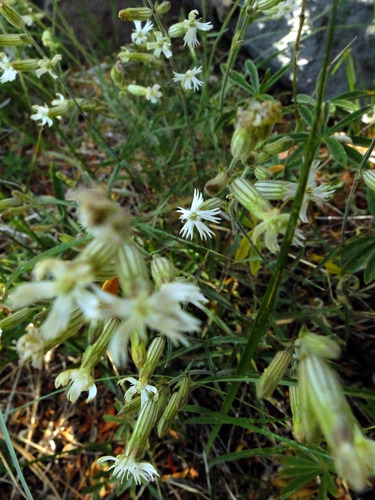
Silene bernardina is a variable plant that is divided into several subspecies. As a general rule, this species is a perennial herb that grows from a taproot and leafy caudex structure. Its hairy, erect stems can reach up to around 0.5 metres (1+1⁄2 feet) in height. The slender stems have glandular, sticky patches on their upper sections. The leaves are either linear or lance-shaped; leaves growing low on the stem reach up to 8 centimetres (3 inches) long, while leaves on distal branches are smaller. Flowers develop in a terminal cyme at the top of the stem, and also appear in some leaf axils. Each flower has a hairy, glandular calyx made of fused sepals marked with ten red veins. The calyx opens at the top to expose five white or purple-pink petals, which can be almost 3 cm (1+1⁄4 in) long. The petals typically have four fringelike lobes at their tips and feathery appendages at their bases. Stamens and three or four long styles protrude from the center of the flower. This species is native to western North America, ranging from Washington and Idaho, through California and Oregon, down to Baja California. It grows in multiple habitat types, including chaparral scrub, mountain forests, and higher-elevation alpine climate habitats.