About Silana farinosa (Boheman, 1856)
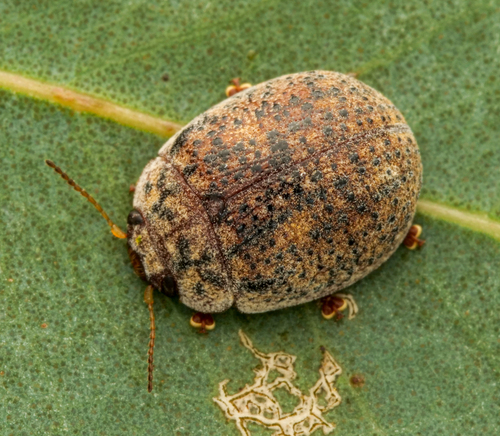
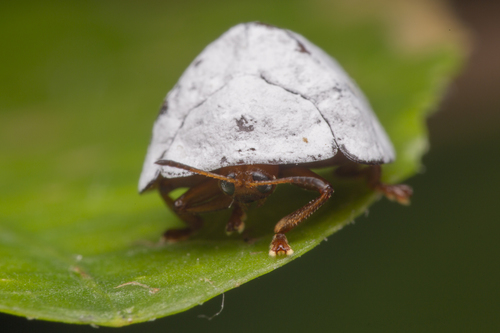
Silana farinosa (Boheman, 1856) females are larger than males. Adult females measure approximately 7.5 mm in length, while adult males measure approximately 6.5 mm. The body is globular and tortoise-like. When newly hatched from eggs, the body is pale yellow. It gradually darkens to dark brown a few hours after moulting. Over time, the beetle becomes whitish once it is fully covered in a waxy deposit. The head is flattened and hypognathous. The eyes are elongated oval. The antennae have 11 segments. The prothorax extends over the head, and is shaped like a trapezoid. The scutellum is triangular. The apex of the elytra is smooth, shiny, and lacks punctures. The ventrum has no punctures, and is covered in fine hairs. Eggs are 5 mm long and spindle-shaped, with a reddish brown dorsum and brownish orange ventrum. Grubs go through five larval instar stages. The larva is elongated, with a tapered, forked end. It has around 8 thoracic pairs of spines and 8 abdominal pairs of spines. Early instar grubs are yellowish green, while final instar grubs are greenish black. The head, legs, prothorax, and dorsum of the ninth abdominal segment are blackish. The larva has three pairs of lateral ocelli and a pair of knob-like antennae. The prothorax has two shiny black patches on its dorsum and two pairs of spinulate projections. The mesothorax has three pairs of projections, and the metathorax has two pairs of projections. The abdomen is made up of nine segments. The average length of a final instar larva is approximately 10 mm. The pupa is approximately 7 mm long and light brown in color.