About Sigmodon hispidus Say & Ord, 1825
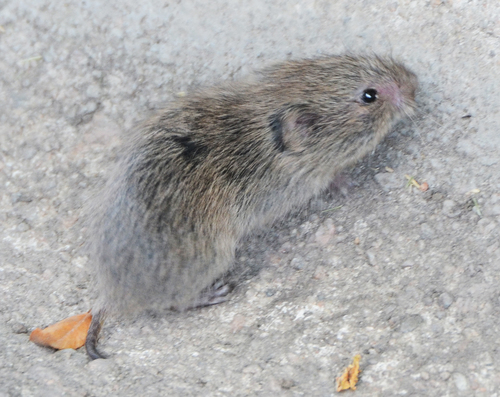
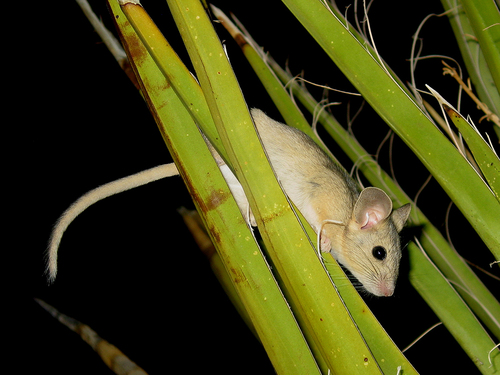
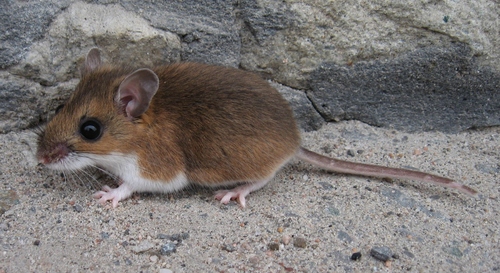
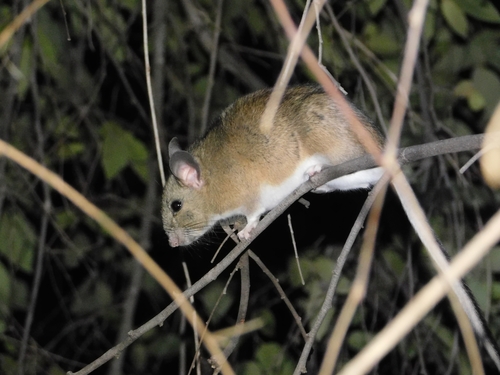
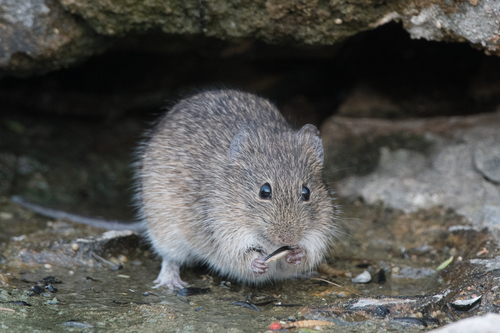
The hispid cotton rat, with the scientific name Sigmodon hispidus Say & Ord, 1825, was long thought to occur across parts of South America, Central America, and southern North America. Recent taxonomic revisions based on mitochondrial DNA sequence data have split this formerly widespread species into three separate species: S. hispidus, S. toltecus, and S. hirsutus. After this split, the distribution of S. hispidus ranges from Arizona in the west to Virginia in the east, and from the Platte River in Nebraska in the north to likely the Rio Grande in the south, where it meets the northern edge of S. toltecus (formerly classified as S. h. toltecus). Within the United States specifically, S. hispidus ranges from southern Virginia and North Carolina (especially the coastal plain) west through Tennessee, northern Missouri, Kansas, and extreme southern Nebraska to southeastern Colorado, New Mexico, and southeastern Arizona; it extends south to the Gulf Coast, and continues south into northern Mexico. It is not found on the coastal plain of North Carolina nor in the mountains of Virginia. Disjunct populations exist in southeastern Arizona and extreme southeastern California, extending into Baja California Norte. In Kansas, the species only arrived within the last 50 years. For adult hispid cotton rats, the total body length ranges 202–340 mm (8.0–13.4 in); tail length ranges 87–122 mm (3.4–4.8 in), and tails are frequently broken or stubbed; hind foot length ranges 29–35 mm (1.1–1.4 in); ear length ranges 16–20 mm (0.63–0.79 in); and body mass ranges 50–250 g (1.8–8.8 oz). Hispid cotton rats have been used as laboratory animals. Hispid cotton rats occupy a wide variety of habitats across their range, but they are not randomly distributed across microhabitats. They are strongly associated with grassy patches that have some shrub overstory, and have little to no affinity for patches dominated by dicots. Habitat use and preference generally appears to depend on monocot density, though some studies do not draw a clear conclusion on the importance of other vegetation. For example, hispid cotton rats may respond positively to a high percentage of dicots in a stand if overall cover remains optimal. In Kansas, hispid cotton rat populations increased on root-plowed prairie that had seen increases in the diversity and biomass of early successional forbs. Male hispid cotton rats show a lower degree of habitat selectivity than females. In Texas, males were found across different habitat types (grassy, shrubby, and mixed) roughly in proportion to how available each habitat was; females tended to choose mixed habitats more often than would be expected based on availability alone. Habitat use also varies with season and breeding status. In Texas, grassy areas with some shrubs were preferred in spring, while areas with more shrubby cover were preferred in fall. In Kansas remnant prairie, the preferred habitat of hispid cotton rats has dense undergrowth and an upper layer of protective vegetation such as big bluestem (Andropogon gerardii), kochia (Kochia scoparia), or annual sunflower (Helianthus annuus). Hispid cotton rats favor grassy clearings, croplands, overgrown fields, and overgrown roadsides and right-of-ways. In Kansas prairies, hispid cotton rats occur at relatively high abundance in ungrazed uplands and sandy mixed-grass native prairie, and also prefer disturbed areas. The use of disturbed areas was likely important for the recent spread of hispid cotton rats into north-central Kansas from their historical pre-settlement northern range limit in Oklahoma. On Texas rangelands, hispid cotton rats respond positively to increased standing crop biomass and increases in the proportion of the standing crop made up of potential food plants such as bristlegrasses (Setaria spp.). Rat density was four times greater on areas planted to exotic grasses including King Range bluestem (Bothriochloa ischaemum) and buffel grass (Cenchrus ciliaris, listed here as Enchrus ciliaris) than on native range dominated by windmill grass (Chloris spp.) and Texas wintergrass (Stipa leucotricha). In northeastern Kansas, hispid cotton rats occurred at high population densities in tallgrass prairie (dominated by perennial grasses); population density declined to levels too low to accurately estimate over 28 years of succession to brush and trees. They are occasionally found in habitats dominated by early successional grassland species, that is, annual grasses and forbs. Hispid cotton rats occur in grassy areas or early-successional habitats within open woods. In the Southeast U.S., hispid cotton rat population density increases with the density of broomsedge (Andropogon virginicus) and other low growing plants, but declines with succession to brush and trees. In Texas pine-hardwood forests, hispid cotton rats were captured most often in narrow streamside management zones, which have more light and thus more ground cover, and slightly less often in wider zones. In longleaf pine-slash pine stands of central Louisiana hispid cotton rats were captured in sawtimber, sapling, and regeneration stands but not in pole-sized timber; stands with surface cover were more likely to support hispid cotton rats. Pole-sized timber is dense, so little light reaches the ground, and surface cover is minimal. In Louisiana and Mississippi, hispid cotton rats were more numerous in cut than in uncut bottomland hardwoods. They were also more numerous in cottonwood (Populus spp.) plantations than in uncut cottonwood stands. In northern Georgia, intensive site preparation following clearcutting of pine-hardwood mixtures increases forage production and increased numbers of small mammals, presumably including hispid cotton rats. In Colorado, hispid cotton rats occupy semimoist areas with abundant grasses and weeds and appear to be restricted to relatively warm areas. In New Mexico, hispid cotton rats do not occur regularly in areas with a mean annual temperature lower than 55 degrees Fahrenheit (13 °C) and a growing season shorter than 180 days. In Trans-Pecos, Texas, hispid cotton rats occur at warmer, low elevations in areas of moderate to dense grassy cover. When water and wastewater are added to baldcypress (Taxodium distichum var. distichum) domes, small mammals including hispid cotton rat move to drier peripheral areas. Rising water tables favor marsh rice rats (Oryzomys palustris) over hispid cotton rats. Cameron and McClure compiled reports of hispid cotton rat population densities. The mean hispid cotton rat population density range across all included studies was 5.3 to 31.1 rats per hectare. Population density ranges recorded in Texas include 1 to 14 rats per hectare in coastal prairie, 17 to 84 rats per hectare in unmowed right-of-ways, 9 to 29 rats per hectare in old fields, 6 to 54 rats per hectare in abandoned fields, and 0.7 to 5 rats per hectare in grass-prickly-pear (Opuntia spp.). In Florida, population density ranges include 0 to 24 rats per hectare in sand pine scrub, 2 to 47 rats per hectare in pine flatwoods, and 27 to 94 rats per hectare in tropical hammock. In Kansas, the hispid cotton rat density ranged from 0.2 to 21 rats per hectare in grassland; the highest estimated density was 65.4 hispid cotton rats per hectare in favored habitat. In a study of the effects of habitat patchiness on movement, hispid cotton rats preferred only the largest patches, which measured 165 feet (50 m) by 330 feet (50×100 m). These patches were established by mowing strips between blocks of grasses. Hispid cotton rats were present in intermediate numbers on medium-sized patches which measured 39.6 by 79.2 feet (12.1 by 24.1 metres), but were so scarce on the smallest patches that their movement pattern could not be analyzed. In Kansas remnant prairie, the average annual home range of an adult male hispid cotton rat was estimated as 0.969 acres (0.392 hectares), and that of adult females as 0.543 acres (0.220 hectares). The greatest distance traveled by an adult male was 330 feet (100 m) and by an adult female was 250.9 feet (76.5 m). In Texas, male hispid cotton rats also had larger home ranges than females. Home ranges were larger in summer and winter than in spring and fall. Home range size was positively correlated with body mass and negatively correlated with population density. There was a relatively high degree of exclusivity (41%), indicating intolerance of other members of the species, particularly those of the same sex. In Texas, hispid cotton rats were able to return to their original home ranges from displacements of up to 5,000 feet (1,500 m). Return rates were relatively high from displacements of up to 990 feet (300 m), suggesting that hispid cotton rats are familiar with the area within this distance. Hispid cotton rats released in areas with no cover returned to their original home ranges more successfully than hispid cotton rats released in typical hispid cotton rat habitat. Spencer and others used site fidelity as a measure of an individual's actual home range and concluded that hispid cotton rats have both single-day and multiday site fidelity, and therefore establish true home ranges.