About Sideroxylon spinosum L.
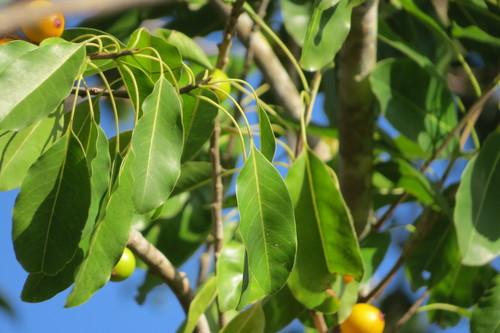
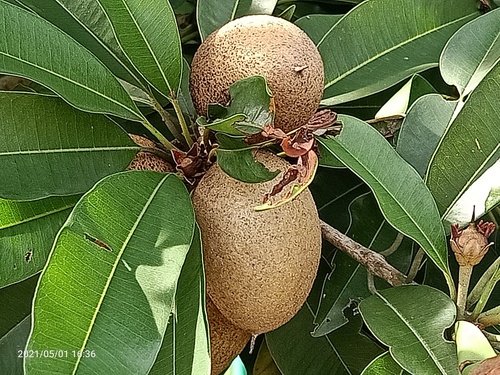
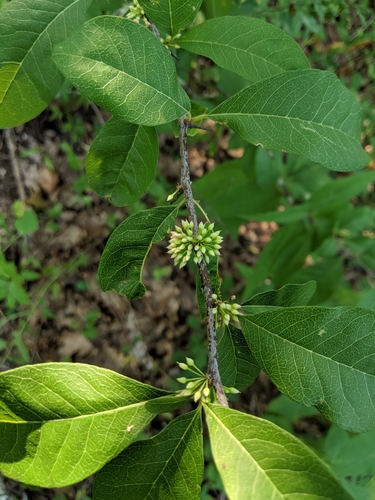
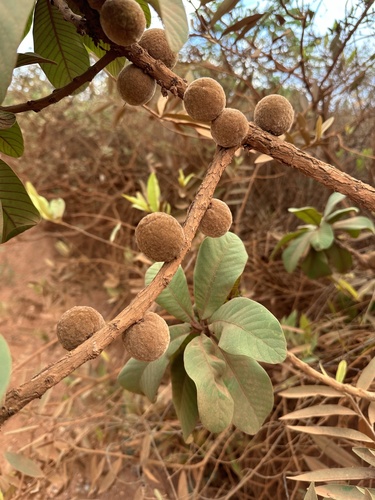
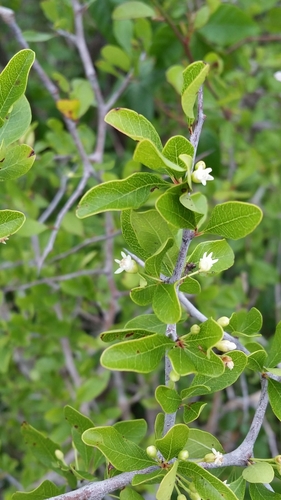
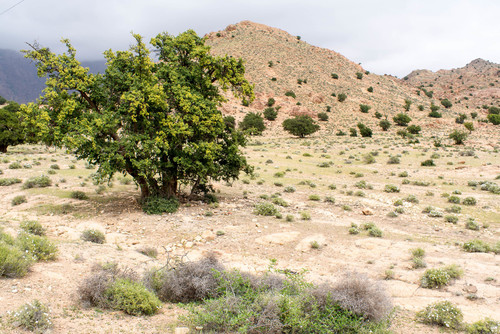
This species, scientifically named Sideroxylon spinosum L., is commonly known as argan or argane. Its leaves are small, measuring 2–4 cm (3⁄4–1+5⁄8 in) long, oval in shape, and have a rounded apex. The small flowers have five pale yellow-green petals, and flowering occurs in April. The fruit is 2–4 cm long and 1.5–3 cm (5⁄8–1+1⁄8 in) broad. It has a thick, bitter peel that surrounds a sweet-smelling but unpleasantly flavoured pulpy pericarp layer. In turn, this pericarp surrounds a very hard nut, which holds one small, oil-rich seed, occasionally two or three. The fruit takes over a year to mature, ripening between June and July of the year after it forms. In October 2011, the Moroccan government submitted an application to the European Commission to grant Argane Protected Geographical Indication status, based on the region's unique geographical properties. Historically, the argan tree grew across all of North Africa, but today it grows only in southwestern Morocco and is also cultivated in the Arabah and Negev regions of Israel. This tree is perfectly adapted to southwestern Morocco's harsh environment, able to survive extreme heat over 50 °C, drought, and poor soil. Even though argan tree numbers are dwindling, they are the second most abundant tree in Moroccan forests, with over twenty million trees growing in the region. Argan trees play a vital role in the local food chain and environment: their roots grow deep into the ground searching for water, which helps bind soil and prevents erosion. Much of the region has resisted the advance of the Sahara desert due to argan trees, so they fill an irreplaceable role in the region's ecological balance. Currently, arganeraie argan forests in Morocco cover only around 8,280 km2 (3,200 sq mi), and this area has been designated as a UNESCO biosphere reserve. Over the last 100 years, the forest area has shrunk by about half, driven by charcoal production, grazing, increasingly intensive cultivation, and the expansion of urban and rural settlements. Livestock numbers have increased substantially, and argan forests show clear signs of overgrazing and over browsing. Browsing directly harms existing mature argan trees, because goats climb high into the tree branches to reach the fruit. Overgrazing causes soil erosion, alters the forest microclimate by reducing ground cover and surface humidity and increasing temperature, and prevents the long-term regeneration of the forest. The recent development of a thriving export market for argan oil as a high-value product may offer the best opportunity for argan tree conservation. However, the economic gains from argan oil exports have also created new threats to argan trees in the form of an increased goat population. Local people use their new income to buy more goats, and the goats stunt argan tree growth by climbing trees and eating their leaves and fruit. It is reported that displays of tree-climbing goats in tourist popular areas are staged or faked, as goats only climb argan trees very infrequently without human intervention. For hundreds of years, the argan tree has held a place in the cultures of the Berber people who live in its native range. It is a multi-purpose tree, and every part of the tree can be used as a food or economic resource. The fruit can be eaten, oil can be extracted from the tree's nuts, and the wood can be used for fuel. Because of this, the tree has played a vital socio-economic role in local culture, and currently provides a significant source of food and income for around three million people, over two million of whom live in rural areas. In some parts of Morocco, argan replaces olive as a source of forage, oil, timber, and fuel in Berber society.