About Sideroxylon inerme L.
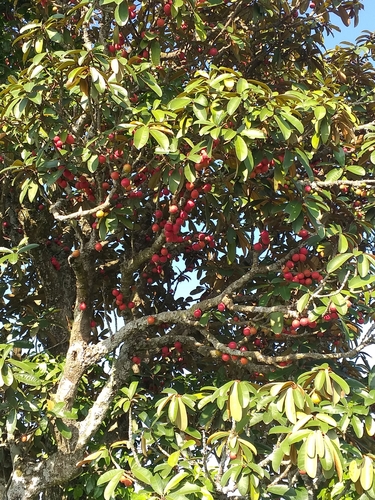
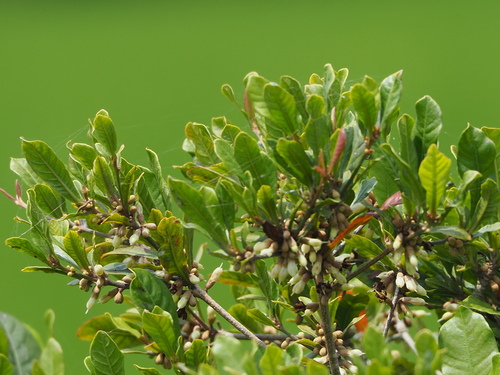
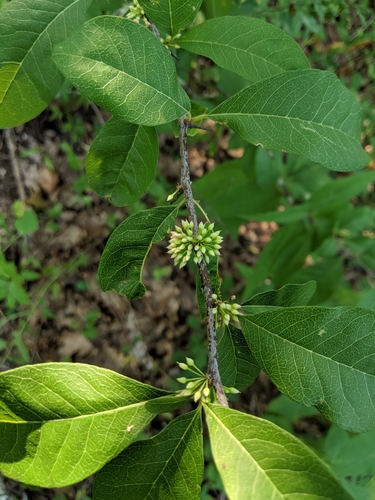
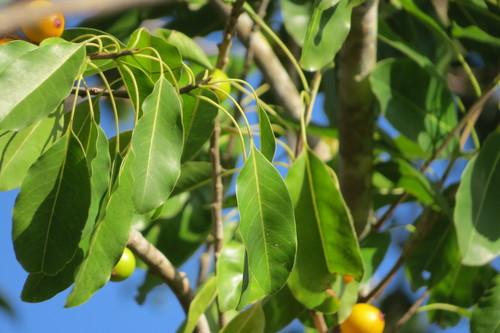
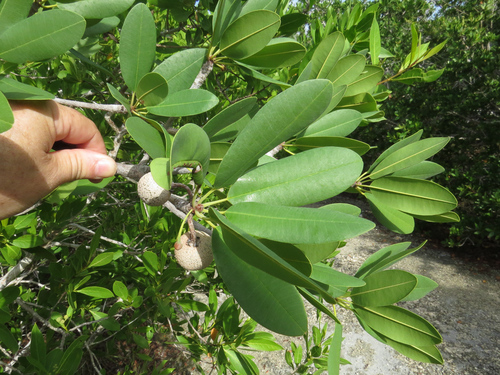
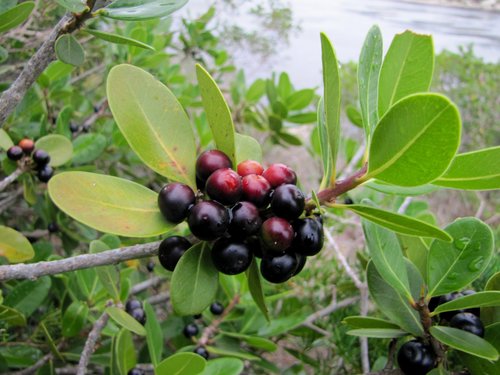
Sideroxylon inerme L. is a sturdy, broadleaf evergreen tree native to semi-coastal regions, characterized by dense foliage, clusters of white bisexual flowers, and edible purplish-black berries. It produces leathery leaves arranged in a spiral pattern; both the leaves and its berries contain milky latex. Fine hairs always cover the tree's young branches and new leaves. Mature individuals can reach up to 15 meters in height. This species, commonly called milkwood, holds considerable value in traditional medicine. Its flowers and fruits attract birds, monkeys, and other animals: speckled mousebirds feed on its flowers, while birds, bats, monkeys, and bush pigs eat its fruit. It also functions as an effective firebreak, and is cultivated specifically for this purpose. Sideroxylon inerme trees grow scattered across coastal woodlands and littoral forests of southern and eastern Africa, ranging from the Cape Provinces of South Africa in the south to Somalia in the north. It is also found on Aldabra, the Comoro Islands, and the Mozambique Channel Islands in the western Indian Ocean. Historically, dense forests of large milkwood trees grew along the coast and bays of Cape Town, particularly at Noordhoek, Macassar, and Gordons Bay. While the species is not endangered, it is classified as a Protected Tree in South Africa, meaning it is illegal to damage, move, or destroy these trees.