About Sicyopterus lagocephalus (Pallas, 1770)
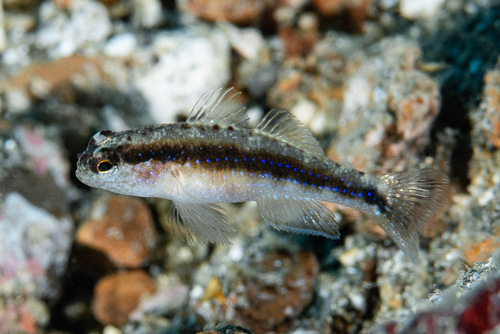
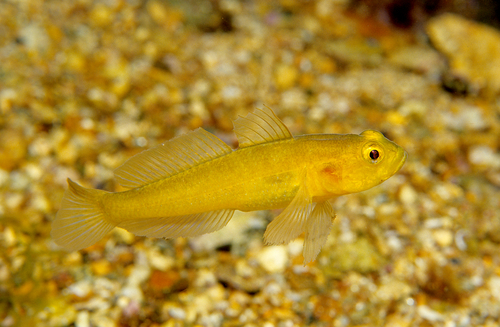
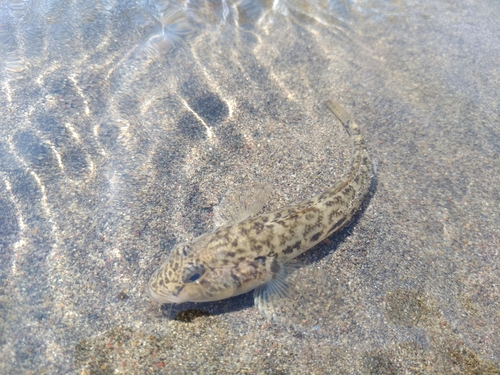
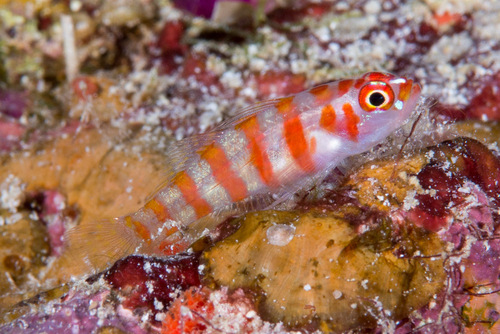
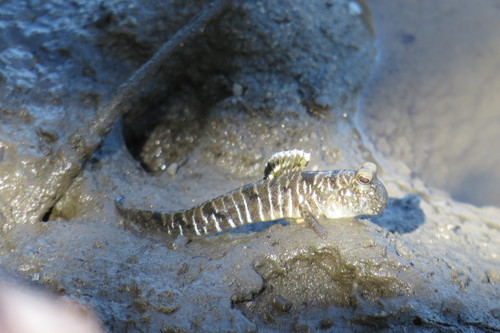
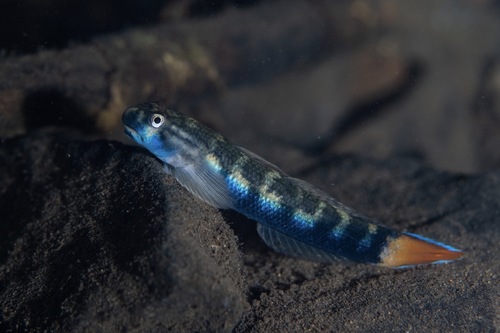
Male Sicyopterus lagocephalus can reach a total length of around 13 cm (5.1 in), while females grow up to 10.6 cm (4.2 in). This species has a divided dorsal fin, which has 6 to 7 spines and 9 to 10 soft rays. The anal fin has one spine and 10 soft rays, and the pectoral fin has approximately 19 soft rays. In the rainy season, males develop bright coloration: their sides are metallic bluish-green, their tail is orange-red, and they have around seven dark saddle-shaped markings on their back. Females are grey or brown with dark saddle markings, have a pale belly, and a black and white band at the base of the tail.
Sicyopterus lagocephalus has a broad distribution across the tropical Pacific. Its range stretches from Sri Lanka and the Mascarene Islands to Japan, Taiwan, the Philippines, Papua New Guinea, Australia, the Marshall Islands, and French Polynesia. Adult individuals inhabit fast-flowing streams with rocky beds, while larvae live in the ocean.
Female Sicyopterus lagocephalus lays eggs in fresh water. After hatching, larvae repeatedly rise to the stream surface then sink back down, which helps carry them downstream with the current. They use up their yolk sacs, and will die if they do not reach the ocean within approximately seven days. When larvae arrive in the marine environment, they measure between 1 and 4 mm (0.04 and 0.16 in) long, and begin feeding on plankton. They are translucent at this stage, and remain at sea for between 133 and 256 days before migrating back into fresh water. The post-larval stage begins when they enter estuaries. They have already developed suction discs, but undergo metamorphosis at this time: their mouths shift from the tip of the snout to the underside of the head, they start developing pigment, their pectoral fins transform, their tail loses its fork, they grow teeth on the premaxillae bone, changes occur in the cranium, and adjustments to osmoregulation take place. Once their rake-like teeth emerge, they start feeding on diatoms and algae, which they scrape off the substrate. After two days in the estuary, juvenile fish move upstream, using their suction discs to climb small waterfalls. After about three to four weeks of migration, they establish territories in the fast-flowing streams where they will breed.