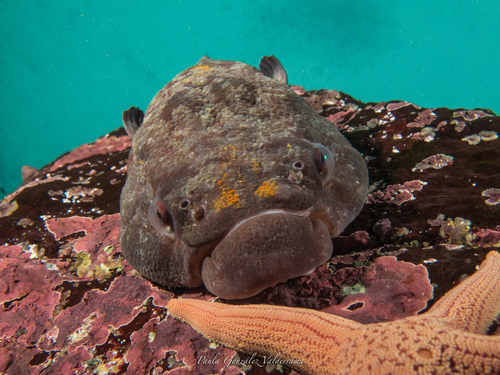
About Sicyases sanguineus Müller & Troschel, 1843
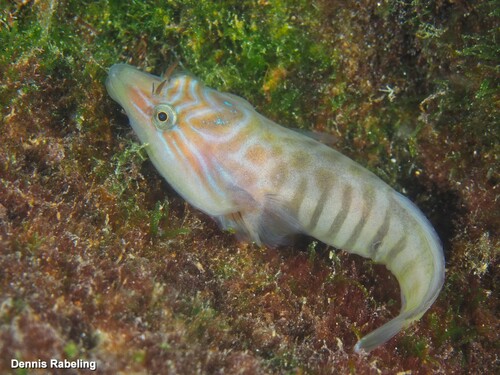
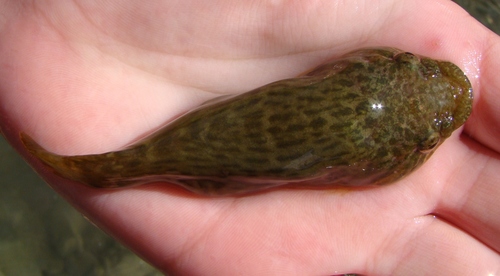
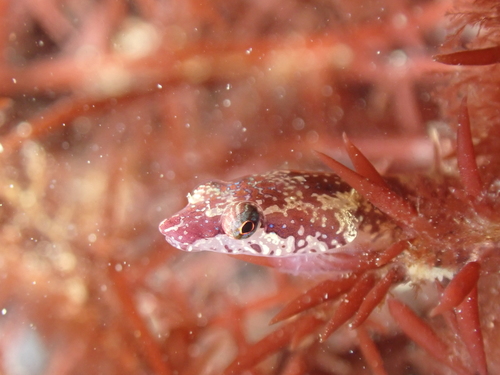
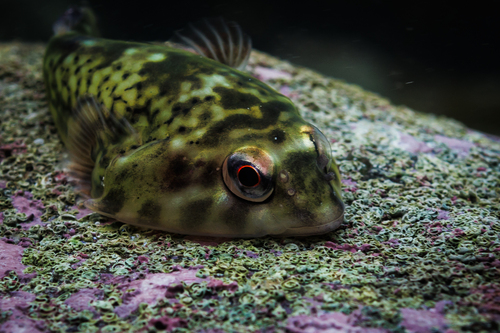
Sicyases sanguineus is a species of amphibious marine clingfish that belongs to the family Gobiesocidae. This species is found in the Southeast Pacific, along the entire coast of Chile and southern Peru. Locally, it is called pejesapo, which literally translates to toad-fish. It lives in shallow waters, including the intertidal zone, and is frequently seen on exposed rocks above the water surface. It is able to breathe through its gill surfaces and its skin, and can survive out of water for up to three days as long as wave splash keeps its body moist. Alongside Chorisochismus dentex from southern Africa, Sicyases sanguineus is one of the two largest clingfish species, reaching a maximum length of 30 cm (12 in). Sicyases sanguineus is a characteristic fish of vertical rock walls in the middle and upper rocky intertidal community along the exposed Pacific coast of South America, with a distribution range extending from southern Peru to southern Chile. It occupies a unique ecological niche with no known comparable parallel development in other rocky intertidal communities. The presence of vertical rocky shorelines exposed to ocean swells, plus access to abundant benthic prey, are the most likely factors that determine where this species occurs. Sicyases sanguineus attaches itself to rocks using a large disc made from fused, highly modified pelvic fins, which is covered in small, flattened dermal papillae. The combination of suction from the disc and adhesion from the papillae securely anchors the clingfish to the rock surface.