About Shepherdia canadensis (L.) Nutt.
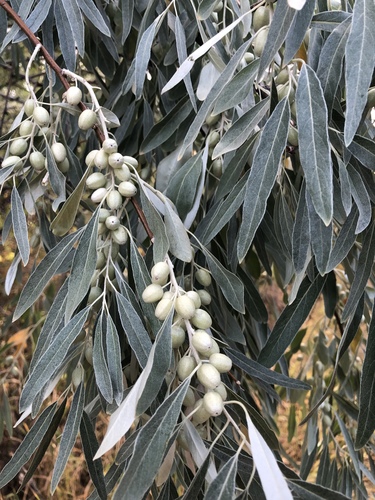
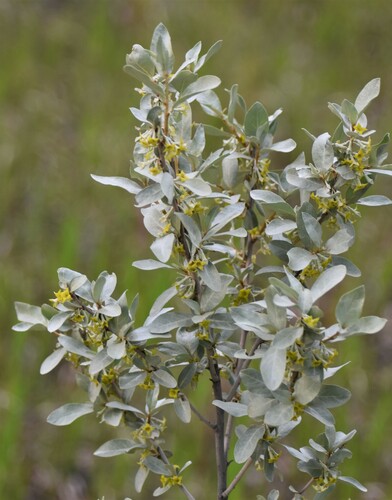
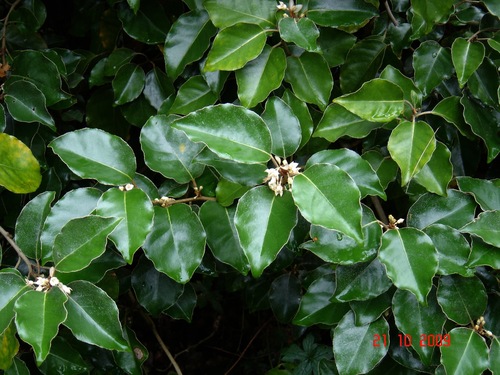
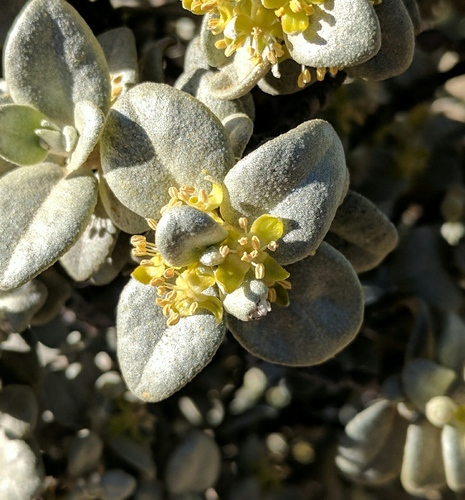
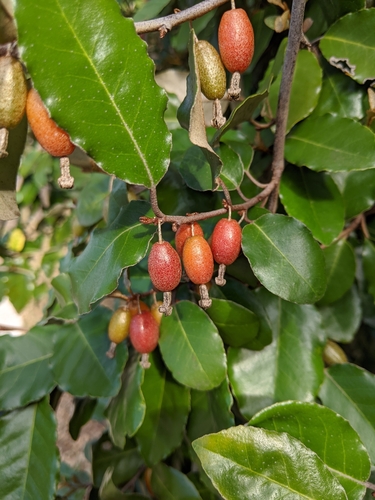
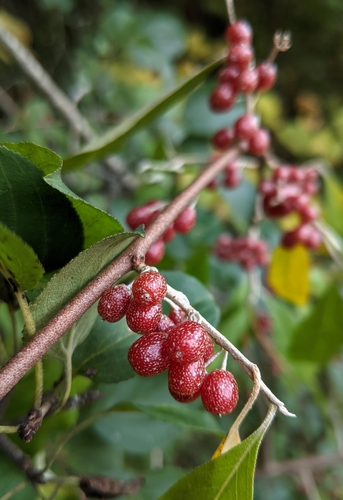
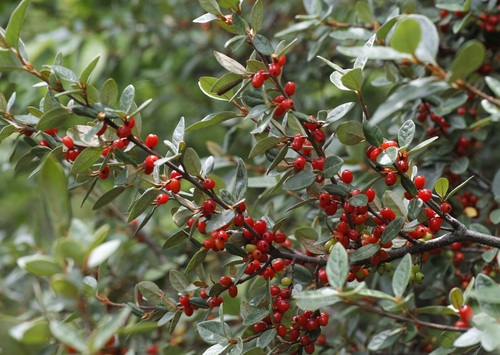
Shepherdia canadensis (L.) Nutt. is a deciduous nitrogen-fixing non-legume shrub that reaches a maximum height of 1–4 m (3–13 ft). Its leaves grow opposite along stems, have short petioles, reach 6.5 cm (2.6 in) in length, are green on the upper surface, and whitish-brown on the lower surface. Flowers grow in clusters, emerge from leaf axils, and are unisexual, with no true petals. Instead, they bear 4 fused triangular yellow or brown lobes, and measure 0.32–0.42 cm (0.13–0.17 in) in diameter. This species is dioecious, meaning individual plants are single-sex, and male and female flowers grow on separate plants that cannot self-fertilize. Male flowers have 8 stamens, while female flowers have one pistil and an urn-shaped hypanthium; both types of flower have nectar glands. Its fruit is typically around 0.6 cm (0.24 in) in diameter and usually red, though the subspecies S. canadensis forma xanthocarpa Reh produces yellow berries. Each berry holds a single rusty-brown seed surrounded by juicy pulp with a soap-like texture, which gives the plant its common nickname 'soapberry'. The berries have a bitter taste from their saponin content. Shepherdia canadensis is widespread across all of Canada except Prince Edward Island, and grows in western and northern parts of the United States, including Alaska and Idaho. It occurs in non-wetland forested areas, including forest openings and understories, and is often found on the shores of rivers and lakes, on mountain outcroppings, and in cliffed regions with high-pH bedrock. This species uses the C3 carbon fixation photosynthetic pathway, which suits it well to boreal and mountainous environments that have moderate temperatures during the growing season. Combined with its nitrogen-fixing ability, this pathway allows it to grow in dry, rocky, nutrient-poor soils, expanding its ecological niche. It commonly colonizes burn areas and other disturbed sites, where it adds usable nitrogen to the soil to support other plants and provides cover for animals. It grows a deep taproot, and produces sprouts from the root crown; it also has shallow, fibrous branching roots, which bear rhizomatous root nodules. The main pollinators of this species are insects, most commonly Syrphidae flies. Successful pollination requires the presence of both male and female plants, as an insect carries pollen from pollen-producing male flowers to female flowers, which produce nectar and develop fruit. It is difficult for pollinators to distinguish between male and female flowers, so insects typically visit both sexes at equal rates. The fruit of Shepherdia canadensis is edible, but the saponins it contains can cause gastrointestinal irritation if large quantities are eaten. This plant is not closely related to toxic soapberry plants in the genus Sapindus, which also share the common name 'soapberry' and produce toxic saponins. Several Canadian First Nations peoples in British Columbia, including the Nlaka'pamux (Thompson), St'at'imc (Lillooet), and Secwepemc (Shuswap), extensively collect these berries. The naturally bitter berries can be sweetened by frost, and are processed with other berries to make Indian ice cream. Saponins from the berries create foam when the fruit is whipped for this dessert. First Nations peoples ascribe multiple health properties to the berries, and the Sioux used the plant to treat gastrointestinal illnesses. Native-themed restaurants in British Columbia occasionally serve these berries on their menus.