About Setophaga pitiayumi (Vieillot, 1817)
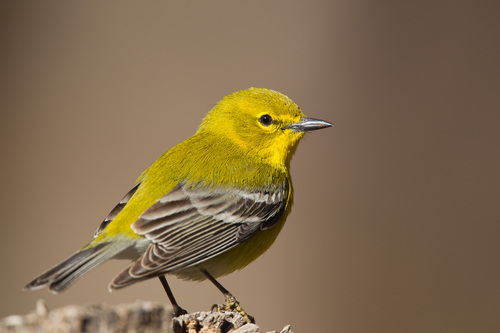
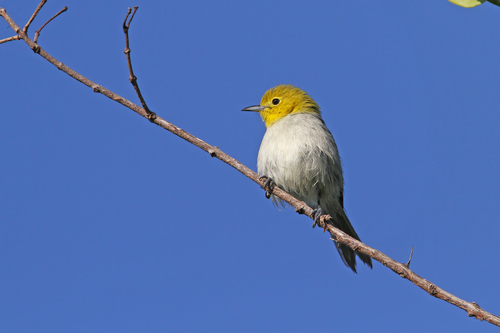
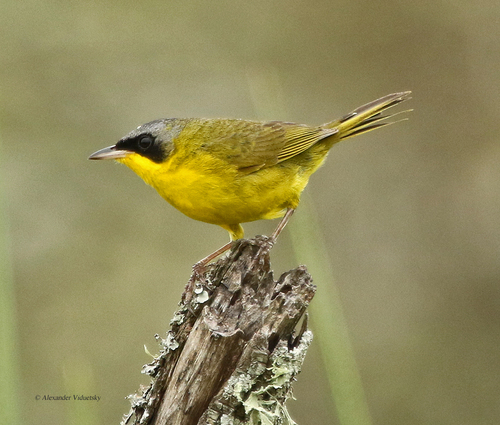
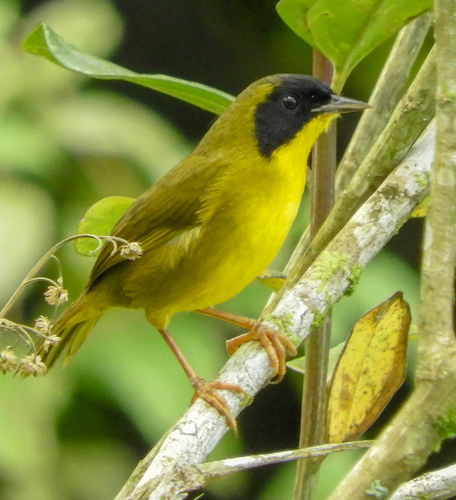
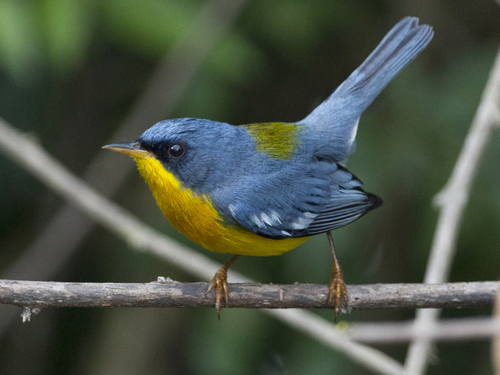
This small New World warbler, Setophaga pitiayumi, commonly called the tropical parula, measures 4.3 inches (11 cm) in length. It has mostly blue-grey upperparts, with a greenish patch on its back and two white wing bars. Its underparts are yellow, shifting to orange on the breast. Males have a black patch that extends from the bill to behind the eye. Females are slightly duller than males and have no black markings on the head. Immature tropical parulas have dull plumage, lack wing bars, and have a grey band across the breast. The species' song is a high, buzzy trill, while its call is a sharp tsit. There are approximately 14 subspecies of tropical parula, which display a wide range of plumage tones. The subspecies S. p. graysoni is endemic only to Socorro in the Revillagigedo Islands. Some subspecies, particularly insular ones, are sometimes treated as separate distinct species. Setophaga pitiayumi has occasionally been grouped together with the closely related northern parula (S. americana) as a single species. Hybrids between the two are regularly found in the Rio Grande Valley of southern Texas, and this may be a relatively recent phenomenon. Most tropical parulas can be told apart from northern parulas by their lack of white eye crescents, though this trait can be ambiguous in hybrids. Additional distinguishing features include the distribution and extent of non-yellow coloration on the breast, and how far yellow extends below the cheek and on the belly. In 2005, a partially leucistic female tropical parula was observed at Reserva Buenaventura in El Oro Province, Ecuador. This individual had several small white patches on the forehead and around the eyes, leading it to strongly resemble a hybrid; however, hybrids would only be expected to reach as far south as Panama if they migrated like northern parulas. In terms of ecology, the tropical parula occurs mainly in hills and premontane forests, and is not found in the Amazon basin. It tends to prefer moderately disturbed and secondary forests, and tolerates habitat fragmentation well. For example, on the eastern slope of the Andes it is regularly found at elevations between 3,300–4,300 ft (1,000–1,300 m). In this region, its habitat consists of a patchy mix including primary forest such as high Iriartea deltoidea palm woods, wet premontane secondary forest typically dominated by Elaeagia (a member of the Rubiaceae plant family), areas with abundant epiphytes and hemiepiphytes like Clusiaceae, former clearings overgrown by shrubs, and fresh forest edges. The subspecies S. p. graysoni mostly occupies low woody vegetation, most commonly Croton masonii shrubs, around 1–1.5 meters (a few feet) above ground. It is more terrestrial than other tropical parula subspecies, and can often be seen hopping on the ground, though this behavior is probably less common in areas with abundant feral cats. Tropical parulas feed on insects, spiders, and occasionally berries. They may join mixed-species feeding flocks; this is common in some locations like the Serra de Paranapiacaba, but is often just coincidental elsewhere. The tropical parula builds its nest within clumps of epiphytes, especially Spanish moss (Tillandsia usneoides) growing on trees. It typically lays two eggs in a scantily lined domed nest. Incubation lasts 12–14 days, and is done primarily by the female. On Socorro Island, the breeding season likely occurs during the summer months, and young birds have usually fledged by November.