About Setopagis parvula (Gould, 1837)
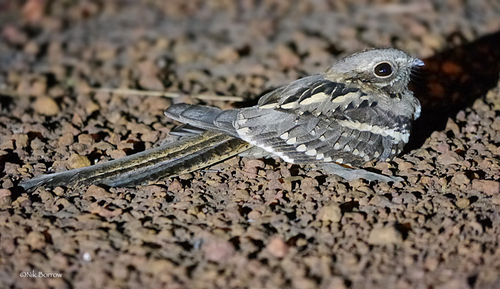
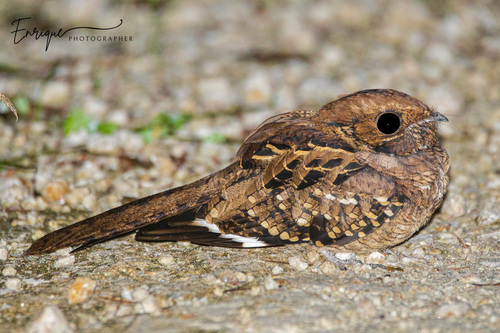
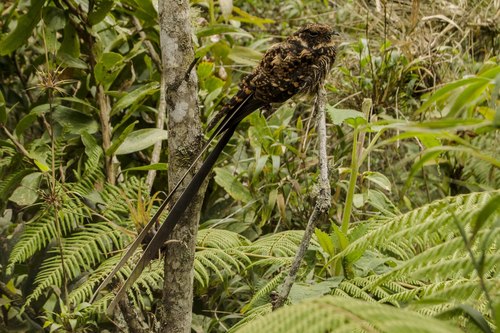
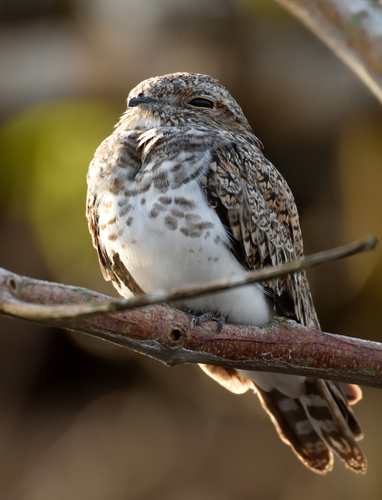
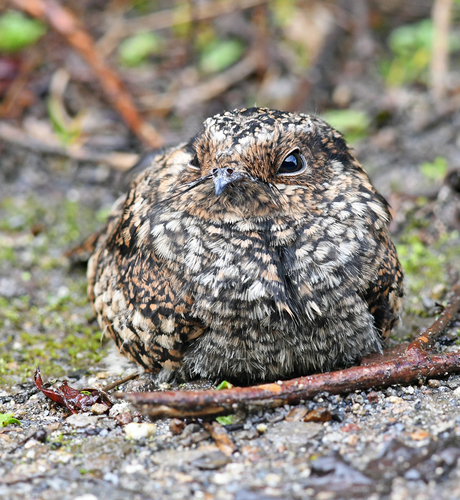
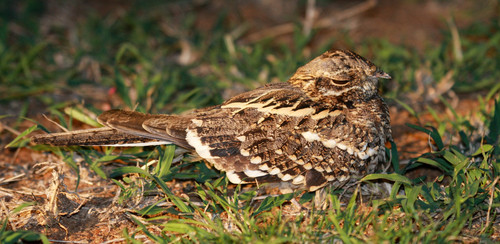
Setopagis parvula, commonly called the little nightjar, measures 19 to 21 cm (7.5 to 8.3 in) in length and weighs 25 to 46.5 g (0.88 to 1.6 oz). Males are generally grayish brown, marked with buff, brown, and blackish brown spots and streaks. Their belly is buff with brown bars; they have a broad but indistinct buff collar on the hindneck, a buffy chin, and a white throat. A broad white band runs across the wing, and the outer tail feathers have white tips. Females are similar in overall appearance, but their throat is buff, and they lack white markings on the wing and tail. The little nightjar's distribution extends from eastern Peru across Bolivia and central and northeastern Brazil to the Atlantic coast, and south through southern Brazil, Paraguay, and Uruguay to central Argentina. A single vagrant individual has been recorded in Aruba. Across much of the southern part of its range, and possibly in Peru, the species is thought to be migratory, moving north and east during the austral winter. It inhabits brushy savanna, the interior and edges of open woodland and forest, and can also be found in non-native Eucalyptus plantations. Its elevational range extends from sea level in the east to approximately 1,500 m (4,900 ft) in Bolivia.