About Setaria italica (L.) P.Beauv.
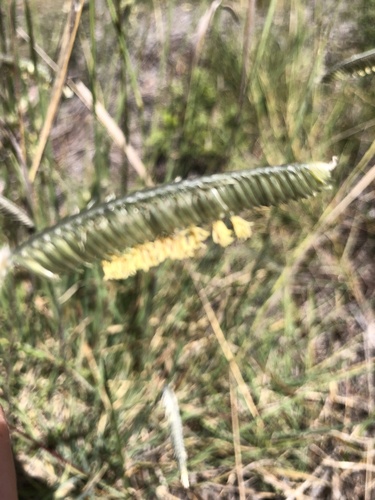
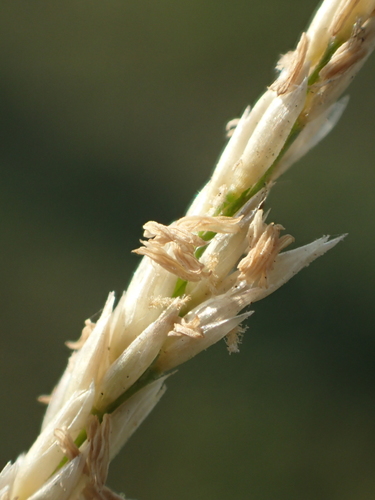
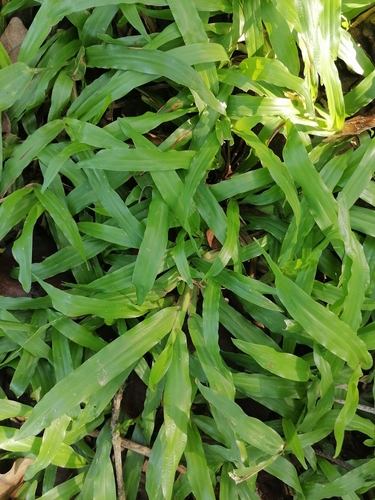
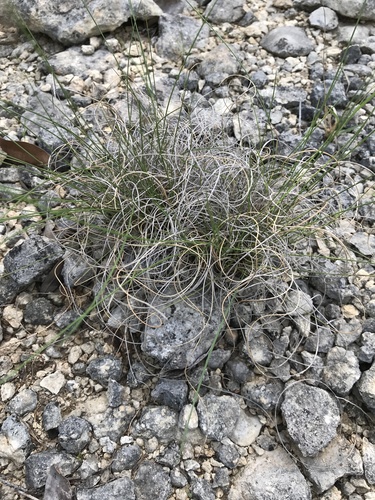
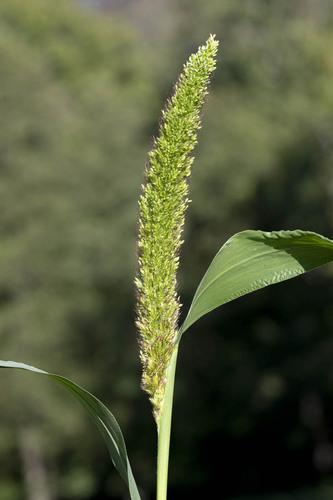
Foxtail millet (Setaria italica (L.) P.Beauv.) is an annual grass. It has slim, vertical, leafy stems that can reach a height of 120–200 cm (4–6+1⁄2 ft). Its seedhead is a dense, hairy panicle 5–30 cm (2–12 in) long. The small seeds, around 2 millimetres (3⁄32 in) in diameter, are enclosed in a thin, papery hull that is easily removed during threshing. Seed color varies widely between different varieties. In India, foxtail millet remains an important crop in arid and semi-arid regions. In South India, it has been a staple in people’s diets since the Sangam period. It is mentioned frequently in old Tamil texts and is commonly associated with Lord Muruga and his consort Valli. In Karbi Anglong district of Assam, India, millets have long been an integral part of the Karbi people’s food system and their Jhum cultivation fields. Historically, Hanjangmilen, the Karbi name for foxtail millet, was commonly grown in Jhum fields, but today it is rarely found there. Farmers are now reintroducing this traditional crop back into their food system. Foxtail millet requires little water, grows well in poor soil, grows quickly, and is affected by very few diseases. In China, foxtail millet was the main staple food in northern China before the Song dynasty, when wheat became the dominant staple crop. It is still the most common type of millet and one of the main food crops in the dry northern region of the country, especially among poor communities. In Southeast Asia, foxtail millet is commonly cultivated in dry, upland regions. In Europe and North America, it is planted on a moderate scale to produce hay and silage, and to a more limited extent for birdseed. In the northern Philippines, foxtail millet was once an important staple crop, until it was later replaced by wet-rice and sweet potato cultivation. Foxtail millet is a warm season crop, typically planted in late spring. Harvest for hay or silage can be done in 65–70 days, with a typical yield of 15,000–20,000 kilograms per hectare (6.7–8.9 short ton/acre) of green matter, or 3,000–4,000 kilograms per hectare (1.3–1.8 short ton/acre) of hay. Harvest for grain takes 75–90 days, with a typical yield of 800–900 kilograms per hectare (0.36–0.40 short ton/acre) of grain. Its early maturity and efficient use of available water make it well-suited for growing in dry areas.