About Sesbania bispinosa (Jacq.) W.Wight
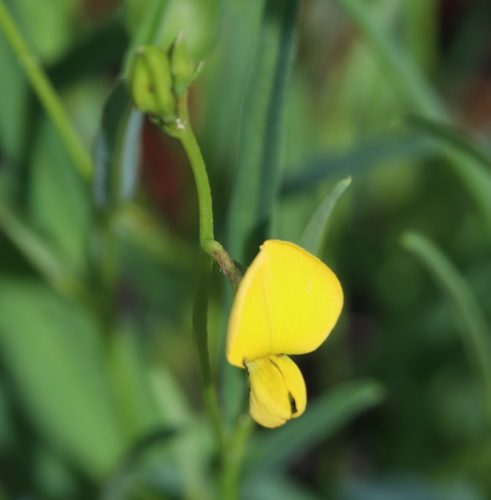
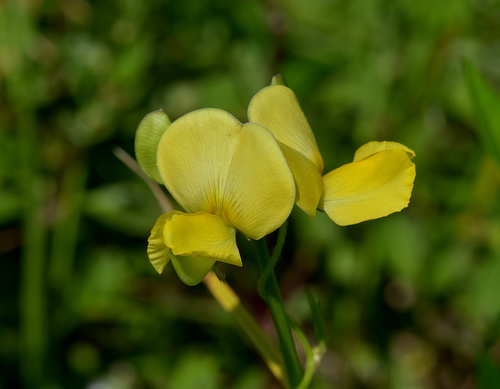
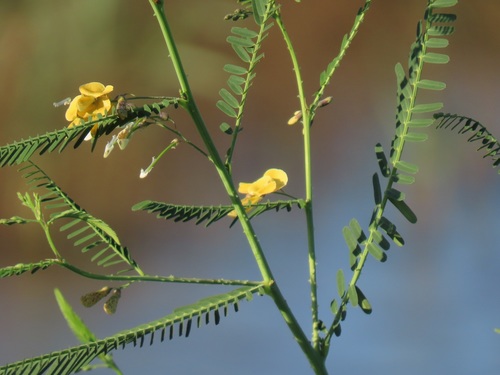
Sesbania bispinosa (Jacq.) W.Wight is an annual shrub. It can reach up to seven meters in height, though it usually grows to between one and two meters. It produces fibrous, pithy stems with long leaves, and bears yellow flowers marked with purple spots. Its pods contain light brown beans.
This species is native to Asia and North Africa, and is most common in tropical Africa, where it grows as a widespread noxious weed. It has been introduced to the Americas. It can grow on saline soil, and is adapted to wet, heavy soil, though it also adapts easily to drought-prone or sandy regions. It is widely cultivated in India, and grown in rice paddies in Vietnam to be used as firewood.
Sesbania bispinosa has a wide range of uses. It is used as green manure, rice straw, wood, and fodder. Its fibers can be used similarly to industrial hemp to make rope, fish nets, sackcloth, and sailcloth. Its fibers are similar to those of birch trees, and show promise as a source of material for paper production. The foliage works well as livestock fodder, and the beans can be fed to fowl. It has also been used as a famine food for humans. Natural gum obtained from the plant is useful as a thickening agent. Like other legumes, it can be planted to improve soil through nitrogen fixation, and it is a good source of firewood.