About Sesarma reticulatum (Say, 1817)
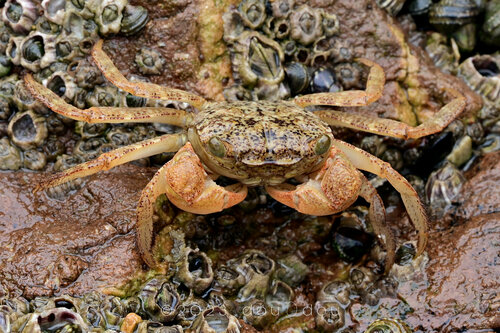
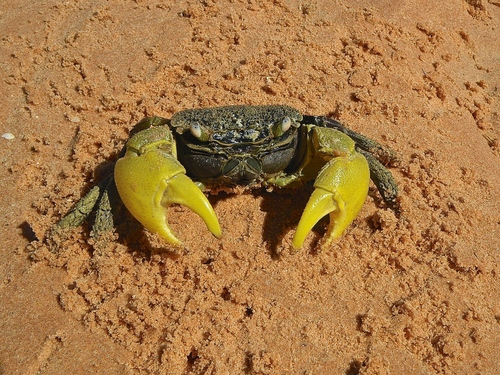
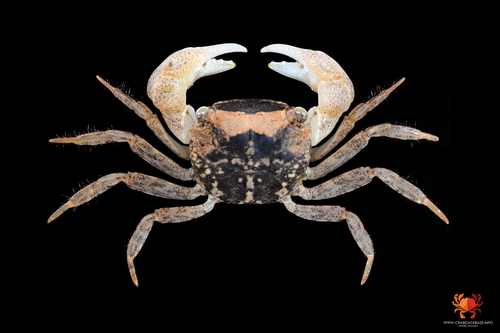
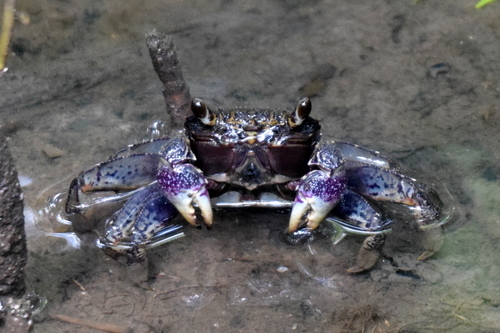
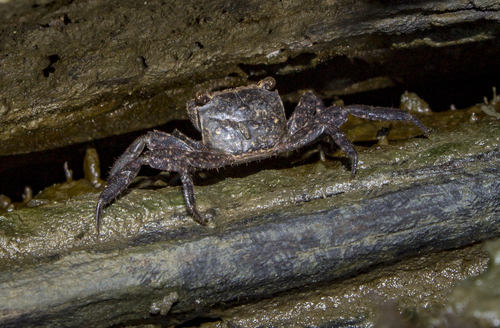
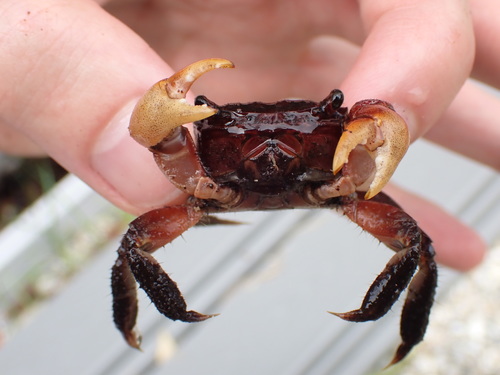
Sesarma reticulatum is typically purple or brown with darker speckles, and its carapace can grow up to 1 inch (25 mm) long. It can be told apart from the closely related species S. cinereum by the presence of a second tooth around the orbit of each eye. The aquatic larvae, also called zoea, of this species live at depths greater than 1 meter below the water surface. Larvae stay in estuaries throughout their development, where they act as a food source for predators.
The distribution range of S. reticulatum runs from Woods Hole, Massachusetts to Volusia County, Florida; a separate related species is found in the Gulf of Mexico.
Overpopulation of S. reticulatum, caused by recreational fishermen over-harvesting the species' natural predators including blue crabs, striped bass, smooth dogfish, and cod, has been linked to the decline of cordgrass in the salt marshes of Cape Cod, and to the reduction in the area of salt marshes along the Atlantic coast of North America, driven by increased erosion. Scientists from Brown University and Princeton University systematically ruled out other causes for this salt marsh degradation. The population explosion of these sesarma crabs has created an extra food source for night herons. The crabs feed on marsh grass both from above the ground and underground, within the tunnels they construct. This research demonstrates the potential cumulative ecological impact of common human activities like recreational fishing.