About Sesamum sesamoides (Endl.) Byng & Christenh.
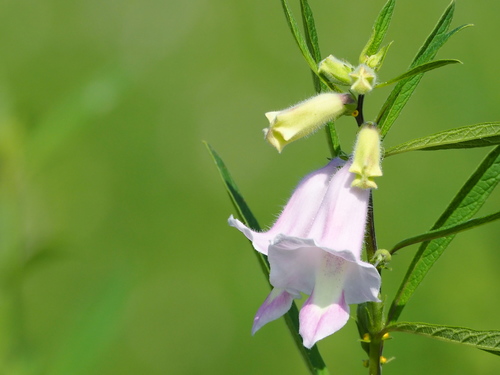
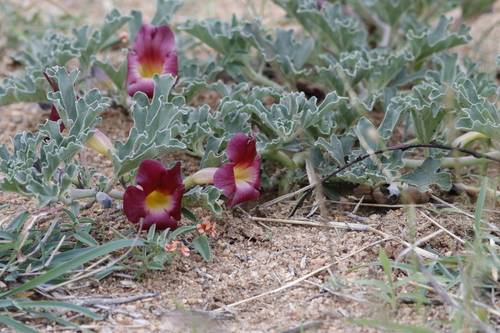
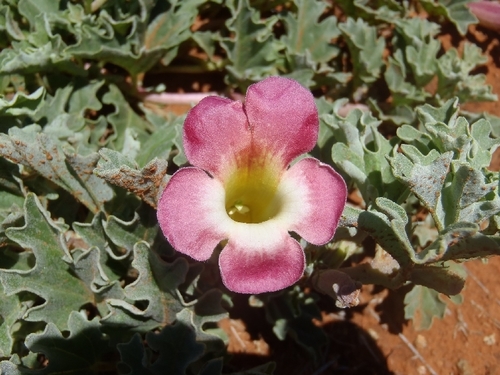
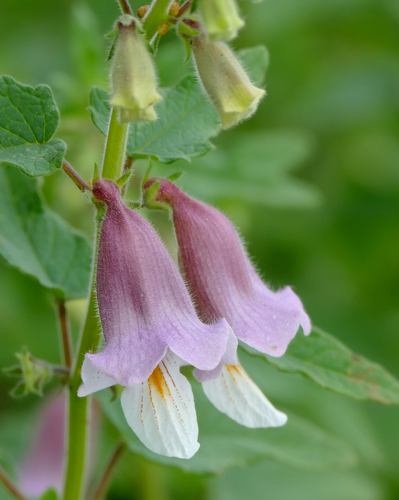
This species, previously published under the synonym Ceratotheca sesamoides, is an upright narrow herb. It typically grows to around 60 cm tall, but can reach heights over 100 cm. It produces pink, mauve, or lilac flowers. Its fruit, which resembles that of Sesamum, is a laterally flattened capsule with slender horns at its distal end; the presence of these horns distinguishes this species from Sesamum, which does not have such horns. It is commonly known as false sesame. False sesame is native to northern West Africa, and has been spread by humans across Africa, occurring from Senegal to Tanzania and the Democratic Republic of the Congo, and south to Botswana and Mozambique. This species typically grows ten or more stems from its basal foliage clump, and these stems often lie prostrate. Frequent removal of younger shoots supports extended vegetative growth and flowering, which lengthens the plant's productive period. It is primarily self-pollinating, and its flowers open at dawn. After pollination is complete, fruit reaches full maturity around six weeks after anthesis. Seeds germinate at the start of the rainy season. Like other members of the Pedaliaceae family, false sesame is covered in mucilage glands. These glands allow the species to survive dehydration without tissue death, making it somewhat drought resistant. It is very adaptable to different growing conditions, growing as a weed and in cultivated fields. It grows best in well-drained sandy soils with high sun exposure, and grows less successfully in rocky areas. False sesame has a wide range of practical uses. When its mucilage-containing leaves are cooked directly in soups, they help reduce nutrient loss into the cooking water. Finely chopped leaves can be used in a variety of sauces; a common preparation mixes chopped leaves with groundnut flour, salt, onions, tomatoes, and a small amount of hot water, which is typically eaten with porridge. Its seeds can be ground into a fine paste and mixed with staple foods such as beans and cassava. Seeds can also be crushed to extract an oil similar to sesame oil, which can be used in cooking or salads. Adding false sesame leaf sap to boiling Vitellaria paradoxa seed pulp during shea butter production helps separate fat from the pulp. Its leaves can also be used as livestock feed. Local communities claim that false sesame has a variety of medicinal benefits, and use it to treat a range of common diseases on the African continent. Aqueous leaf extracts are used to treat diarrhea, and the extracts contain alkaloids, phenolics, flavonoids, and saponins. Warm leaves can be ground and mixed with ash, then applied to inflamed cervical lymph nodes to speed up the birthing process for both humans and animals. A mixture of ground false sesame leaves and the rhizome of Anchomanes difformis is used to treat leprosy.