About Sesamum indicum L.
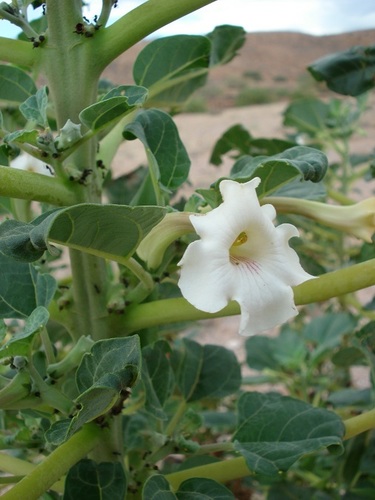
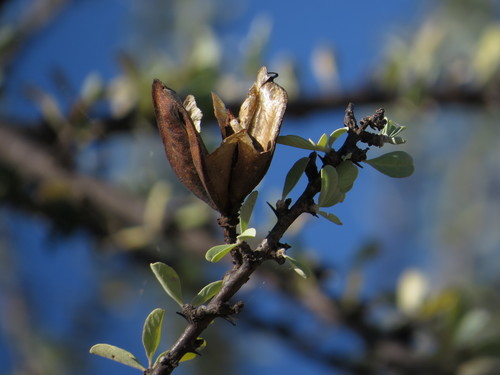
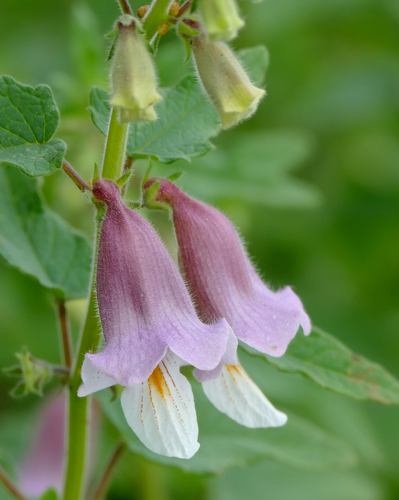
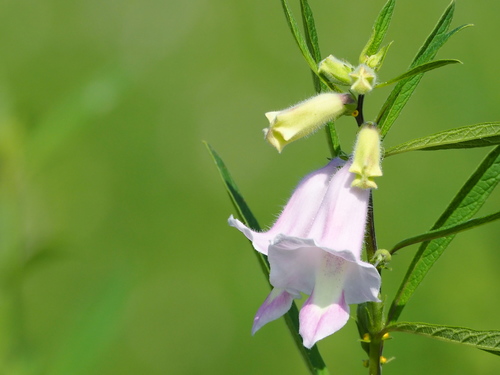
Sesame, with the scientific name Sesamum indicum L., is a perennial plant that grows 50 to 100 cm (1 ft 8 in to 3 ft 3 in) tall. It bears opposite leaves that are 4 to 14 cm (2 to 6 in) long with an entire margin. Leaves near the plant base are broad lanceolate and up to 5 cm (2.0 in) wide, while leaves on the flowering stem narrow to just 1 cm (0.39 in) wide. Its flowers are tubular, 2.5 to 3 cm (0.98 to 1.18 in) long, and range in color from white to pink or purple. The fruit is a usually pubescent capsule, 2 to 3 cm (0.79 to 1.18 in) long and 0.6 to 1.2 cm (0.24 to 0.47 in) wide, that contains four locules. Sesame seeds are either white or black, and are small. Their size varies widely between cultivars, and typically measure 3 to 4 mm (0.12 to 0.16 in). Seeds are ovate, slightly flattened, and thinner at the hilum (seed eye) than at the opposite end. A 100-seed sample collected from a market in Ibadan, Nigeria had a mass of 0.203 grams (0.007 oz).
Sesame varieties have adapted to grow across many soil types. High-yielding crops grow best on fertile, well-drained soils with a neutral pH, and have low tolerance for high-salt and waterlogged soils. Commercial sesame crops require 90 to 120 frost-free days, and warm conditions above 23 °C (73 °F) support better growth and yields. While sesame can grow in poor soils, the highest yields come from farms with proper fertilization. Flowering timing depends on both photoperiod and cultivar. Photoperiod also affects the oil content of sesame seeds: longer photoperiods increase seed oil content, and oil content is inversely proportional to protein content. Sesame is drought-tolerant, partly due to its extensive root system. Even so, it requires adequate moisture for germination and early growth. While the crop can survive both drought and excess water, yields are significantly lower in both conditions. Moisture levels before planting and before flowering affect yield the most. Most commercial sesame cultivars are intolerant of waterlogging. Late-season rainfall extends growth and increases seed loss from dehiscence, when seedpods shatter and scatter seeds. Wind can also cause shattering during harvest.
Sesame seed is a common ingredient in many world cuisines. Sesame seeds, also called benne, were brought to 17th-century colonial North America by enslaved West Africans. The entire sesame plant was used in West African cuisine: seeds thickened soups and puddings, or were roasted and infused to make a coffee-like drink. Seed oil was used in place of butter and as a shortening for cakes. Mature sesame leaves, which are high in mucilage, can be used as a laxative and to treat dysentery and cholera. After arriving in North America, the plant was grown by enslaved people as a subsistence staple to supplement their weekly rations. In Caribbean cuisine, sugar and white sesame seeds are combined into a bar similar to peanut brittle, sold in stores and at street corners; an example is Bahamian Benny cakes. In Asia, sesame seeds are sprinkled onto sushi-style foods. In Japan, whole sesame seeds are used in many salads and baked snacks, and roasted tan and black sesame varieties are used to make the flavoring gomashio. A mixture of ground black sesame and rice forms zhimahu, a Chinese dessert and breakfast dish. Both sesame seeds and oil are used extensively in India: sesame seeds mixed with heated jaggery, sugar, or palm sugar are formed into balls and bars similar to peanut brittle or nut clusters and eaten as snacks, such as chikki. Sesame is a common ingredient in Middle Eastern cuisine, where seeds are ground into tahini paste and used to make sweet halva, and it is a common component of the Levantine spice mixture za'atar popular across the region. In Southern Italian cuisine, traditional sesame seed confections are a culinary remnant of the Arabic period. These include giurgiulena, a brittle-style torrone served at Christmas whose name comes from the Arabic juljulàn, and reginelle (or sesamini), a lightly sweet biscuit covered in sesame seeds. Similar sweets are found in neighboring cultures across the Mediterranean. Sesame oil is sometimes used for cooking, though not all varieties are suitable for high-temperature frying. Toasted sesame oil, which is distinct from cold-pressed sesame oil, has a distinctive pleasant aroma and taste, and is often used as a table condiment.