About Serrognathus titanus (Boisduval, 1835)
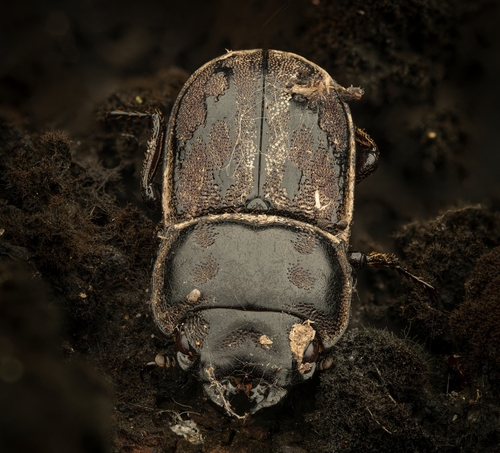
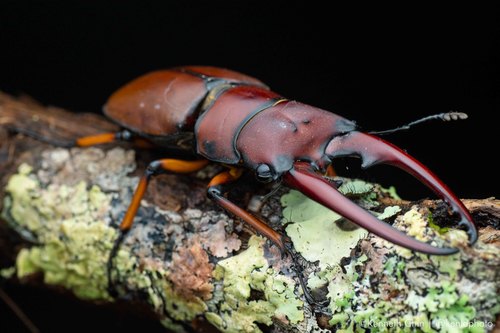
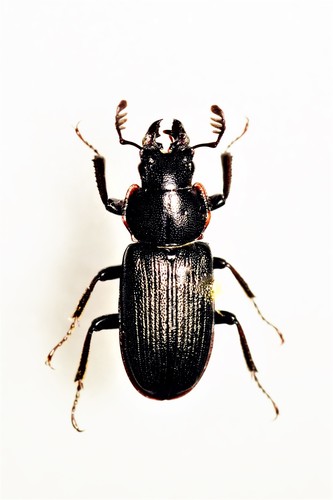
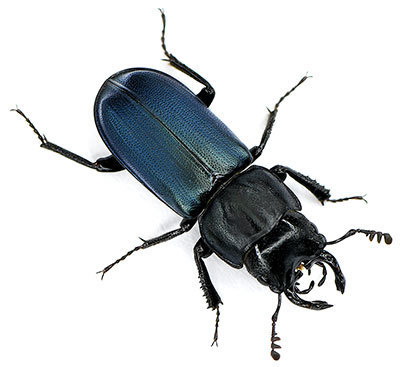
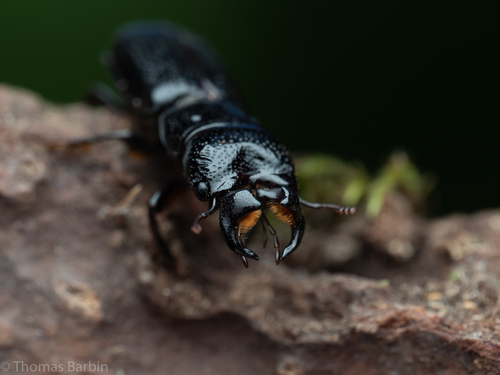
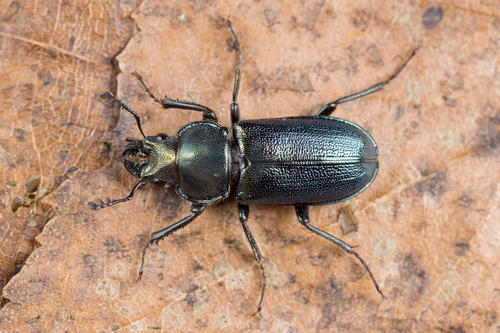
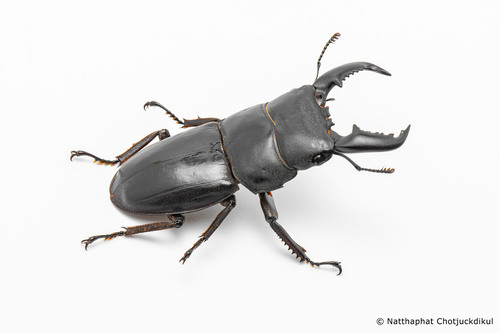
Serrognathus titanus, first described by Boisduval in 1835, shows clear sexual size dimorphism. Males measure 32.0–111.3 mm (1.26–4.38 in) in total length including mandibles, while females measure 36.5–54 mm (1.44–2.13 in). This species has an elongated, somewhat flattened, dull black body, with blackish antennae and legs. Males have distinct antler-like jaws: small teeth run along the inner edge of the jaws, a pair of large teeth are positioned toward the base, and the jaws end in a forked tip. In large males, the head is nearly as long as the prothorax and abdomen combined. This species is widely distributed across Indonesia, the Philippines, Malaysia, Thailand, Vietnam, Laos, Myanmar, India, Japan, China, Taiwan, and Korea. It mainly inhabits tropical rainforests and temperate forests, ranging from lowland areas up into mountain regions. Adult beetles are active and observable from May to August. They feed on tree juice, with a particular preference for juice from Quercus (oak) species. Females lay their eggs on the underground portion of fallen oak trees. Eggs hatch after approximately one month, and larvae feed on rotten wood. The larval stage lasts around one year, and the full complete life cycle of the species ranges from approximately 1 to 2 years. This beetle has commercial value, and export from some regions is illegal. Some Asian cultures attribute aphrodisiac properties to this insect, but most imported individuals are used for competitive sport, decorative display, or kept as exotic pets. This stag beetle is also a popular pet in Asia and Europe.