About Seriola lalandi Valenciennes, 1833
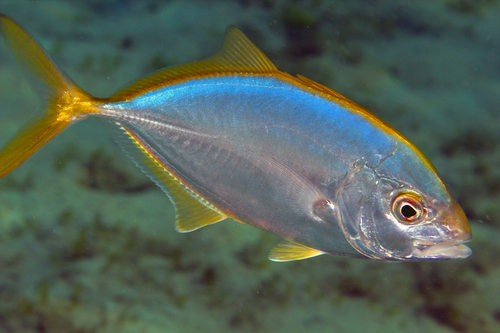
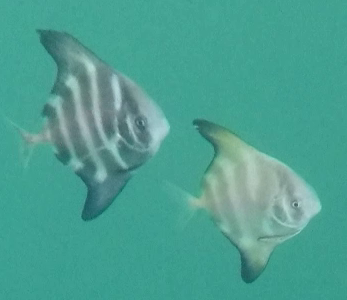
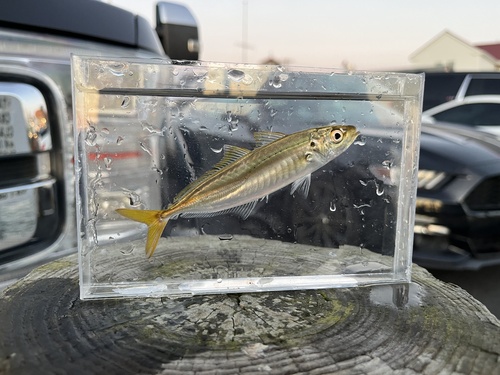
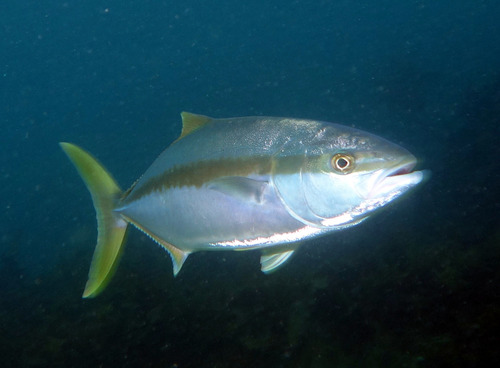
The yellowtail amberjack, also called yellowtail kingfish, hiramasa, or great amberjack, has the scientific name Seriola lalandi. It is a large fish native to the Southern Ocean. While it was previously thought to live in all oceans and seas, recent genetic analysis restricts the true S. lalandi species to Southern Hemisphere waters, though the species can be found in Northern Hemisphere waters during certain times of year. The species was named for Monsieur de Lalande, a naturalist who first informed zoologist Achille Valenciennes that this species existed. The origin of the genus name Seriola, the feminine diminutive form of seria, a word for a large earthenware pot, is uncertain, but the specific epithet lalandi comes from Lalande's surname. Yellowtail amberjack lives in tropical and temperate waters of the Southern Hemisphere and the northern Pacific. In Australia, it has been recorded from North Reef, Queensland (23° 11′ S) south to Trigg Island, Western Australia (31° 52′ S), and reaches as far south as Tasmania. Yellowtail amberjack (known as yellowtail kingfish in Australia) is a highly mobile pelagic species. It typically forms single-species schools, or sometimes schools alongside southern bluefin tuna (Thunnus maccoyii) and silver trevally (Pseudocaranx dentex). It prefers water temperatures between 17 and 24 °C. It generally lives around rocky reefs and adjacent sandy areas in coastal waters, and occasionally enters estuaries. It can be found from shallow water down to around 50 m depth, though individuals have been caught from depths over 300 m. Young fish weighing up to 7 kg form shoals of several hundred individuals, and are generally found close to the coast. Larger fish are more commonly found around deep reefs and offshore islands. Juvenile yellowtail amberjack are rarely seen, as they live far from land, associated with floating debris or weed that provides camouflage. Juveniles are yellow with black bands; this coloration fades as the fish ages, and by the time the fish reaches roughly 30 cm in length, it has developed its adult coloration. S. lalandi is an established suitable candidate for marine aquaculture. Unlike Japanese amberjack (S. quinqueradiata), which has been extensively cultured in Japan for a long time, wild juvenile S. lalandi are not easily obtained, so farmed juveniles are produced in hatcheries from captive-breeding stock. In 2010, the Stehr Group based in South Australia was the largest producer of cultured S. lalandi globally. Aquaculture trials have been run elsewhere in Australia, and some were abandoned after stock losses. Water quality concerns were raised after a mass mortality event of farmed kingfish in upper Spencer Gulf, South Australia, in 2011. In the late 2010s, new yellowtail kingfish farms were established near Geraldton and the Abrolhos Islands in Western Australia, operated by Indian Ocean Fresh Australia and Huon Aquaculture respectively. Multiple attempts to culture the species have been made in New Zealand, including in sea cages and a large land-based system at Parengarenga Harbour in northern New Zealand. Chile is currently conducting tests of both sea-cage and land-based farming methods for the species. In Germany, S. lalandi is cultivated in the country's first land-based seafish culture operation. A Dutch company called The Kingfish Company planned to open a land-based aquaculture operation for the species in Maine, U.S.A., in 2022. Most cultured S. lalandi is sold to the Japanese restaurant market for consumption as sashimi, but amberjack can also be prepared and eaten in a range of other ways, including grilling and drying.