About Sepioteuthis sepioidea (Blainville, 1823)
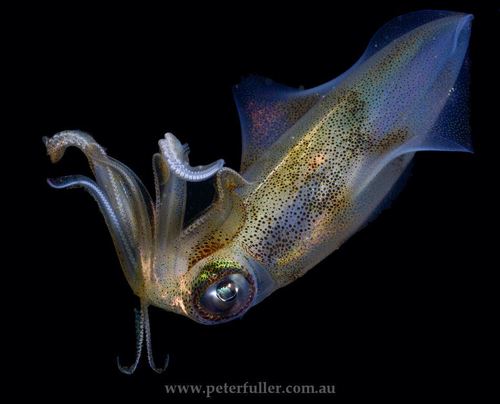
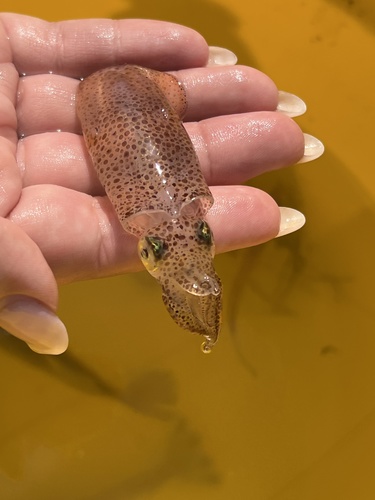
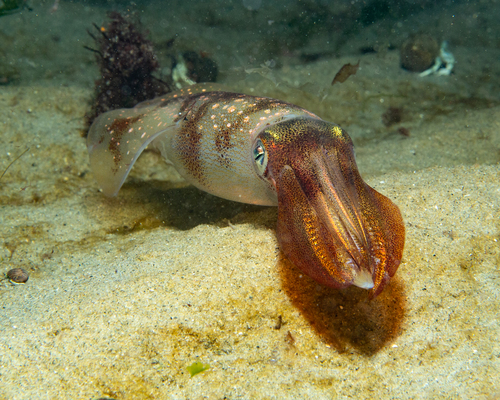
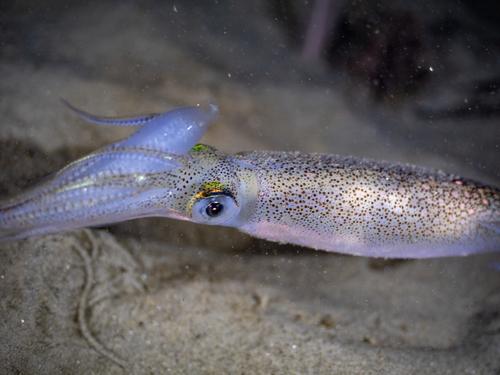
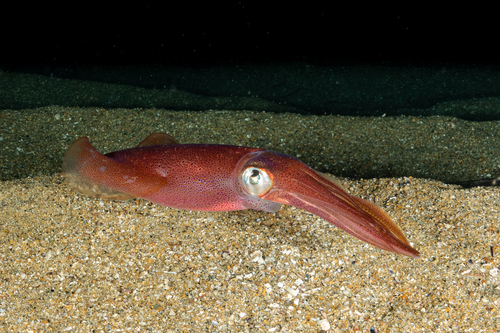
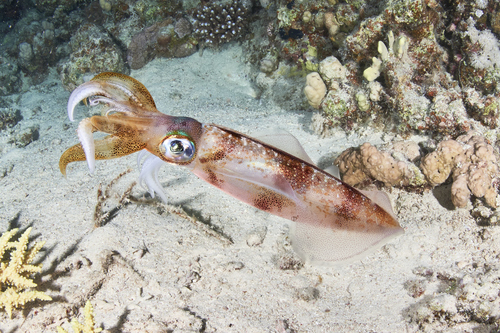
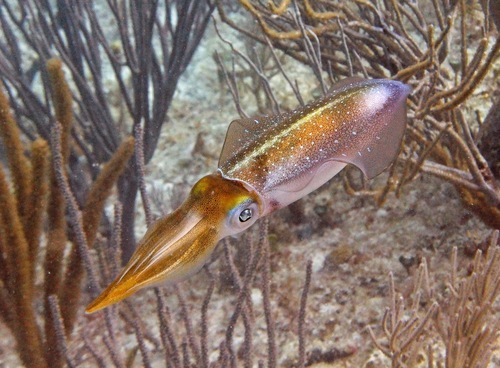
Like most squid species, Sepioteuthis sepioidea (common name Caribbean reef squid) has an asymmetric horizontal W-shaped pupil. While the function of this pupil shape is still not fully understood, current research suggests it helps balance light across the squid's visual field to produce evenly illuminated, clear images. The species also displays a unique color pattern called the "half-and-half" body morph, which develops during interactions with other cephalopods. Several minutes after an interaction, one half of the squid's body becomes darker than its typical base coloration. This color change is also seen when the squid is asleep. During its extended quiet sleeping state, the squid shows a pale, uniform color, while the shorter active sleeping state features varied colors, textures, and patterns. Caribbean reef squid are distributed across the Caribbean Sea and off the coast of Florida, and also occur around Brazilian reef habitats. They are the only squid species commonly sighted by divers on inshore reefs in Florida, the Bahamas, and the Caribbean region. They typically form small schools of 4 to 30 individuals in shallow waters near reefs. Their habitat changes based on their life stage and size. Newly hatched squid stay close to shore, at depths of 0.2 to 1 meter below the surface, on or under aquatic vegetation. Young small squid usually gather in shallow turtle grass near islands, and stay between several centimeters and two meters below the surface to avoid predation by birds. Adult squid swim into open water and can be found at depths up to 150 meters. During mating season, adult squid live near coral reefs at depths of 1.5 to 8 meters. This species has a documented symbiotic relationship where it protects juvenile fish from open-ocean predators. Like other cephalopods, Caribbean reef squid are semelparous, meaning all individuals die after reproducing. Females die immediately after laying their eggs, while males can fertilize multiple females over a short window before dying. Females lay eggs in scattered well-protected locations across reefs. Before mating, the largest male competes with 2 to 5 other males for access to a female. He then approaches the female and gently strokes her with his tentacles. The female may initially signal alarm by flashing a distinct pattern, but the male calms her by blowing water at her and moving slowly away. He returns repeatedly until the female accepts him, and this courtship dance can last up to an hour. When courting, males become defensive of the female they are pursuing. They use a physical zebra-stripe display called the saddle-striped pattern to ward off other rival males in established female-male pairings. The female's response to this display determines if mating will proceed. Once the display is approved by the female, the male attaches a sticky sperm packet (spermatophore) to the base of the female's tentacles. As he extends to place the sperm packet, he displays a pulsating body pattern. Only around half of these placements result in the spermatophore successfully transferring to the female's oviduct for internal fertilization. After receiving the sperm packet, the female places it into her seminal receptacle, lays her eggs in small clusters in suitable protected sites, and then dies.