About Sepia officinalis Linnaeus, 1758
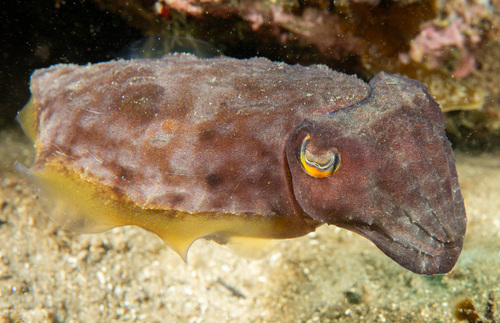
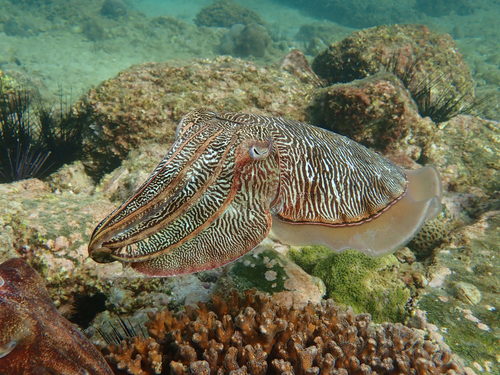
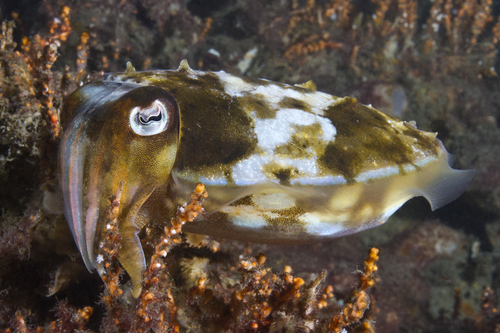
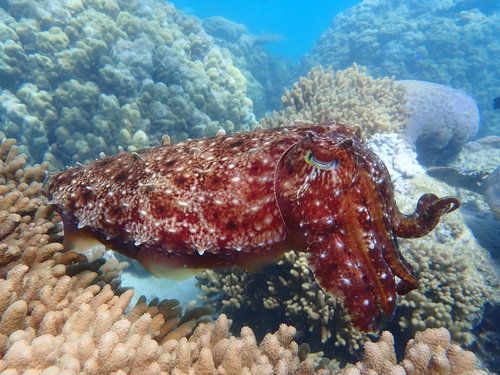
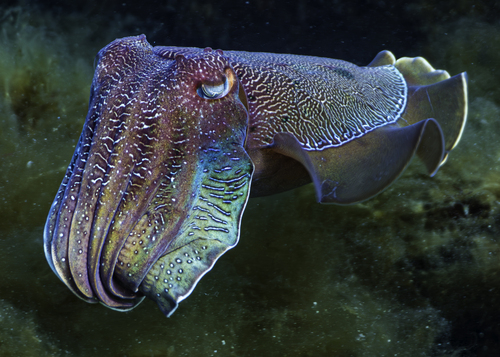
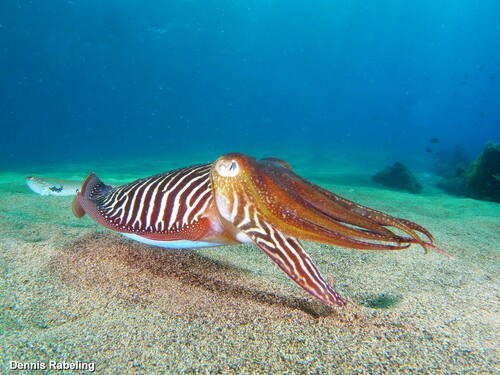
The common cuttlefish Sepia officinalis is one of the largest cuttlefish species. An exceptional male specimen from temperate waters can reach a mantle length of up to 45 cm (18 in) and a mass of 4 kg (8.8 lb), while specimens from subtropical waters rarely exceed a mantle length of 30 cm (12 in) and a mass of 2 kg (4.4 lb). The cuttlefish's mantle contains its digestive and reproductive tracts, plus an internal calcareous shell called the cuttlebone that sits on the dorsal side of the animal. This species has two well-developed eyes, eight arms surrounding the mouth that hold and manipulate prey, two specialized feeding tentacles used to ambush prey, and a beak that holds a radula to break down and consume often armored prey. Common cuttlefish normally move by undulating fins along the edge of their mantle. When startled, they typically jet away through a siphon while releasing defensive ink. Common cuttlefish are well known for their exceptional camouflage abilities, which are made possible by three types of specialized skin cells: pigmented chromatophore organs, light-scattering leucophores, and structurally reflecting iridophores that work together to conceal the cuttlefish in its surroundings. They can rapidly change both their skin color and pattern, and also use peripheral muscles to alter the texture of their skin. Their camouflage patterns are grouped into four main categories: mottle, stipple, uniform, and disruptive. Cuttlefish already have these camouflage capabilities before hatching; they can actively control their chromatophores while still inside their clear egg membrane. Sepia officinalis is commonly fished throughout the Mediterranean, particularly in countries such as Greece and Spain. Even though it is heavily fished and some regional wild stocks are nearly overexploited, the species' overall population is not declining, so it is classified as Least Concern on the IUCN Red List of threatened species. Cuttlefish as a group have many commercial uses, giving them high overall commercial value. Sepia officinalis is a popular food across its native range, and Mediterranean languages have many distinct common names for the species. The mantle is the primary part eaten: after removing the cuttlebone and internal organs, it is prepared into a wide range of dishes. The head, including the tentacles, is also used in many dishes, with the buccal mass containing the beak usually removed before preparation. Cuttlefish ink is thought to have multiple potential beneficial health effects, including anti-inflammatory, antioxidant, antimicrobial, antihypertensive, and anti-retroviral properties, as well as potential anticancer properties. The ink is used as a food ingredient that stains dishes a deep black color. It is also commonly used to create the natural pigment sepia, which is named for this species and extracted from its ink sac. Cuttlebones are widely sold for pet parrots, as they provide a good source of calcium, help keep parrots' beaks trimmed, improve jaw strength, and serve as enrichment. Some reptile species may also use cuttlebones for calcium and enrichment.