About Senna occidentalis (L.) Link
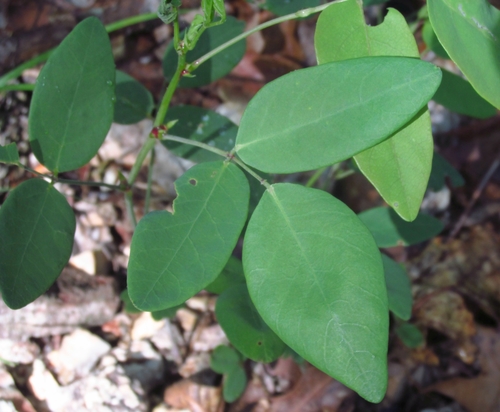
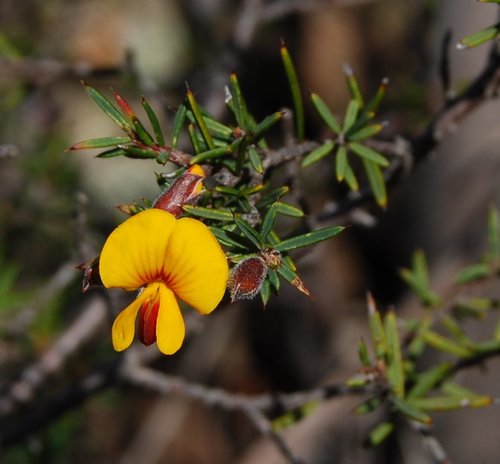
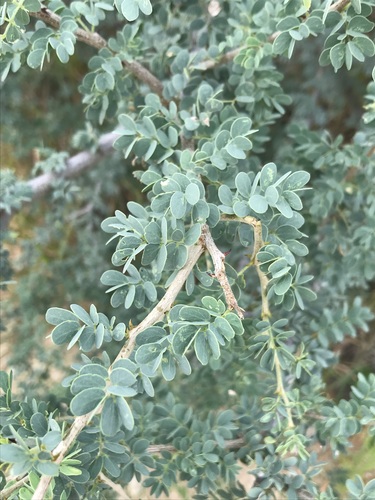
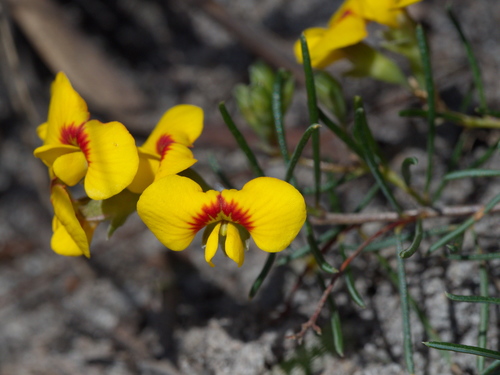
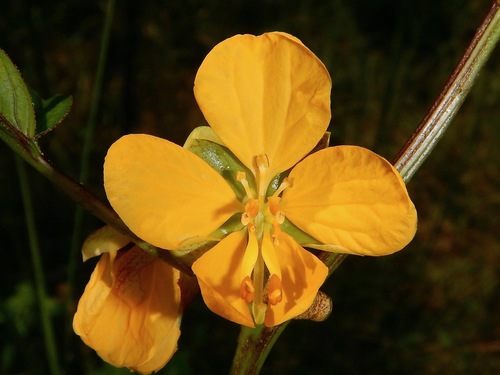
Senna occidentalis is a foul-smelling shrub that typically grows 1–2 meters (3 ft 3 in – 6 ft 7 in) tall, with softly hairy branches and stems. Its leaves are pinnate, measuring 150–170 mm (5.9–6.7 in) long, and grow from a 20–40 mm (0.79–1.57 in) petiole. Each leaf holds three to seven pairs of broadly elliptic to egg-shaped leaflets, which are 50–70 mm (2.0–2.8 in) long and 30–40 mm (1.2–1.6 in) wide, spaced 15–30 mm (0.59–1.18 in) apart. A sessile gland is located near the base of the petiole. Yellow flowers are arranged at the ends of branchlets and in upper leaf axils, in groups of two to four. These clusters grow from a 2–5 mm (0.079–0.197 in) peduncle, and each individual flower sits on a 10–15 mm (0.39–0.59 in) pedicel. The petals reach up to 10 mm (0.39 in) long; there are six fertile stamens with anthers ranging from 4 to 6 mm (0.16 to 0.24 in) long, plus four staminodes. This species flowers year-round, and produces fruit that is a slightly curved, cylindrical pod 120–180 mm (4.7–7.1 in) long and around 3 mm (0.12 in) wide. Coffee senna is native to the southern United States, Mexico, and South America, and it is an aggressive pantropical weed. In Australia, it is widespread but scattered across northern Western Australia, the Northern Territory, South Australia, Queensland, and New South Wales. This species, previously also called Cassia occidentalis (CO), has seeds that contain anthraquinones (AQs) including Rhein, Emodin, Aloe-emodin, Chrysophanol, and Physcion, which have been linked to hepatomyoencephalopathy in children. The cytotoxicity of these AQs correlates with their binding affinity to serum albumin; Rhein shows the highest toxicity and the highest binding affinity. The plant is reported to be poisonous to cattle, because it contains emodin, a known toxic anthraquinone derivative. The seeds also contain chrysarobin (1,8-dihydroxy-3-methyl-9-anthrone) and N-methylmorpholine. The plant can also be poisonous to humans if consumed in sufficient quantity. Emodin and Aloe-emodin exhibit strong binding affinities to DNA, a property associated with their high cytotoxic potential. Rhein has been found to significantly oxidize glutathione (GSH), which contributes to its toxic effects, while Physcion and Chrysophanol show minimal interactions with DNA, which correlates with their lower toxicity. This suggests that the toxicity of AQs from CO seeds is strongly influenced by their interactions with proteins and DNA, which leads to adverse health effects. Despite reports of its toxicity, the leaves of this plant, called Dhiguthiyara in the Maldivian language, have been used in the traditional diet of the Maldives for centuries in dishes such as mas huni, and the plant is also used as a medicinal plant there. Almost all parts of the plant (leaf, root, seeds) are used as food and medicine by tribal populations in India. However, consumption of Bana Chakunda (this plant) seeds has been identified as a possible cause of death among tribal children from acute encephalopathy (see Acute HME syndrome). After the plant was identified as the cause of these deaths, the number of deaths dropped sharply. The same association between plant consumption and poisoning outbreaks was recorded in Rio Grande do Sul, Brazil, where 16 outbreaks were documented. This was a higher number of outbreaks than recorded in a 1979 clinical study, in which eight calves died after developing dyspnea, neutrophilia, and tachycardia following consumption of the plant.