About Senna hebecarpa (Fernald) H.S.Irwin & Barneby
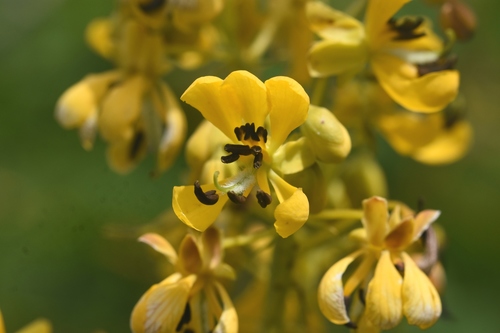
Senna hebecarpa, formally described as (Fernald) H.S.Irwin & Barneby, is a sparsely branched perennial plant. It produces alternate, compound leaves. Clusters of its light yellow to orange flowers bloom between July and August in North America. This species is distributed from the Great Lakes region and Maine south through the Eastern United States, along the Appalachian Mountains and Atlantic Plains, reaching as far south as Georgia. It grows in moist open woodlands and disturbed areas. Ecologically, it acts as both a larval host plant and a nectar source for the Cloudless Giant Sulphur butterfly (Phoebis sennae), and it holds special value for native bumble bees. Senna hebecarpa is cultivated as an ornamental plant. It is used as a perennial wildflower and flowering shrub in traditional gardens and wildlife gardens, in natural landscaping projects, and for habitat restoration projects.