About Senegalia nigrescens (Oliv.) P.J.H.Hurter
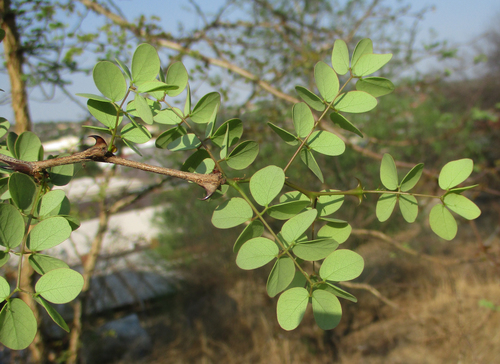
Senegalia nigrescens, commonly called knobthorn, is a deciduous African tree that reaches up to 18 meters in height. It grows in savanna regions stretching from West Africa to South Africa. This species is resistant to drought, but not resistant to frost. Its hard wood is naturally resistant to termite damage.
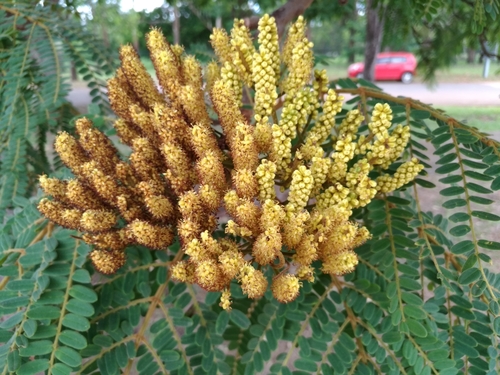
In its ecological community, giraffes frequently browse this tree's flowers and foliage. A variety of other mammals, including elephants, feed on its seed pods and foliage. It has been hypothesized that giraffes may also act as pollinators for this tree. The tree's spicate inflorescences are too long to be protected by thorns, and do not produce chemical defenses. Unlike the bright coloring typical of insect-pollinated species, its flowers are pale. It blooms in the late dry season, in September, when other food sources are less available. However, observed reductions in fruit set within areas where giraffes feed suggest giraffes act as predators rather than pollinators. Effective pollination for this species is more likely performed by insects or birds.
Traditional medicine uses an ointment made from the roots of this tree to treat convulsions.