About Senegalia mellifera (Vahl) Seigler & Ebinger
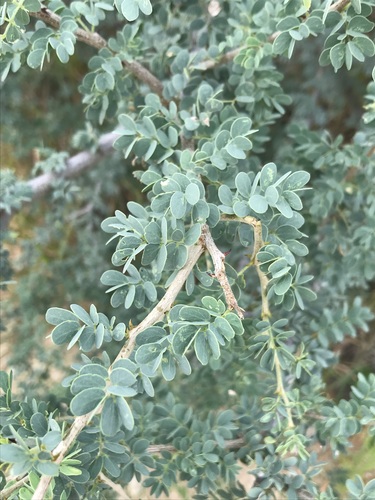
Senegalia mellifera can grow either as a multi-trunked bush up to seven metres tall with a roughly funnel-shaped crown, or as a single-trunked tree reaching up to nine metres in height. It can form impenetrable thickets. In some regions of Africa, it is considered a problematic shrub species that causes woody plant encroachment, as it can spread into and cover large expanses of farmland.
This species is native to dry areas of Africa and the Arabian Peninsula.
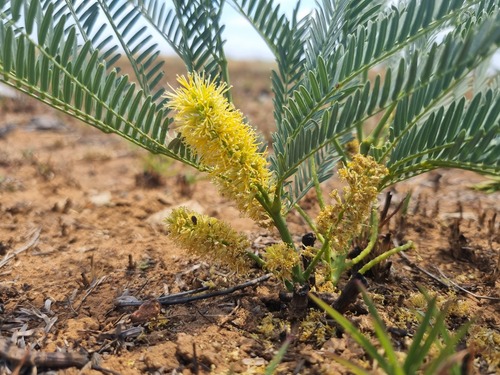
Across Africa, Senegalia mellifera has a variety of human uses. It is used for fencing, as livestock feed, and as building material for huts. Its flowers produce nectar that is collected by honey-producing bees. The wood is valued as fuel and for making charcoal, and the species is widely used in traditional African medicine.
For animals, this tree is an important feed resource for both cattle and wild animals, particularly in dry areas of Africa. Its leaves and young branches are highly nutritious, with a high protein content. Kudu often eat the tree's flowers. Common animals that browse on Senegalia mellifera include elephants, black rhinos, giraffes, and eland. The leaves can also make up an important part of goat diets.