About Senecio vulgaris L.
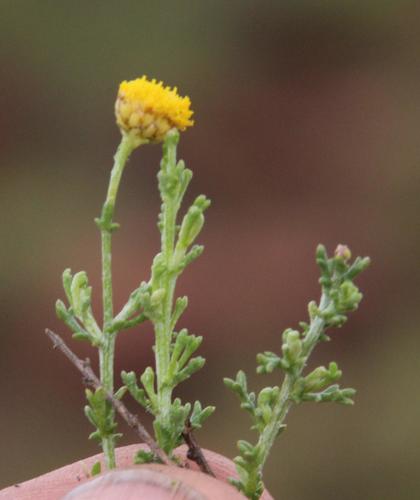
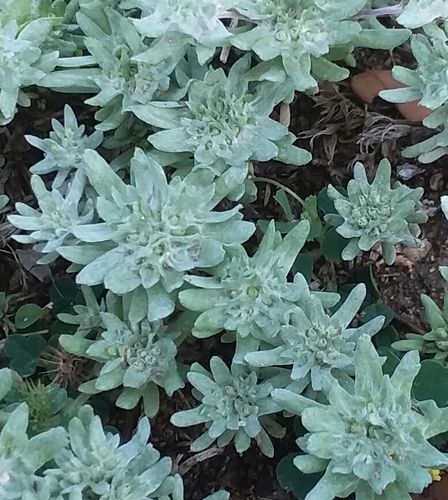
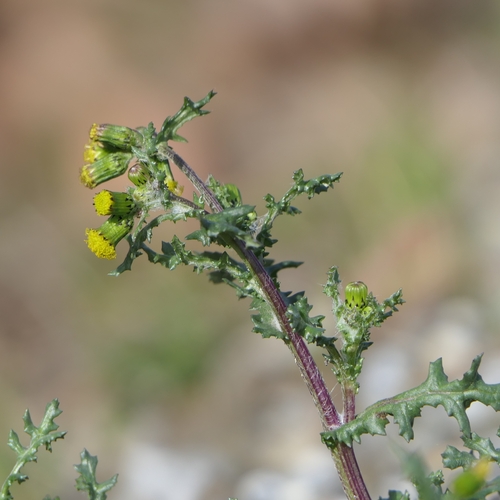
Senecio vulgaris L., commonly known as common groundsel, is an erect herbaceous annual that grows up to 16 inches (41 cm) tall. Its inflorescences usually lack ray florets, and the yellow disc florets are mostly hidden by bracts, giving the flowers an inconspicuous appearance. It is very similar to Senecio viscosus, but lacks the glandular hairs and ray florets that S. viscosus has. This species is generally agreed to be native to Europe, northern Asia, and parts of North Africa, but its wider native status is debated. The USDA Natural Resources Conservation Service Plants Profile Database lists it as native to all 50 United States, Canada, Greenland, and Saint Pierre and Miquelon. The USDA Germplasm Resources Information Network, however, considers it native only to parts of Afro-Eurasia. The Integrated Taxonomic Information System Organization (ITIS), a partnership of multiple U.S. federal agencies, states the species was introduced to the 50 United States. The online journal Flora of North America calls it "probably introduced" to areas north of Mexico. Individual regional groups have stated it is not native to the areas they oversee, including Florida, Washington, Wisconsin, Saskatchewan, British Columbia, and Missouri. The United States Geological Survey reports common groundsel is exotic to all 50 U.S. states and all Canadian provinces, with the exceptions of Georgia, Kentucky, Massachusetts, and Labrador. Senecio vulgaris is a frost-resistant deciduous annual that grows in disturbed sites, waste places, roadsides, gardens, nurseries, orchards, vineyards, landscaped areas, and agricultural lands, at altitudes up to 1,600 feet (500 m). It is self-pollinating, produces 1,700 seeds per plant, and can produce three generations per year. Seeds are dispersed by wind, cling to clothing and animal fur, and spread as contaminants in commercially traded seed. This has made containing its global spread very difficult, if not impossible. In the United States, Senecio vulgaris is listed as a noxious weed. It is considered non-native to most or all of the Americas, and has a reputation for being hepatotoxic to both livestock and humans. There are contradictory claims that it is both poisonous to humans and also medicinal; much of this contradiction can be resolved by examining terminology and the dose of toxic substance ingested. All species in the genus Senecio contain pyrrolizidine alkaloids such as senecionine. Chronic human exposure to these alkaloids can cause irreversible liver damage. Common groundsel has not been widely recommended as a medicinal herb since 1931, when it was recommended as a diaphoretic, antiscorbutic, purgative, diuretic, and anthelmintic. This was a reduction in its recommended uses: in the 1st century CE, Pedanius Dioscorides suggested it to expel kidney gravel; in the late 16th century John Gerard recommended it for poultices; and in the 17th century Nicholas Culpeper suggested it as a cure for epilepsy. Current information on the dangers of ingesting groundsel remains contradictory. A heavily cited 1989 paper suggests toxic effects are immediate and gives pre-ambulatory care recommendations. A Canadian poisonous plants information database cites a 1990 paper for a prenatal exposure warning: in one documented case, a mother ingested tea containing an estimated 0.343 milligrams of senecionine, which caused fatal veno-occlusive disease in her newborn infant. There is far less contradiction about the pyrrolizidine alkaloids present in S. vulgaris, and all sources warn that the alkaloids accumulate in the body. Certain pyrrolizidine alkaloids are non-toxic precursors that are converted to toxic metabolites inside the body through the process of toxification. Botanist and plant lore authority Albert Roy Vickery quotes a 1991 account of using groundsel as a highly effective purge from the English county of Dorset: Mr Joby House of Hewood reported that for constipation, you boil groundsel with lard, take the preparation, and you will defecate extremely easily. When Joby's sister Lucy had severe constipation, her doctor called in the morning said she would be dead by 5 o'clock. Mrs. House visited gypsy Mrs. Penfold, who gave her this cure. When the doctor returned later in the day, Lucy was already running around, and there was feces everywhere. The doctor had brought Lucy's death certificate, but he tore it up and burned it in anger. For livestock, Carl Linnaeus was recorded as claiming that goats and swine eat this plant freely, cows do not prefer it, and horses and sheep will not touch it. He also noted that caged birds are fond of its seeds, and its leaves and seeds provide food for many wild species, naming rabbits as an example. More recent studies find that the lethal amount of Senecio vulgaris for cattle or horses is 7% of their body weight; for example, a 700-pound (318 kg) cow would need to consume 50 pounds (23 kg) of the plant to reach this lethal dose. Smaller non-lethal amounts impair liver function, but damage does not become apparent until the animal is stressed, such as by new feed, a new location, pregnancy, or exposure to another toxin. Sheep and goats have rumen bacteria that detoxify the alkaloids, and are able to consume an amount of this plant (and other Senecio species) equal to twice their body weight without harm. The toxic alkaloids are not destroyed by drying, or by fermentation when made into silage.