About Sempervivum tectorum L.
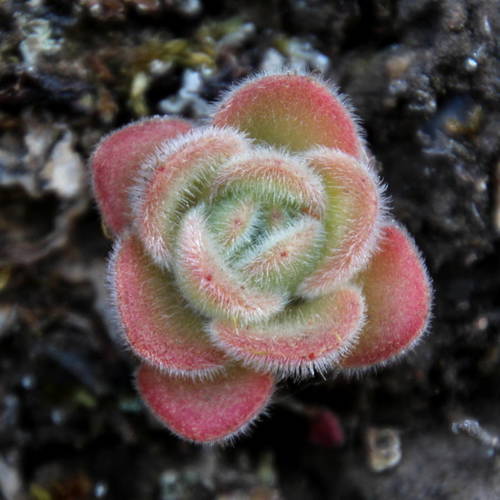
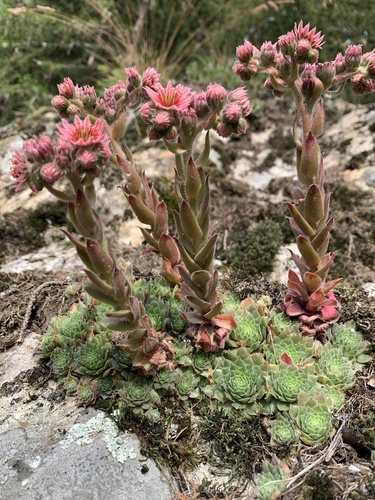
Sempervivum tectorum L. is an evergreen, rosette-forming succulent perennial. It grows 15 cm (6 in) tall and spreads to 50 cm (20 in) wide, reproducing and expanding by producing offsets. Its grey-green leaves grow in tufts, attach directly to the plant without stalks, form rosettes 4–10 cm (2–4 in) across, and are often tinted rose-red. In summer, it produces clusters of reddish-purple flowers that grow in multiples of 8 to 16. These flower clusters sit on hairy, erect, flat-topped stems. This species is highly variable, partly because hundreds of its cultivars have been propagated, sold, and traded for almost 200 years. Carl Linnaeus first formally described Sempervivum tectorum in 1753, and he observed that the species has ciliate leaves—meaning leaf edges are fringed with small hairs. Sempervivum tectorum is one of multiple houseleek species grown in cultivation. It is valued as a groundcover for hot, dry locations, and has received the Royal Horticultural Society's Award of Garden Merit. This species multiplies horizontally through the propagation of underground roots. New plant budding happens in spring. Each mother plant can produce up to four new young plants, or up to ten new plants when growing conditions are favorable. Young plants separate easily from the mother plant if care is taken not to damage their roots. Propagation from seed can also be done in spring.