About Sempervivum ciliosum Craib
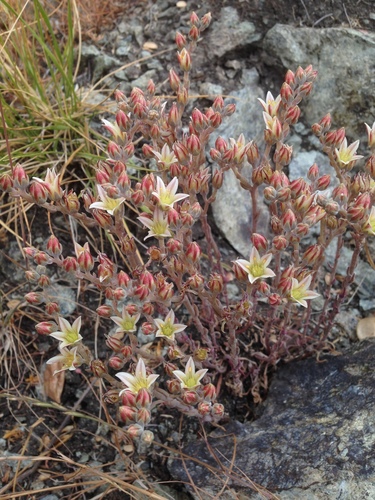
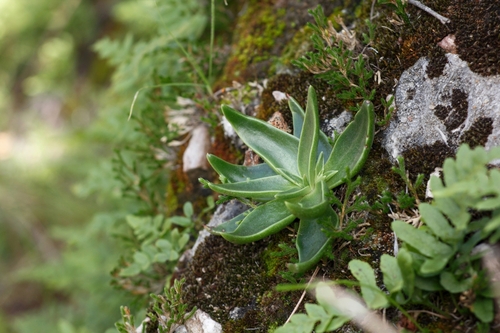
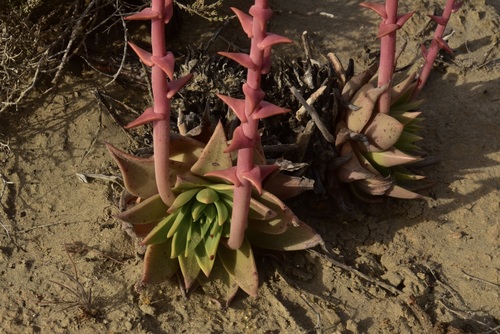
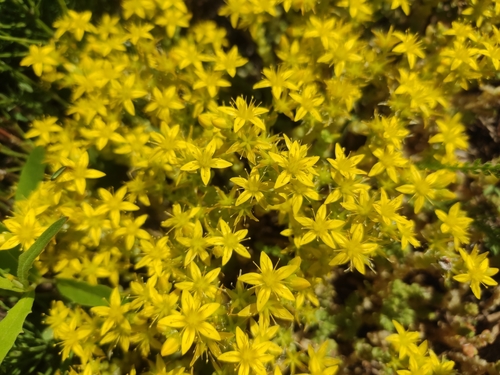
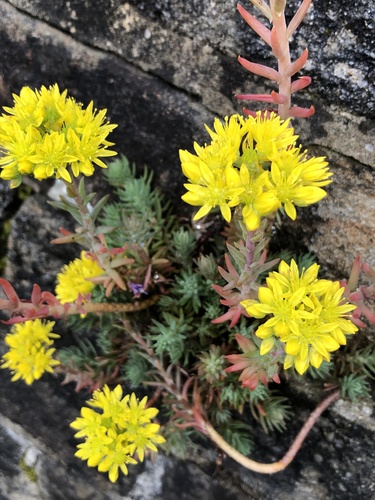
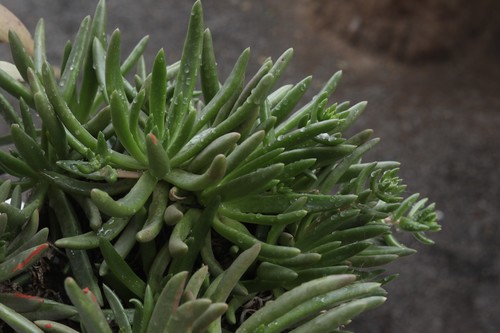
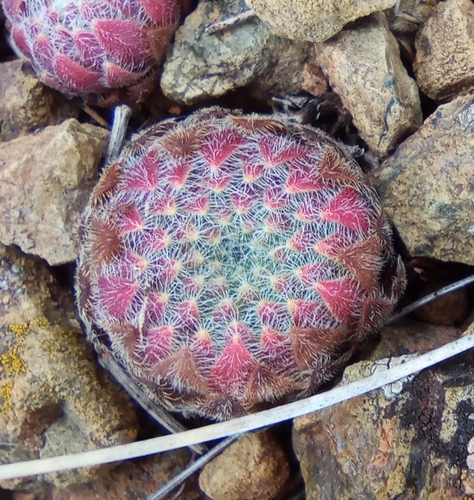
Sempervivum ciliosum Craib, commonly called Teneriffe houseleek, is known colloquially as 'hen-and-chicks'. It is a flowering plant species in the succulent stonecrop family, Crassulaceae, native to the Balkans and Southeastern Europe. Despite having a superficial resemblance to American cacti, houseleeks are not closely related to the cactus family. This species is an evergreen perennial that grows in colonies. Each individual rosette reaches roughly 7.5 cm (3.0 in) in both height and width, and colonies form dense mats up to 50 cm (20 in) wide. As the 'hen-and-chicks' common name suggests, mature 'mother' (hen) plants produce multiple small baby plantlets (chicks) along their sides. These plantlets remain connected to the mother plant by an umbilical cord-like structure until they root and become fully self-sufficient. Plantlets grow to root and expand the colony, either by detaching from the mother plant during flooding, erosion, or animal damage, or by rooting directly where they grow. Its leaves are teal-green, slightly pointed, succulent, and lightly hairy; the fine hairs are an adaptation to prevent sunburn. Like many other succulent genera including aeoniums, agaves, and certain kalanchoes, Teneriffe houseleek is monocarpic, also called hapaxanth. When a rosette is ready to flower, it shifts its growth pattern: leaves first turn inward, then extend upward and outward, transforming the rosette into a flowering stalk that grows up to 10 cm (3.9 in) tall. The stalk is topped with yellowish, star-shaped flowers. The Latin specific epithet ciliosum translates to 'with a small fringe'. This species has received the Royal Horticultural Society's Award of Garden Merit. It is hardy to temperatures as low as −20 °C (−4 °F). It needs a semi-sheltered location that receives several hours of full sun each day, and grows best in well-drained, well-amended growing medium, or even plain sphagnum moss. Since it is native to rocky outcrops and cliff faces, it grows exceptionally well in vertical displays, and sometimes performs better vertically than it does in standard potting soil. It thrives when mounted on driftwood, rocks, wooden posts, trees, moss poles, or other elevated structures, because these placements provide maximum drainage and aeration. This plant cannot survive indoors, in excessively shady, stagnant conditions, or in overly wet soil. In its natural habitat, it takes root in leaf litter and moss that accumulates between and around rocks on exposed slopes. In these alpine locations, airflow, sunlight, and drainage are all ideal. While the plant benefits from any rainfall that occurs, water needs to drain quickly away from its roots to avoid fatal root rot.