About Semotilus atromaculatus (Mitchill, 1818)
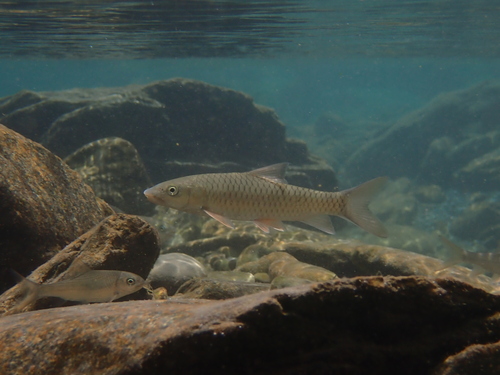
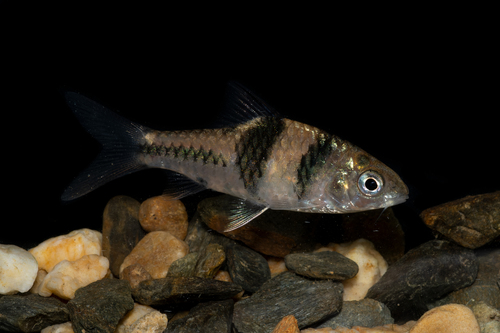
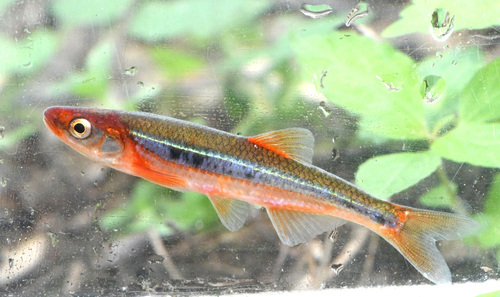
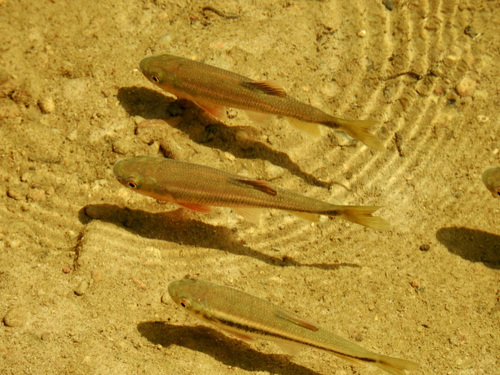
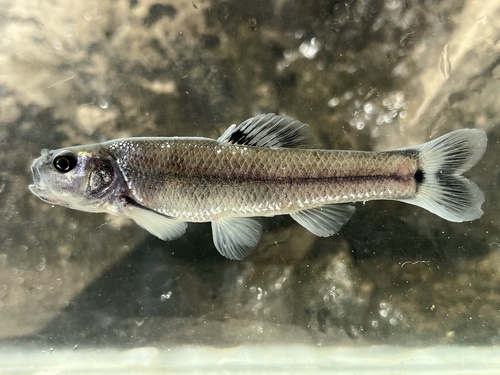
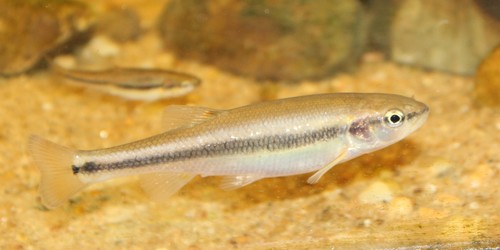
The creek chub (Semotilus atromaculatus) is a small chub with a typically greenish-brown back, cream-colored sides broken by horizontal black stripes running from the nose to the tail, and a white belly. It has a round, cylindrical body with a compressed posterior. On average, males measure 125 mm (4.9 in) long, while females average 105 mm (4.1 in) long. Because it feeds on items directly in front of it, its mouth is terminal, large, and positioned below the anterior of the eye. Some individuals show slightly different coloration, with black backs and a brown or yellowish middle line. The overall average length of adult creek chubs falls between 127–178 mm (5.0–7.0 in), and the longest documented individual measured 197 mm (7.8 in) long. This species can be distinguished from other common minnow species by a black "moustache" on its upper lip, plus a black dot on its dorsal fin. Juvenile males additionally develop a rosy band on their sides and glossy, dark spots on the dorsal fin. This fish is able to tolerate many different environments and can adapt quickly to extreme conditions, feeding on a wide variety of foods. Its current range covers the eastern two-thirds of the United States and southeastern Canada. It has been documented throughout the Great Lakes surrounding Wisconsin and extending into Minnesota, where it was once described as abundant. However, reported sightings of this species have dropped across Wisconsin and the Great Lakes, indicating a population decline in these regions. Even with this regional decline, the species continues to be regularly found throughout small and medium rivers and streams. It thrives in small stream habitats, and moves toward weedy areas to feel secure and avoid predators. It can live in environments with many different substrates, and has been recorded over bottoms made of gravel, sand, silt, rubble, mud, boulders, clay, bedrock, and detritus. This species prefers stream and river environments over lakes: it is caught far more often in streams than in lakes. Out of over 440 individuals caught, only 9 came from lakes, and only 6 individuals were caught when sampling was limited exclusively to lakes. For reproduction, males increase their reproductive success by migrating to a spawning area. After migrating, the male begins building a spawning site to attract females from the surrounding area. Spawning sites are most often small pits lined with small pebbles, which protect the laid eggs. When a female enters the site, the male wraps around her pectoral fin and body, fertilization takes place, and the female leaves. Each fertilization cycle releases around 25 to 30 eggs. Reproductive activity often takes place at communal nesting sites, where a male controls the territory and protects it from intruders. During the breeding season, males grow small, keratin-based bumps called nuptial tubercles on their head, which are used in ritualized combat. This combat rarely becomes dangerous or destructive, and functions to drive off intruding males from communal nesting sites.