About Semnopithecus entellus (Dufresne, 1797)
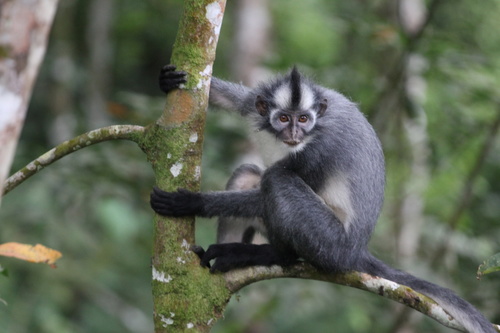
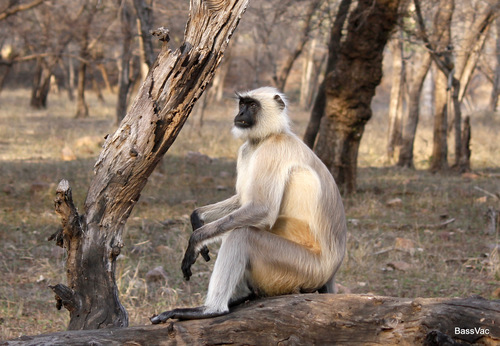
Adults of Semnopithecus entellus, the northern plains gray langur, have mostly light-colored fur, with darker fur on the back and limbs; their face, ears, hands, and feet are all black. Infants have brown fur. Head-and-body length (excluding the tail) ranges from 45.1 cm (17.8 in) to 78.4 cm (30.9 in), while tail length falls between 80.3 cm (31.6 in) and 111.8 cm (44.0 in). Adult males weigh 16.9 kg (37 lb) to 19.5 kg (43 lb), and adult females weigh 9.5 kg (21 lb) to 16.1 kg (35 lb).
This species’ native range covers a large portion of India south of the Himalayas, extending south to the Tapti River and the Krishna River. It has also been recorded in Tharparkar, Pakistan. It is thought to have been introduced to western Bangladesh by Hindu pilgrims on the bank of the Jalangi River. Its natural habitats are subtropical or tropical dry forests and subtropical or tropical dry shrubland.
The northern plains gray langur is diurnal, and it is both terrestrial and arboreal. Females groom members of both sexes, but males do not groom other individuals. This species can form several different group types: multi-male multi-female groups, one-male multi-female groups, all-male groups, or solitary males. One-male groups are the most common, and total group size can exceed 100 individuals. When males reach maturity, they typically leave their natal group, while females usually stay in their natal group. Young adult females are typically dominant over older females. When a new male takes over a group, he may commit infanticide of young fathered by previous males; this behavior is less common when the takeover happens gradually over several months.
Northern plains gray langurs eat primarily fruits and leaves. They can survive on mature leaves, which allows them to persist through the dry season. Their diet also includes seeds, flowers, buds, bark, and insects such as caterpillars. Humans often feed them fruits and vegetables, and some groups get a substantial portion of their diet from food provided at temples or from raiding crops. Groups with access to abundant year-round food (such as those provisioned by temples or able to raid crops annually) breed throughout the year. Groups living in natural forests typically give birth between December and May. The gestation period is around 200 days. Females who are not the mother alloparent infants for the first month of life. Weaning occurs at around 1 year of age, and males reach maturity at around 6 to 7 years old.
Northern plains gray langurs often associate with chital deer. Both species respond to each other’s alarm calls: chitals appear to benefit from the vigilance of male langurs watching for predators from trees, while langurs benefit from chitals’ better senses of smell and hearing. This species has also been observed grooming with rhesus macaques.