About Selasphorus platycercus (Swainson, 1827)
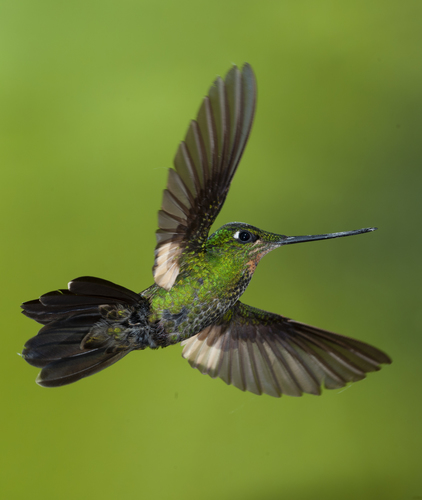
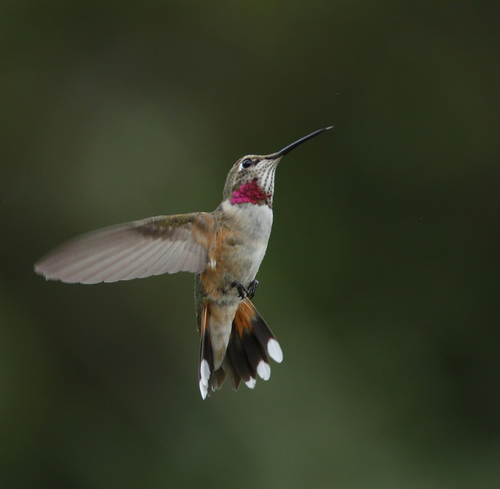
The broad-tailed hummingbird, scientifically named Selasphorus platycercus (Swainson, 1827), is a medium-sized hummingbird. It measures 4 inches (10 cm) in length, has an overall wingspan of 5.25 inches (13.3 cm), and weighs around 3.6 grams (0.13 oz), with females tending to be slightly larger than males. Both adult sexes have an iridescent green back, a white eye ring, and a rounded black tail that projects beyond their wing tips — this distinctive tail is the source of the species' common name. This species exhibits sexual dimorphism, meaning males and females have different physical characteristics. Males have a characteristic bright rose-red gorget, and the white eye ring is a useful identification feature for the species. Females can be told apart from males by their paler overall coloration, cinnamon-colored flanks, and spotted cheeks, which males do not have. This hummingbird occurs in the understory or beneath tree canopies of pine and oak woodland. It forages in open areas with flowers, or in grasslands situated among trees and shrubs. Its breeding habitat is primarily located in subalpine meadows, foothills, montane valleys, and stands of aspen or spruce. During the summer, the broad-tailed hummingbird is found from Guatemala to Mexico, as well as in the western United States and Western Canada. Its wintering range is centered in southern Mexico and Guatemala. The breeding range of the species extends from central Montana in the north to Guatemala in the south. While broad-tailed hummingbirds have been observed in British Columbia, these individuals are considered accidental migrants, and there is no evidence that the species breeds at these northern latitudes.