About Selaginella tortipila A.Braun
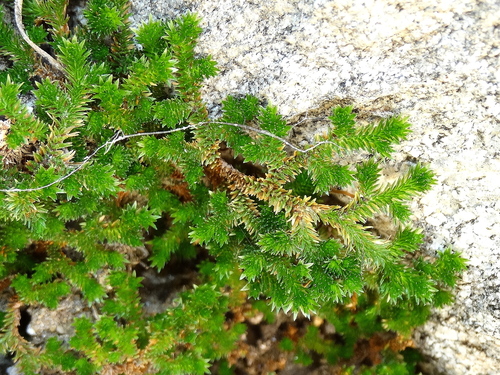
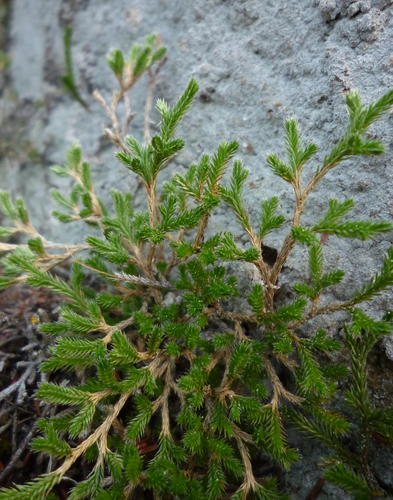
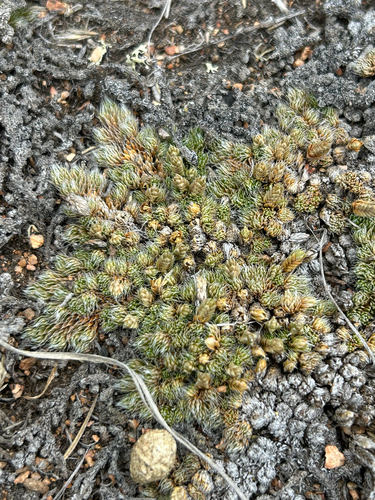
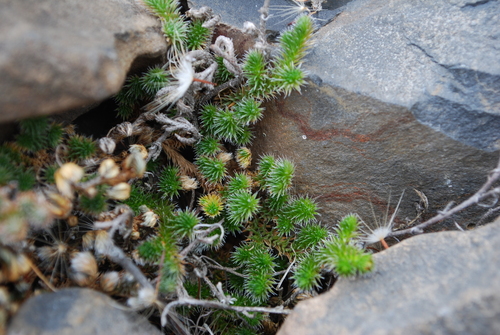
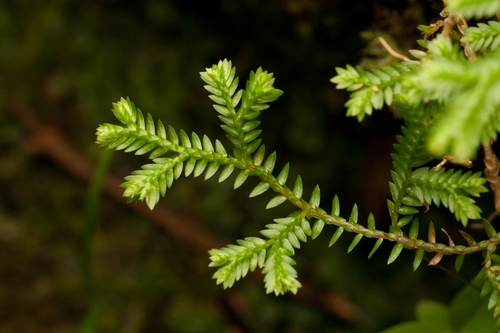
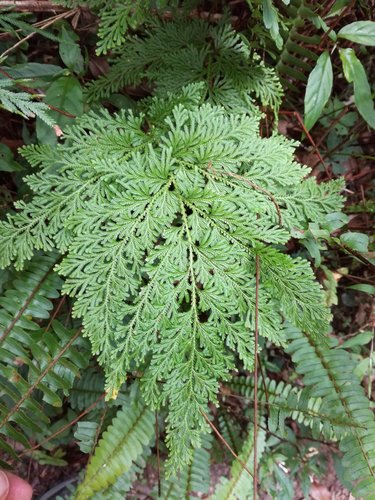
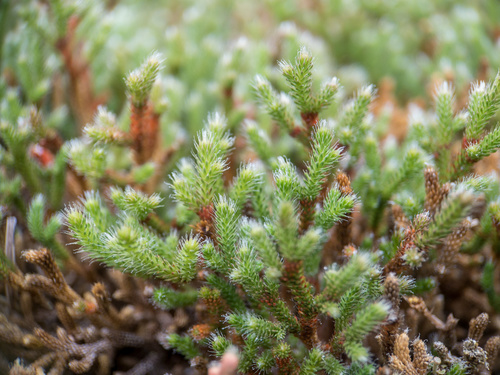
Selaginella tortipila A.Braun is most often found in a vegetative growing state, where it forms characteristic cushion-like mats when it grows. It can develop very different morphology depending on growing conditions or habitat. In drought-prone, exposed locations, its stems grow upright, bearing a small number of leaves. In shaded areas with sufficient moisture and humidity, its stems grow prostrate, with leaves that spread widely. This morphological plasticity is the root of ongoing debate over whether S. tortipila and its relative S. sherwoodii are actually distinct species. S. tortipila only produces reproductive structures under favorable conditions. These reproductive structures are cone-shaped organs called strobili. The reproductive phase of this species is critical for both its survival and its ability to colonize new habitats. It reproduces via spores, and spores are the most vital stage for the species; changes to spore structure can alter the species' morphological and taxonomic classification. Scientists have documented two spore sizes in S. tortipila. Megaspores, with diameters ranging from 0.25 mm to 0.41 mm, occur in populations that range in color from straw-yellow to lemon chrome, and have rugose surfaces. Pale yellow populations of S. tortipila produce microspores, with diameters ranging from 41 μm to 64 μm. S. tortipila and S. sherwoodii share similar spore characteristics, which further contributes to the question of whether they are separate species. S. tortipila occurs primarily on exposed granite and granite-gneiss rock. It colonizes very high elevations, ranging from 1,500 ft to 4,500 ft, where temperatures are highly variable and both nutrients and water are scarce. Confirmed populations of S. tortipila are found in North Carolina, South Carolina, and Georgia. It has been reported to occur in Tennessee, but this report remains unconfirmed. In its confirmed ranges, S. tortipila grows on rocks, forming grayish-green masses on sloping granite rock surfaces. It depends on moss mats to supply nutrients to its spores for germination. According to Steven S. Larson and Wade T. Batson, S. tortipila completely dominates plant communities on the rocky surfaces where it occurs, particularly in abundant populations in Pickens and Greenville counties, South Carolina. High documented statistical values for frequency of occurrence and plant density provide strong evidence of this species' regional dominance. Its colonization strategy is to occupy large areas of rock surface, then expand outward in all directions once it is well established on granite. S. tortipila does not grow on bare, uncolonized rock surfaces, because these sites lack sufficient minimum nutrients to support it. To access required resources, S. tortipila colonizes areas already occupied by pioneer successional mosses (such as Rhacomitrium and Andreaea) and lichens from the Cladonia subgenus. This growth pattern led Oosting and Lewis to characterize S. tortipila as a successional invader. Despite its high fitness for these extreme habitats, S. tortipila does not hold its dominant position for long. As larger lichen species such as Cladonia rugiferina arrive in the habitat, they outcompete S. tortipila and share the habitat until S. tortipila is completely displaced. Like many rare species, Selaginella tortipila faces numerous habitat limitations. Its survival and viability in ecosystems such as rock crevices is heavily compromised, and it is easily outcompeted by other taxa. This outcome is attributed to multiple factors, including its limited impact on co-occurring species and its minimal ecological significance within its habitat. On the other hand, S. tortipila is highly adapted to survive extreme conditions including extended drought, low nutrient availability, and large temperature fluctuations. These traits allow it to outcompete most other vascular plants in these harsh environments.