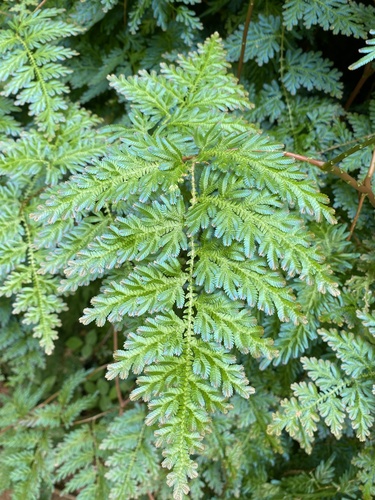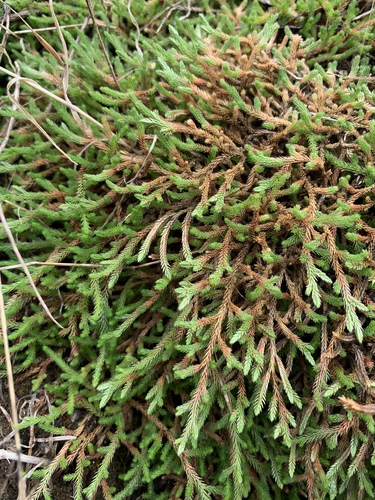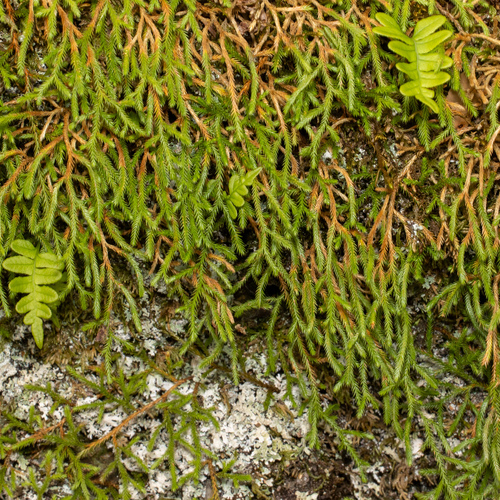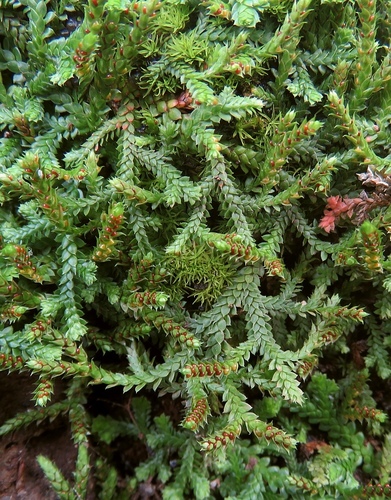
About Selaginella moellendorffii Hieron.
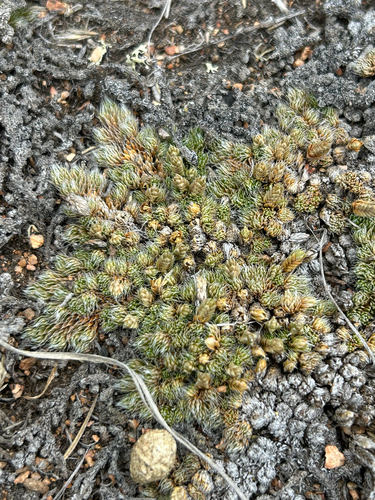
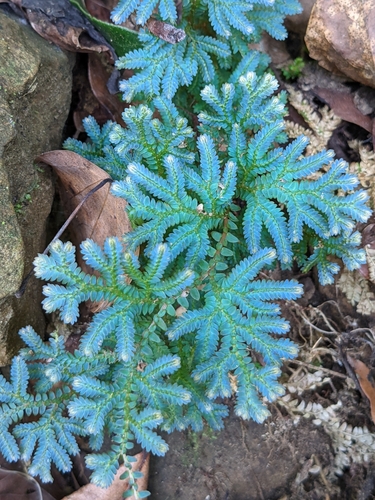
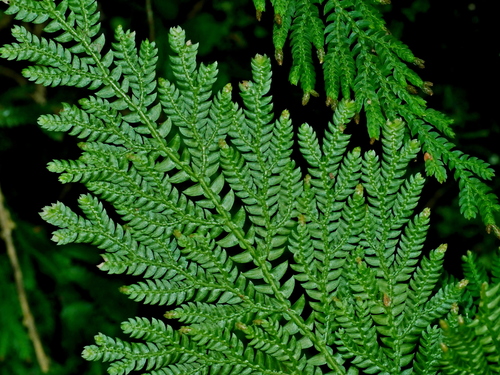
Selaginella moellendorffii Hieron. has unique morphological traits that are characteristic of lycophytes. This species has microphylls, which are small leaves that each have one single unbranched vein, and it grows with dichotomous branching patterns. Its vascular system is made up of protosteles, and its roots grow from specialized structures called rhizophores. All these features show that it belongs to an ancient lineage of vascular plants. Selaginella moellendorffii is native to subtropical Asia, where it grows on moist, shaded forest floors. It is commonly found in low-elevation broadleaf forests, including broadleaf forests in Taiwan. This species has moderate desiccation tolerance, which lets it survive in environments with changing conditions. S. moellendorffii is heterosporous, meaning it produces two distinct types of spores: megaspores and microspores. These spores go on to develop separate female and male gametophytes, a trait that sets this species apart from homosporous plant species. Heterospory is considered an important evolutionary advancement that contributed to the diversification of reproductive strategies in vascular plants.