About Selaginella lepidophylla (Hook. & Grev.) Spring
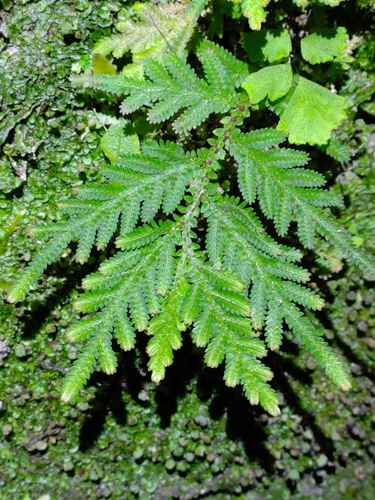
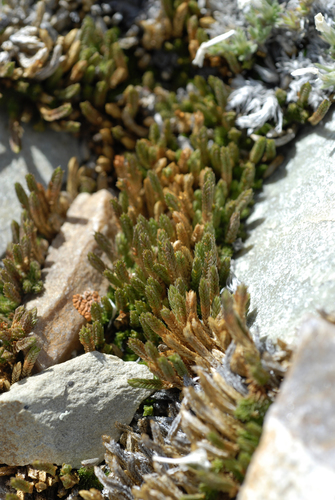
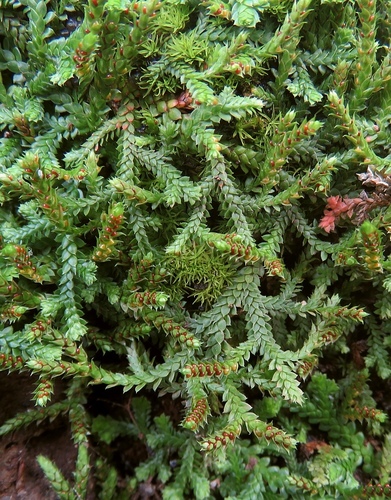
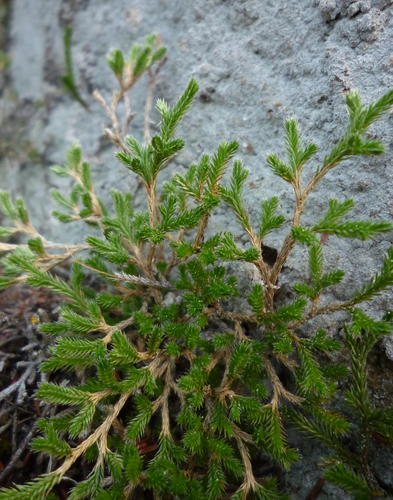
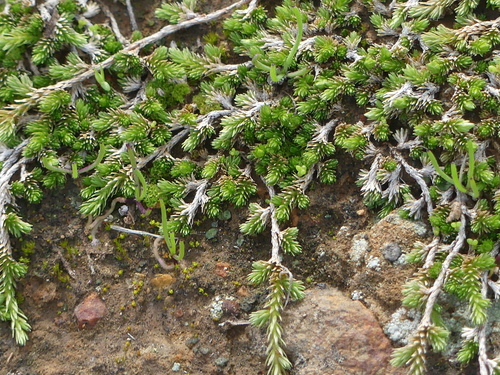
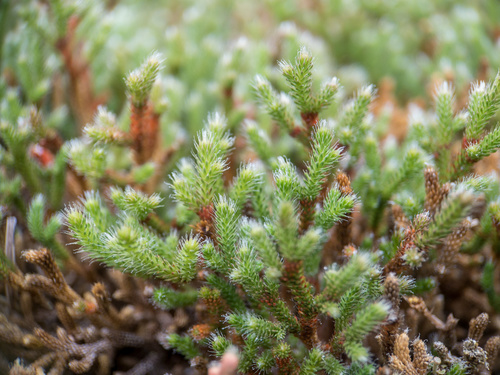
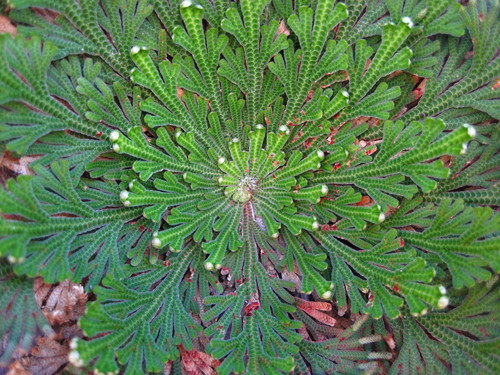
Selaginella lepidophylla is a small, fern-like species of spikemoss with delicate green stems and leaves. It forms a low, spreading mat and reproduces via spores. It naturally grows in dry, sandy soils in full sun. Its most notable trait is its adaptation to prolonged drought in its native habitat: it uses a physiological strategy of drying out and curling inward to form a tight ball when water is unavailable. It can survive for up to several years, losing up to 95% of its moisture content without permanent damage. When surrounding air and ground humidity rises again, even long after it has wilted, the plant "resuscitates". When rehydrated, it resumes its life cycle, fully restoring its ability to carry out photosynthesis and grow. When desiccated, its rooted leaves develop a leathery texture at the base, and take on a dark brown, light brown, or reddish brown color. The dry ball unfurls within a few hours of coming into contact with water, and its parched leaves gradually regain their green color. If the roots are not badly damaged, the plant can even survive in pozzolanic ash. No matter how dried out or damaged it is, its unique leaf biological structure lets it absorb water and unfold itself, even many years after it appears dead. When water is unavailable, the plant enters a dormant state. It avoids tissue and cell damage during drying by producing trehalose, a crystalline sugar that functions as a compatible solute. As water evaporates, dissolved salts become concentrated in the plant's tissues. Trehalose takes the place of the lost water, preventing concentrated salts from causing damage and protecting the plant from death caused by excess salinity. Selaginella lepidophylla also produces betaines, substances that serve the same protective function as trehalose. When water returns to the plant's tissues, the trehalose sugar crystals dissolve, and the plant's metabolism, which was suspended during dormancy, restarts. Leaves that appeared dead turn green and open again. Selaginella lepidophylla is sold as a novelty item, distributed as bare root stock in its dried state that can be revived with only a small amount of water. Spanish missionaries noted the plant's ability to survive extreme desiccation when they arrived in the New World, including the area that would later become the United States. The missionaries used Selaginella lepidophylla to explain the concept of rebirth to potential Indigenous converts, and to convince them to give up their native religious beliefs and traditions. Because of its unique resuscitation ability, the plant was regarded as a lucky charm, and passed down through families from generation to generation. It has also been used as a herbal medicine. An infusion is made by steeping a tablespoon of dried plant material in hot water, and the resulting tea is used to treat colds and sore throats. In Mexico, Selaginella lepidophylla is sold for use as a diuretic. Women drink the water the plant has been soaked in to ease childbirth. How quickly the plant opens in water is interpreted as a sign of whether childbirth will be easy or difficult. The plant is also used in voodoo and Cuban Santería rites to attract love and fortune. It is said to absorb negative energy when worn on the body. Selaginella lepidophylla can be cultivated from spores or cuttings. It requires warm temperatures, high humidity, and well-drained soil to grow.