About Selaginella kraussiana (Kunze) A.Braun
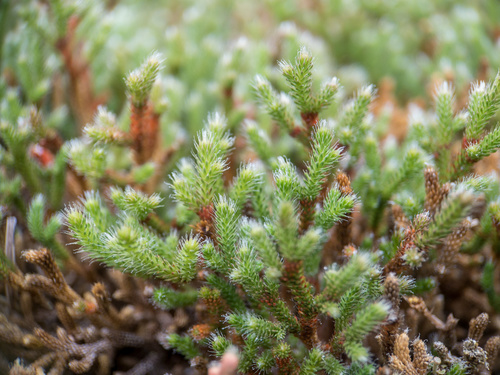
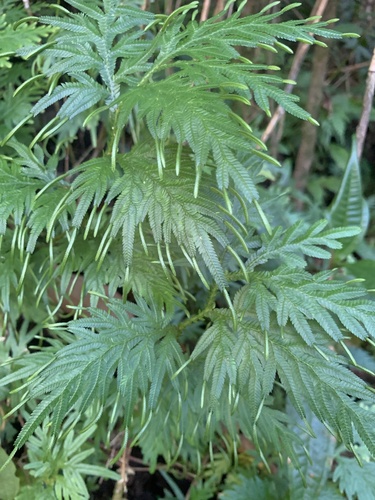
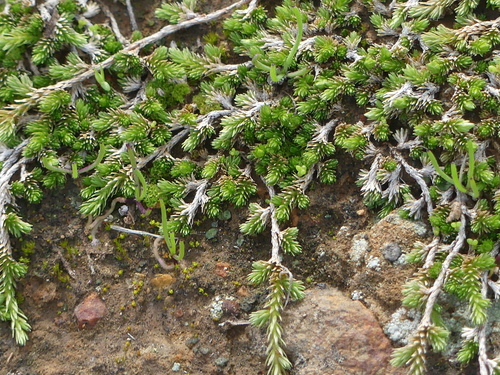
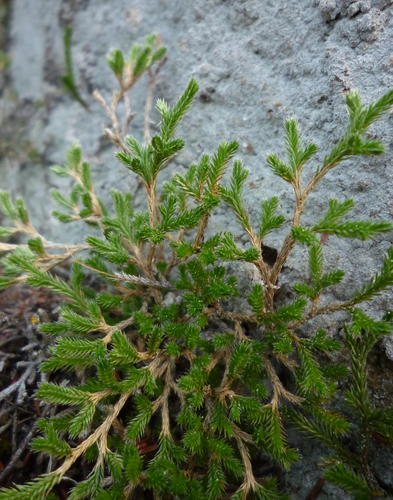
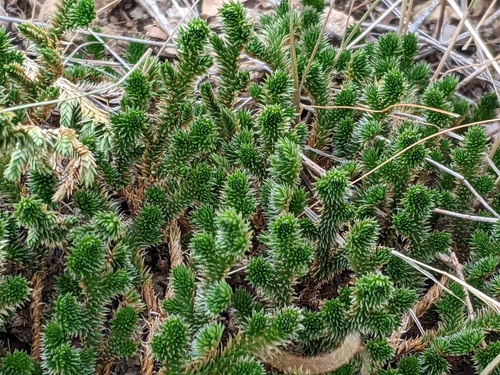
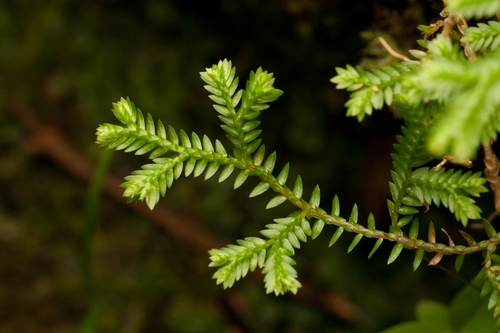
Selaginella kraussiana (Kunze) A.Braun is a low-growing, mat-forming evergreen perennial with primitive fern-like leaves. It grows to only 5 cm (2.0 in) in height, and spreads through stems that root as they extend. Its native range includes Macaronesia, and parts of southern and eastern Africa. Whether it was native to the Azores was a point of controversy until 2005, when spores of this species were found in 6,000-year-old fossils on Pico. After being introduced to Britain in 1878, it has spread slowly, and was first recorded growing in the wild in 1917 in west Cornwall (UK) and County Leitrim (Ireland), where it often grows as a greenhouse weed. It is listed on the New Zealand National Pest Plant Accord because it is an invasive species, and it is common across many parts of New Zealand and Australia, where it forms dense mats in shaded areas. This species is cultivated for ornamental use. It needs a minimum temperature of 5 °C (41 °F), so in temperate regions it is grown under glass as a houseplant. Both the species itself and the cultivar 'Brownii have received the Royal Horticultural Society's Award of Garden Merit. Other known cultivars are 'Aurea' and 'Gold Tips'. These plants grow best in a sheltered location with full or partial shade. They need potting medium that holds humidity but does not stay overly wet, and drains quickly. An acidic to neutral pH between 6.0 and 7.0 is preferable. In winter, a cultivar marketed as Selaginella kraussiana 'Frosty Fern' is sold as a houseplant for its white-tipped foliage. However, this marketed plant is more often the taller-growing Selaginella martensii, rather than the shorter, creeping S. kraussiana.