About Segestria florentina (Rossi, 1790)
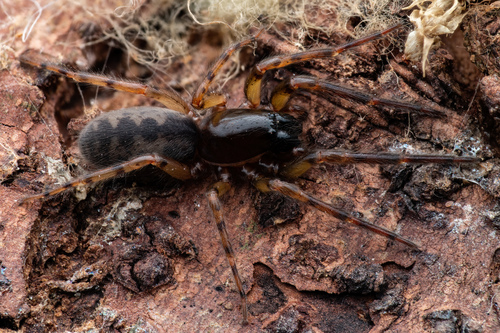
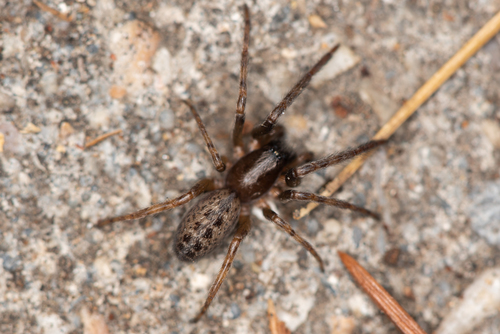
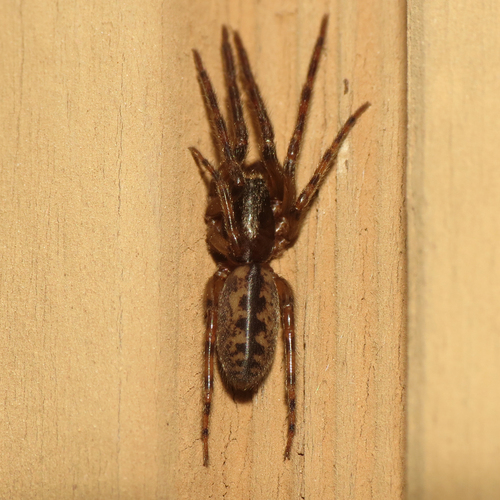
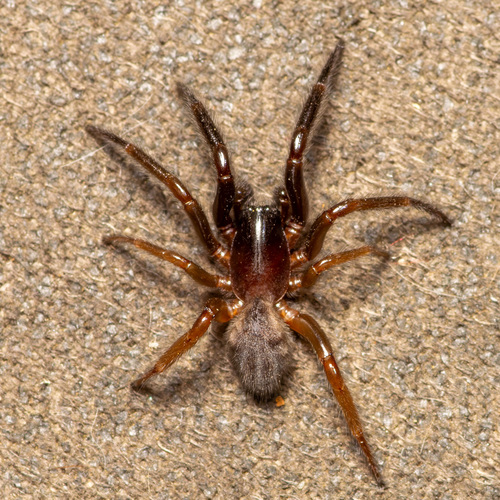
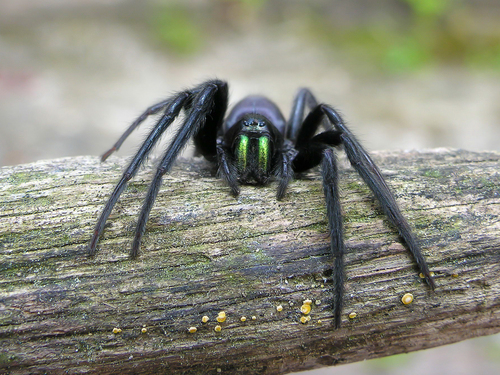
Females of Segestria florentina can reach a body length of 22 mm, while males grow up to 15 mm. This species is much darker than other species in the same genus. Subadult spiders have a greyish opisthosoma with a marking similar to Segestria senoculata, while adult spiders are uniformly black, and sometimes have a green iridescent shine. This shine is especially noticeable on the chelicerae, which reflect a striking green. The two sexes are similar in appearance. Adults of this species are active from June to November. Originally, this species was native to the Mediterranean region, ranging as far east as Georgia. It can now be found in many towns across southern Britain, where it was probably introduced through seaports at least as early as 1845. It has been recorded in several locations including Cornwall, South Molton (North Devon), Shaftesbury, Torquay, Bradninch (Mid Devon), Jersey, Plymouth, Bristol, North Somerset, Swindon, Gloucester, Ashford, Folkestone, Deal, Dover, Hayes, Southampton, Salisbury, Whitstable, Canterbury, South East London, Vinters Park, Maidstone, Portsmouth, Exeter, Sittingbourne, Isle of Sheppey, Essex, Faversham, Tonbridge, Hitchin, Sheffield, Bridgwater and Newport. In these areas, it prefers to live on south-facing walls. Specimens were recorded in Exeter Cathedral as early back as 1890. In 2023, an established population was reported in Limerick, western Ireland. The species has also been found in Argentina, Australia and several Atlantic islands, where it was also probably introduced. A single specimen has been observed in Leiden, The Netherlands. Many specimens live in Westminster Abbey in an isolated population, which has been proposed as a new subspecies. This proposal is due to the population’s brighter green fangs and significantly smaller size compared to other European populations. Egg-laying females prefer to inhabit brick buildings. During winter, females lay eggs within the bricks of south-facing structures. If a female is found between September and October, it is very likely that she has already laid eggs in preparation for the following spring. Buildings can become infested if the species is not found and treated early.