About Sedum sarmentosum Bunge
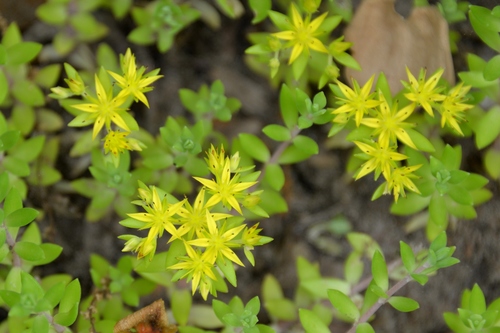
Sedum sarmentosum Bunge bears succulent evergreen leaves on arching, low-lying stems. In summer, five-petaled yellow flowers grow from its inflorescences. This species is cultivated as a perennial groundcover in temperate climates. Like most succulents, it tolerates drought and full sun. It was commonly planted on graves, and can survive there for decades. In China, it is often grown as a trailing plant, which gives it the Chinese name chuípéncǎo (垂盆草), meaning "herb that trails down the flowerpot". In Korea, this plant is called dolnamul (돌나물) and is eaten fresh as a namul vegetable. The spicy, sweet, and tangy sauce typically served with dolnamul is made by mixing gochujang, vinegar (or lemon juice), sugar (or plum syrup), minced garlic, sesame oil, and toasted sesame seeds. Dolnamul is also a common ingredient in bibimbap, as well as Korean-style western dishes such as dolnamul and roasted fruit salad with yuja dressing.