About Sedum morganianum Walther
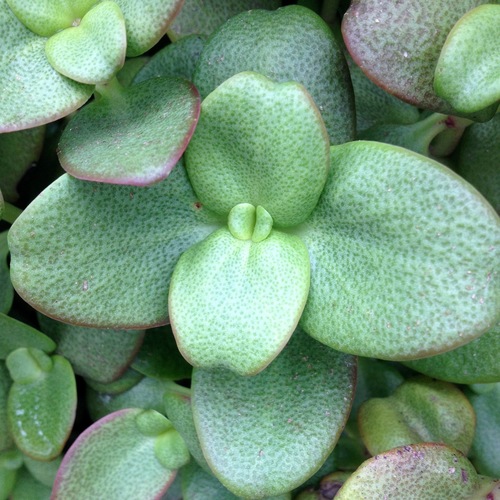
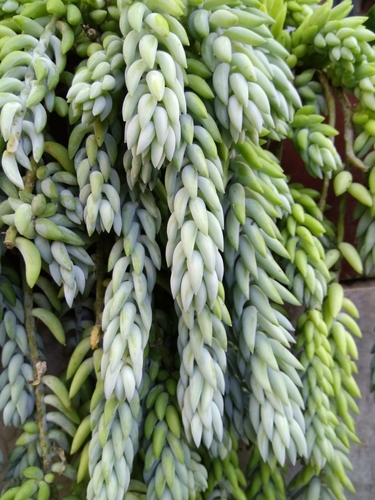
Sedum morganianum, commonly known as donkey tail or burro's tail, is a flowering succulent plant species in the Crassulaceae family, native to southern Mexico. It is a perennial succulent that produces trailing stems up to 60 cm (24 in) long, with thick, fleshy blue-green leaves. In summer, it grows pink to red flowers at the ends of its stems. Wild populations of S. morganianum have only been found in two ravines in Tenampa county, central Veracruz, eastern Mexico, where it grows on vertical igneous rock cliffs in the Tropical Deciduous Forest zone. Because of its very limited geographic range, it is classified as a micro-endemic species. This plant requires a minimum temperature between 5–7 °C (41–45 °F). In temperate regions, it is most often grown as a houseplant in suspended containers, so its trailing stems can hang vertically. If its trailing stems are left in long-term direct contact with the ground, soil, or another growing substrate (such as that in an adjacent container), nodes on the stems will be triggered to root and attach, a common trait found in many genera within the Crassulaceae family. S. morganianum has received the Royal Horticultural Society's Award of Garden Merit. In climates where frost does not occur, this plant grows well outdoors when planted in very good light, but protected from the brightest direct sun during the day. When grown indoors, it grows best in a window that receives full sunlight to produce the strongest growth and most vibrant leaf color. It needs regular moderate watering year-round, except during winter when it should be watered infrequently. Too much water or poor drainage can cause the plant to rot quickly. Outdoors, the plant should also be sheltered from extreme heat and excess rainfall. Its delicate leaves detach very easily – even a light touch can dislodge them, and this happens especially often during rainstorms. Even at high latitudes, any leaves that are removed or fall off root easily, often rooting right where they fall. These fallen leaves will eventually grow into full new plants, particularly when placed in a southern exposure in the Northern Hemisphere, or a northern exposure in the Southern Hemisphere. This species is most commonly propagated from stem cuttings or leaf cuttings. Leaf attachment to the stem is naturally quite loose, so leaves almost immediately break off when the stem is disturbed. Dislodged leaves remain alive for many days, and will produce new roots within just a few days, especially when local humidity is higher. A single leaf can grow into a new plant that reaches inches in size. A clearly visible waxy layer called farina covers the plant's leaves and stems, which reflects its preference for bright shade and protection from hot, intense sun.