About Sebastes paucispinis Ayres, 1854
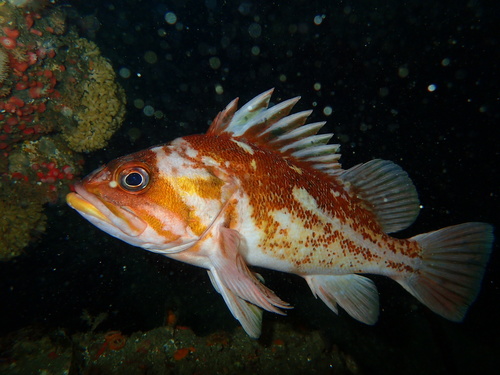
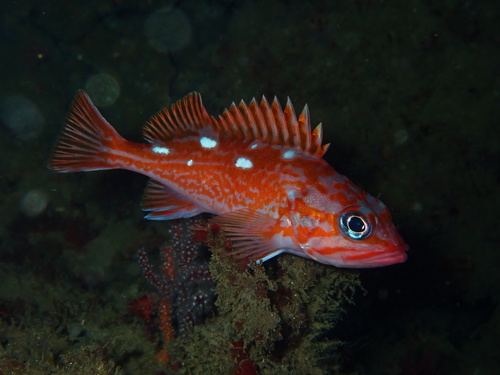
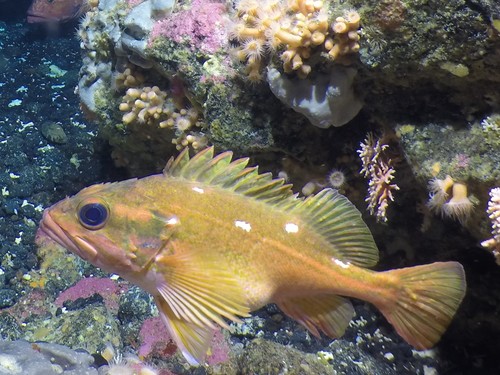
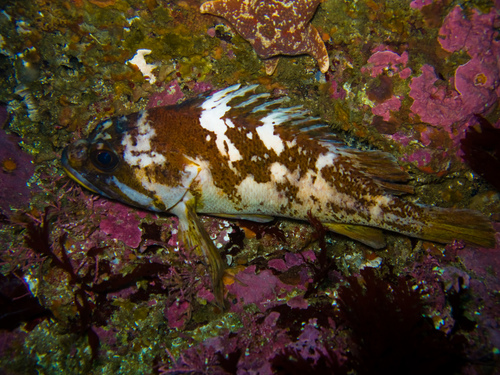
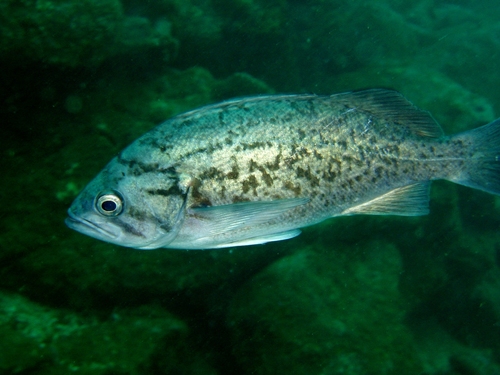
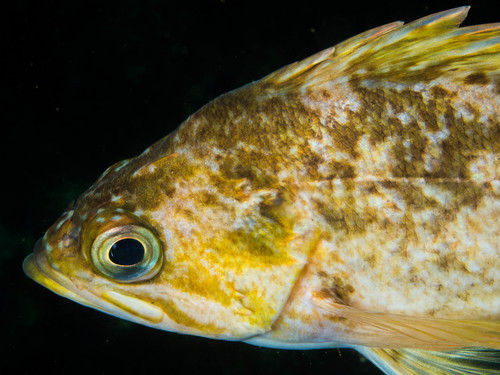
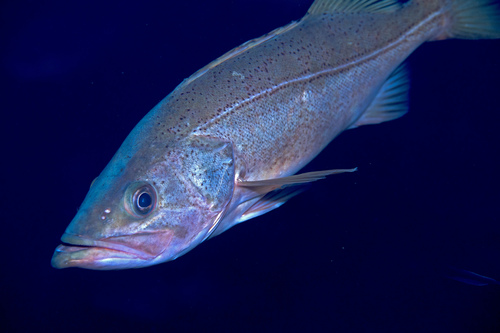
The bocaccio rockfish, scientifically named Sebastes paucispinis Ayres, 1854, is a species of marine ray-finned fish. It belongs to the subfamily Sebastinae (the rockfishes), which is part of the family Scorpaenidae. This species is found in the northeast Pacific Ocean, and it has several other common names: rock salmon, salmon grouper, rockcod, Pacific red snapper, and simply bocaccio. Bocaccio rockfish range from Stepovak Bay, Alaska to central Baja California, and are most abundant from Oregon to northern Baja California. They have been recorded at depths from the surface down to 1,568 feet (478 m), and most individuals live between 150 and 1,000 feet (46–305 m). Juveniles remain in shallower water to get protection from floating kelp mats and driftwood. Shallow water kelp forests and oil platforms also help juvenile bocaccio hide from predators. As bocaccio age, they move into deeper, colder water. The Monterey submarine canyon, a suitable habitat or migration route for many marine organisms, supports bocaccio that feed on a variety of marine species including shellfish (pelagic shrimp and crabs), anchovies, sardines, other small rockfishes, and squid. Adult bocaccio prefer to eat fish, while juveniles are more opportunistic and feed on zooplankton such as copepods. Bocaccio are one of the larger rockfish species: they can grow up to 3 feet (0.91 m) in length, reach 27.9 lb (12.7 kg) in weight, and live for at least 50 years. A 12-inch (30 cm) long bocaccio is around 3 to 4 years old, and a 2-foot (0.61 m) long bocaccio is 7 to 8 years old. Females grow faster and live longer than males. Maturity rates differ between northern and southern populations: southern California bocaccio reach maturity at 14 inches and reproduce at around 18 inches (460 mm), while northern males mature at 22 inches (56 cm) and northern females mature at 24 inches (61 cm). Bocaccio are viviparous rockfish. In Southern California, females spawn their larvae in 2 or more batches, and spawning occurs almost year-round. In Central and Northern California, spawning happens from January to May, and in areas further north, spawning is limited to January to March. A single female can produce more than 2 million eggs per spawning season. Compared to most other rockfish (excluding a small number of species also in the subgenus Sebastodes), bocaccio have a more elongated body, a longer lower jaw, and an elongated snout. Their dorsal coloration is olive-brown, which fades to pink or red on the ventral (belly) side, and they may also have a copper-orange or deep red overall pattern. The ribcage can often be seen through the skin from the outside, and black blotches may be present along the body.