About Sebastes mentella Travin, 1951
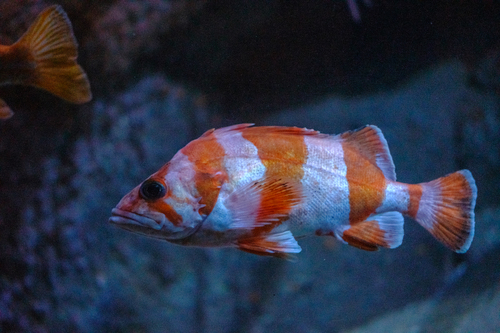
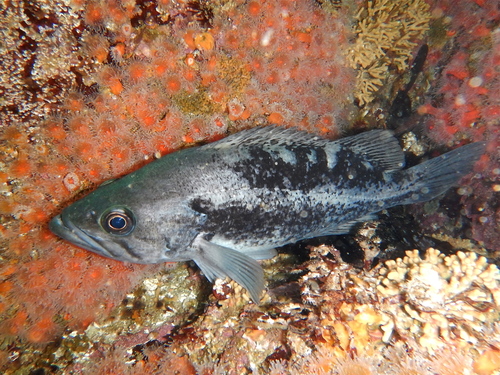
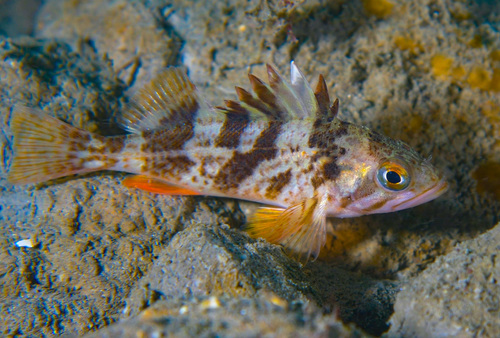
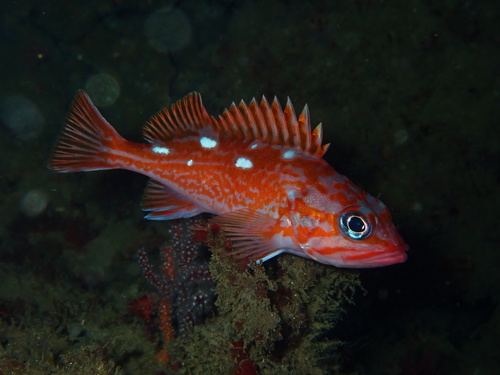
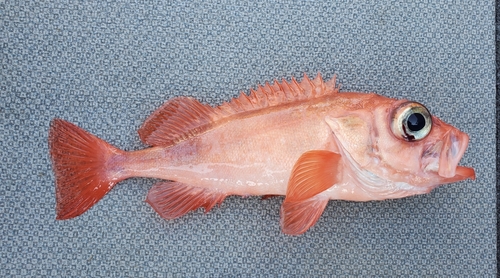
Sebastes mentella Travin, 1951 has an elongated, compressed body, with a deep head and a wide mouth. There are two spines on the preorbital bone, with 1 or 2 spiny points above the maxilla. The suborbital ridge has no spines and is typically not well marked. Spines are present on the nasal, pre-ocular, supraocular, postocular and parietal bones. A well-developed, sharply projecting knob sits on the symphysis of the lower jaw. A supplemental preopercular spine is absent from the gill cover, but all 5 preopercular spines are roughly equal in length. There is a supracleithral spine and 2 spines on the operculum; the lower of these two opercular spines is directed downwards and forwards. The dorsal fin contains 14–16 spines and 13–17 soft rays, most commonly 14 or 15. The anal fin contains 3 spines and 7–11 soft rays, most commonly 9. This species has been recorded to reach a maximum total length of 77.5 cm (30.5 in).
Sebastes mentella occurs in the northern Atlantic Ocean. Its range extends from Baffin Island south to Nova Scotia, around Greenland and Iceland, along the Iceland-Faroes ridge, and north off Norway as far as Svalbard, Jan Mayen and the Barents Sea. It is a bathypelagic oceanic species, found at depths between 300 and 1,441 m (984 and 4,728 ft).