About Sebastes constellatus (Jordan & Gilbert, 1880)
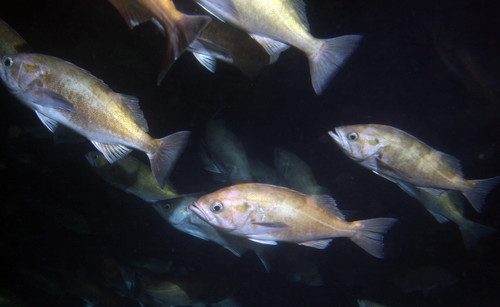
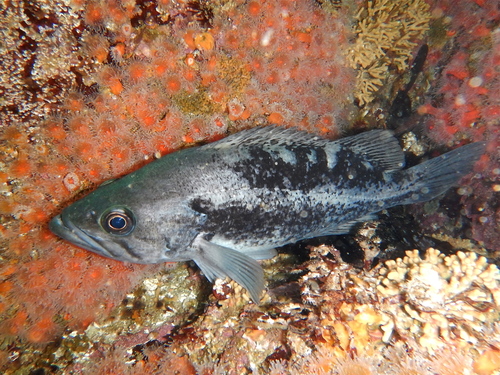
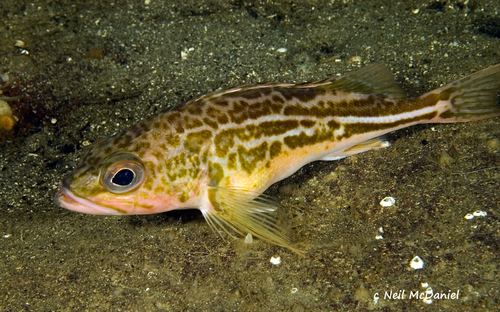
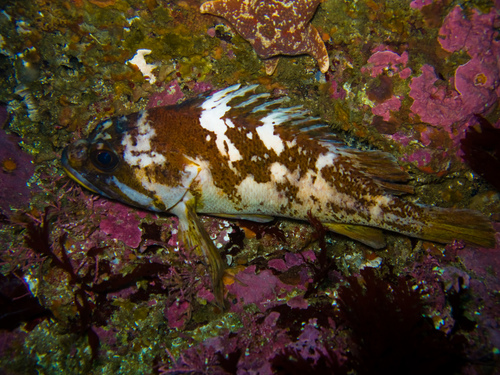
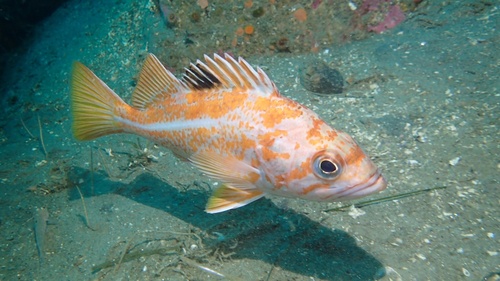
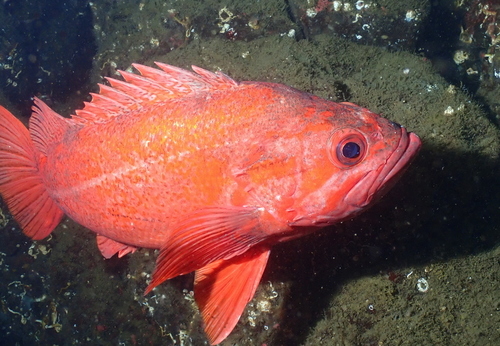
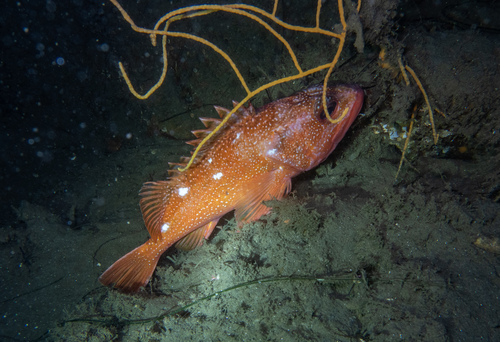
The starry rockfish, Sebastes constellatus, has a robust, rhombus-shaped body whose depth is just under one third of its standard length. Its body is covered in scales. Its dorsal fin holds 13–14 spines and 12–14 soft rays, while its anal fin has 3 spines and 5–7 soft rays. This species grows to a maximum total length of 46 cm (18 in) and reaches a maximum published weight of 1.0 kg (2.2 lb). The body and fins of starry rockfish are orange-red, with darker coloring on the back. They have 5 or 6 large white blotches on their upper flanks, plus many small white spots across the upper body. Their head is more rounded than that of related species, and it also has white blotches. Adult starry rockfish are darker than subadult and juvenile individuals. This species occurs in the Eastern Pacific Ocean along the west coast of North America, ranging from Humboldt County, California in the United States to Todos Santos, Baja California Sur in Mexico. It is most abundant along the coast between Central California and Central Baja California. It lives at depths from 24 to 274 m (79 to 899 ft), and is most commonly found between 60 and 149 m (197 to 489 ft). Adult starry rockfish associate with deep reefs, and only occur over hard substrates, close to large boulders or inside crevices. Starry rockfish are viviparous; their larvae and juveniles are pelagic. Adult starry rockfish are sedentary and stay in the same area of seabed for their entire lives. They are predators that feed on fish, krill, octopus, and other marine invertebrates. Females can produce up to 225,000 eggs per year. This species can live up to 32 years. It is preyed on by other fishes, seabirds, and marine mammals.