About Scythropia crataegella (Linnaeus, 1767)
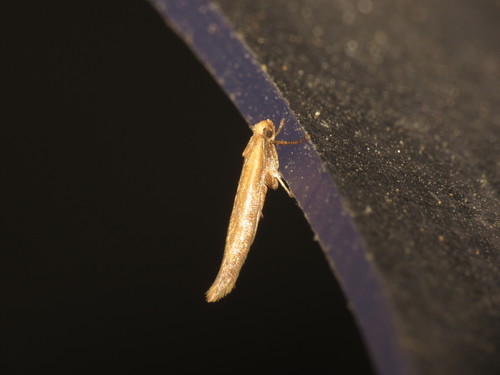
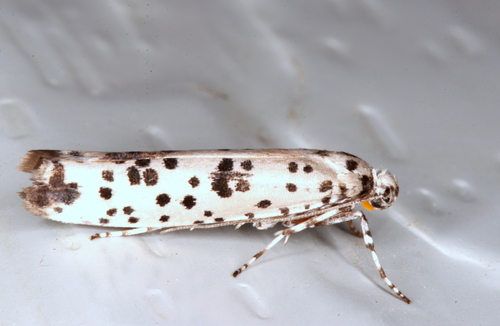
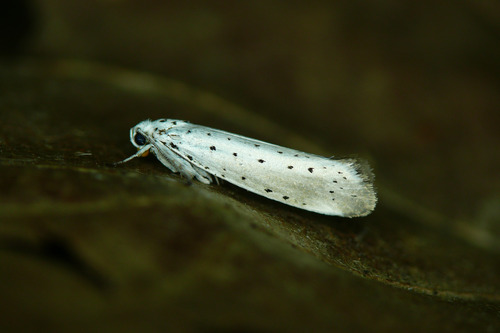
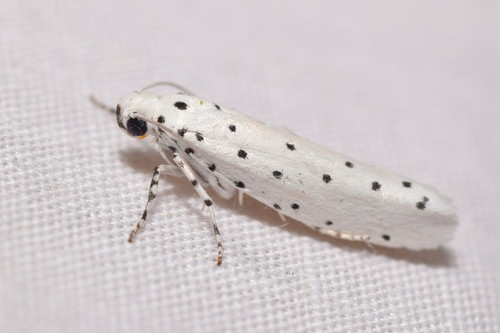
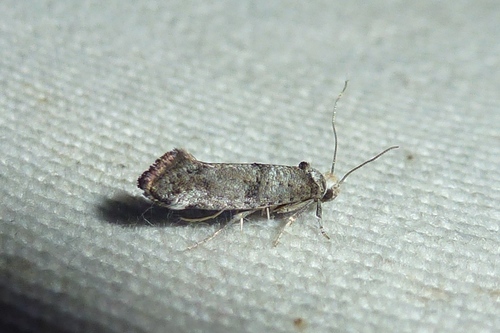
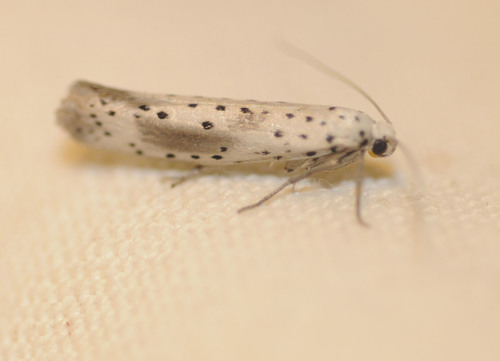
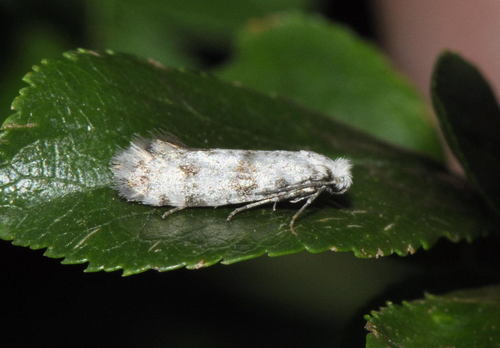
Scythropia crataegella is a small moth that is widespread across almost all of Europe. It is not found in Great Britain north of the Lake District, and has not yet been recorded in Iceland or Ireland (where it is most likely genuinely absent), nor in Portugal (where it may be absent). In Slovenia, it is thought to occur but has not yet been found, as its range covers all the countries surrounding Slovenia. It is quite common throughout its entire existing range. The adult moths are nocturnal and are attracted to light sources. In Great Britain, adults are only commonly seen during July; elsewhere, they can be found from late May to September, and produce two generations per year. The adult wingspan measures 11–15 mm. As is typical for members of the Yponomeutidae family, the forewings of this species display a distinct bold black-and-white pattern: two thick, irregular black bands divide the white forewings into three roughly equal sections: inner, middle, and outer. Numerous small black spots dot the white areas between these black bands. The hindwings are a plain dusky greyish-brown with no additional markings, and the body is whitish in color. The caterpillar larvae feed in large groups, protected by a shared silken web that they produce collectively; young larvae act as leaf miners. The primary food source for the larvae is leaves of Crataegus (hawthorn), which is how the species got its name. They have also been recorded feeding on other members of the Amygdaloideae subfamily, including blackthorn (Prunus spinosa), other Prunus species, Cotoneaster, Malus sylvestris, and Pyrus (pear).