About Scyllarus arctus (Linnaeus, 1758)
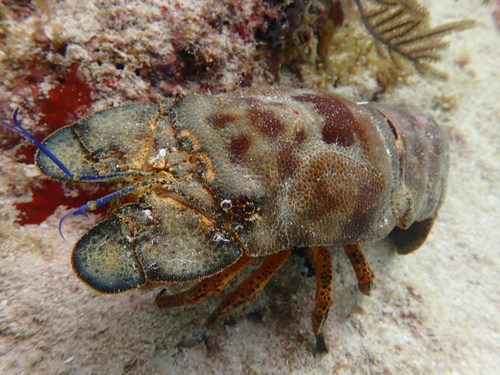
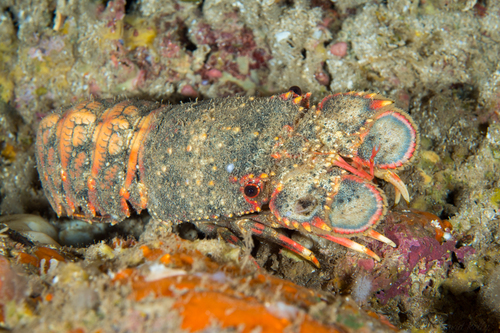
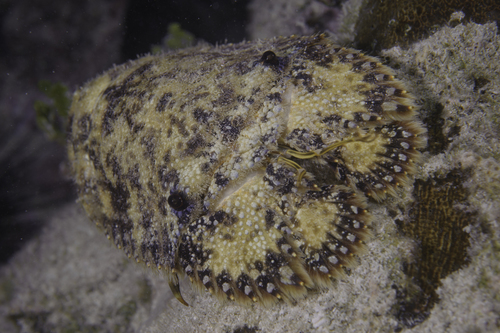
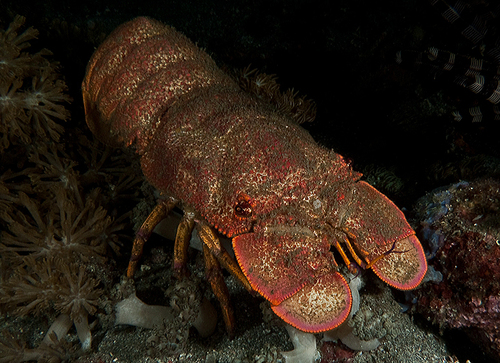
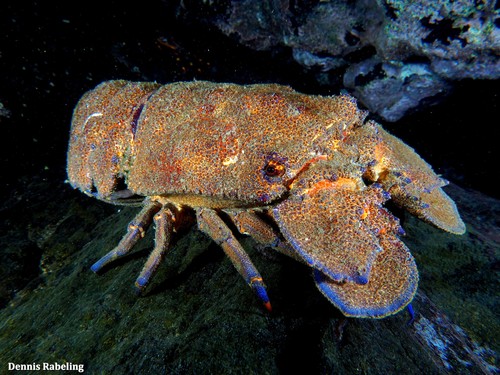
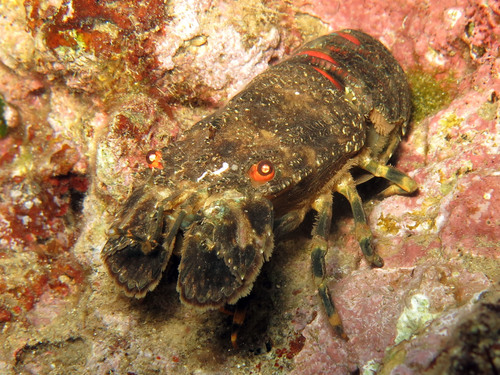
Scyllarus arctus (Linnaeus, 1758) can grow up to 16 centimetres (6.3 inches) in length, though 5–10 cm (2.0–3.9 in) is the more typical size range. Its body is reddish-brown, with an indistinct dark brown spot at the center of each abdominal somite. Each segment of its pereiopods bears a dark blue ring. It overlaps in range with its close relative Scyllarus pygmaeus, and can be distinguished from S. pygmaeus primarily by its larger size, as well as by the shape of a tubercle on the last thoracic sternite: this tubercle is flattened in S. arctus, but conical in S. pygmaeus. Among measured species in the Order Decapoda, S. arctus has one of the smallest genome sizes, less than a third of the genome size measured for the related genus Scyllarides. This species is distributed across the entire Mediterranean Sea, and in the eastern Atlantic Ocean from the Azores, Madeira, and Canary Islands north to the English Channel. It is rare north of the Bay of Biscay. While a small number of specimens have been recorded in British waters, S. arctus is even rarer in Britain than the giant squid Architeuthis dux. Before 1960, S. arctus was considered the only species of the genus Scyllarus that lived in the Mediterranean Sea. In 1960, researchers recognized that the less well-known Scyllarus pygmaeus also occurs across most of the Mediterranean. In terms of ecology, S. arctus is susceptible to white spot syndrome, and is hunted by a wide variety of demersal fish. It inhabits depths between 4 and 50 meters, where it lives on muddy or rocky substrates, and within Posidonia meadows. It is fished in small-scale fisheries, but its small size and low abundance make it an unappealing target for fishing.