About Scyllarides latus (Latreille, 1803)
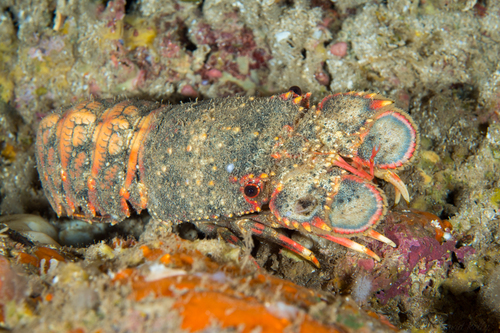
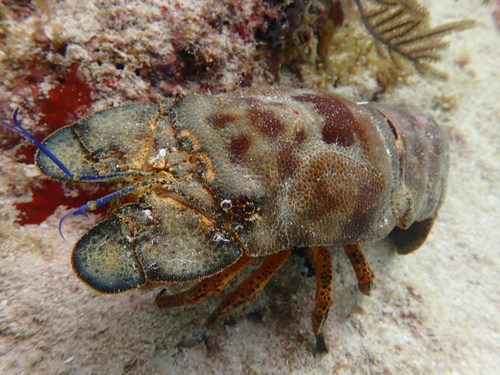
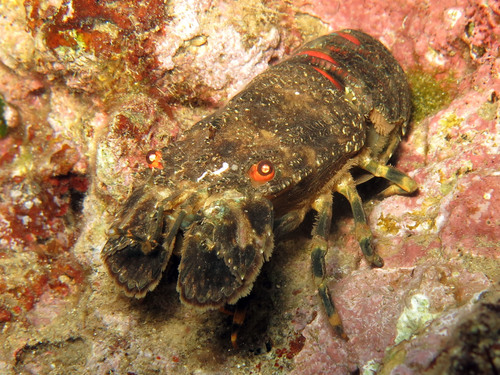
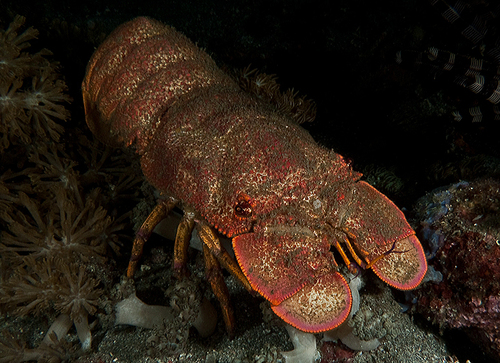
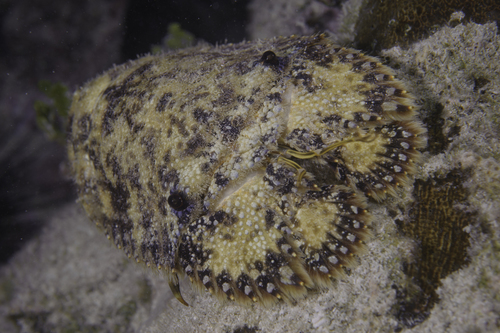
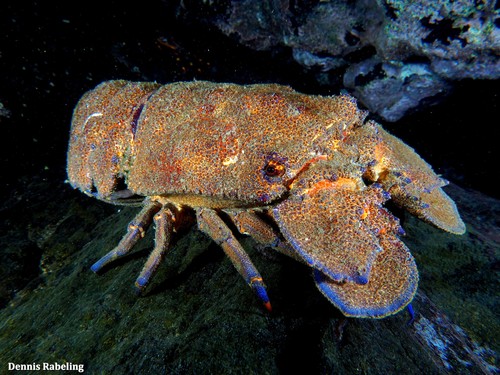
Scyllarides latus can reach a total body length of around 45 centimetres (18 in), though individuals rarely grow larger than 30 cm (12 in). This maximum total length corresponds to a maximum carapace length of 12 cm (4.7 in), and adult individuals may weigh up to 1.5 kilograms (3.3 lb). Like all slipper lobsters, this species has an enlarged, flattened second pair of antennae shaped like shovels or flippers. Despite being called a lobster, S. latus (a slipper lobster) has no claws, and also lacks the protective spines that characterize spiny lobsters. Instead, its exoskeleton, and especially its carapace, is thicker than the exoskeletons of both clawed lobsters and spiny lobsters, acting as tough, resilient armour. Adult S. latus have cryptic coloration for camouflage, and their carapaces are covered in noticeable, prominent tubercles. S. latus occurs along most of the Mediterranean Sea coast; the northern Adriatic Sea is the main exception to this range. It is also found in parts of the eastern Atlantic Ocean, from near Lisbon, Portugal south to Senegal, including the islands of Madeira, the Azores, the Selvagens Islands, and the Cape Verde Islands. In Senegal, S. latus lives alongside the closely related and similar-looking species Scyllarides herklotsii. In April, male S. latus carry spermatophores at the base of their last two pairs of pereiopods. Fertilization behavior has not been directly observed in this species, but most reptant decapods mate with their ventral surfaces touching. Between July and August, female S. latus carry approximately 100,000 eggs on their enlarged, feathery pleopods. The eggs change color from bright orange to dark brown as they develop, and are released into the water after around 16 days of development. This species normally produces only one generation of eggs per year. The larvae of S. latus are far less studied than the adults. The initial larval stage is the naupliosoma, which measures 1.3 millimetres (0.05 in) long and swims using its antennae. After moulting from the naupliosoma stage, larvae enter the first of eleven phyllosoma stages, which swim using their thoracic legs. The final phyllosoma stage can reach 48 mm (1.9 in) in length and may be up to 11 months old; most intermediate phyllosoma stages have not been documented. Only one nisto (juvenile) S. latus has ever been recorded: it was caught off Reggio Calabria in 1900, and only identified as a juvenile S. latus in 2009. Young adult specimens are also rare; the smallest documented adult, held in a museum collection, has a carapace length of 34 mm (1.3 in). Adult S. latus moult once per year, and likely migrate to cooler waters with temperatures between 13–18 °C (55–64 °F) to moult. The old exoskeleton softens over a 10–22 day period before it is shed, and the new pale exoskeleton takes roughly three weeks to fully harden. Smaller individuals typically gain weight after a moult, while this weight gain is much less noticeable in larger individuals.