About Scylla serrata (Forskål, 1775)
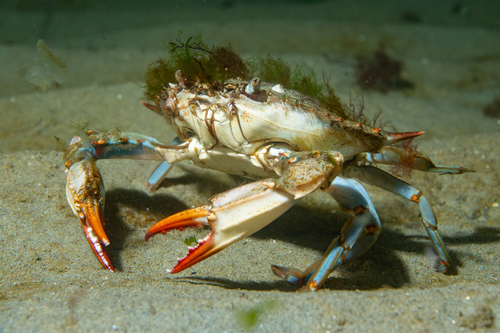
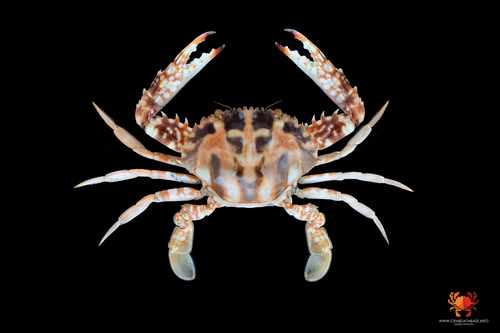
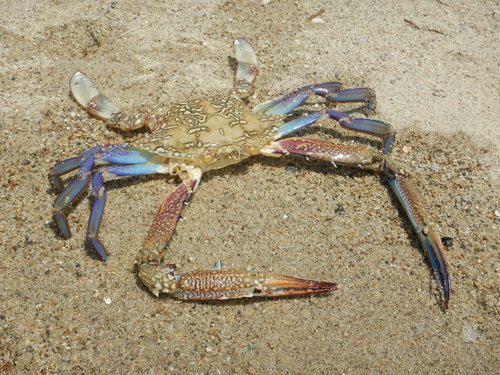
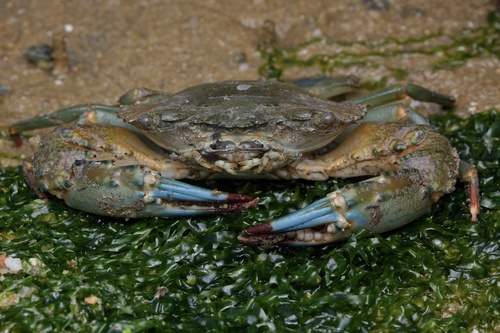
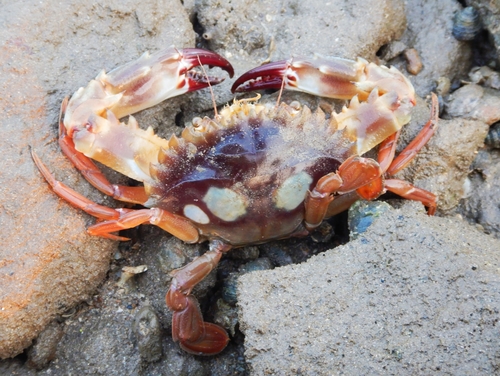
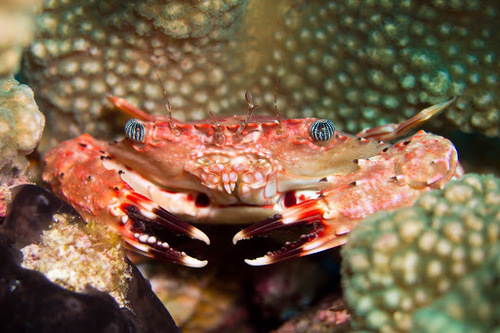
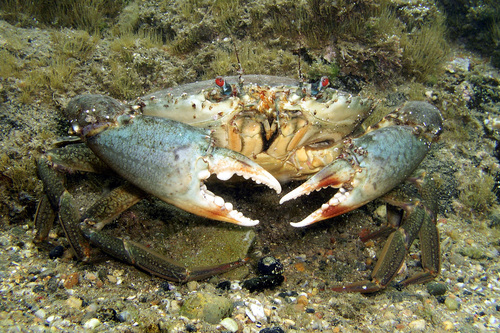
Scylla serrata, commonly called mud crab, mangrove crab, or black crab, is an ecologically important crab species that lives in estuaries and mangroves across Africa, Australia, and Asia. In its most common forms, its shell colour ranges from a deep mottled green to very dark brown.
The natural distribution range of S. serrata covers the Indo-Pacific. It occurs from South Africa, along the coast of the Indian Ocean (where it is particularly abundant in Sri Lanka), to the Southeast Asian Archipelago. It is also found from southern Japan to south-eastern Australia, northern New Zealand, and as far east as Fiji and Samoa. This species has additionally been introduced to Hawaii and Florida. In Hawaii, the species is colloquially called Samoan crab, because it was originally imported from American Samoa.
Because S. serrata is known for its large robust size and dense meat content, it has been highly sought after for harvesting. Overharvesting has led local governments to implement restrictions: harvesting crabs smaller than 6 inches (measured across the back width) is limited, and harvesting females of any size is illegal.
A study of tidal flats in Deception Bay, Queensland found distinct habitat use patterns by different life stages. Juvenile crabs (with a carapace width of 20–99 mm, or 13⁄16–3+7⁄8 inches) stay in the mangrove zone, remaining there during low tide. Subadult crabs (100–149 mm, or 3+15⁄16–5+7⁄8 inches) migrate into the intertidal zone to feed at high tide, then retreat to subtidal waters at low tide. Adults (150 mm, or 6 inches, and larger) are mainly caught below the low-tide mark, with only small numbers captured in the intertidal zone at high tide.
This species is highly cannibalistic: when an individual is molting, other hard-shelled S. serrata will sometimes attack and eat the molting crab. Female S. serrata can produce up to a million offspring. Adult crabs can grow up to 3.5 kg (8 lb) in weight, with a maximum shell width of 26 cm (10 inches).