About Scyliorhinus canicula (Linnaeus, 1758)
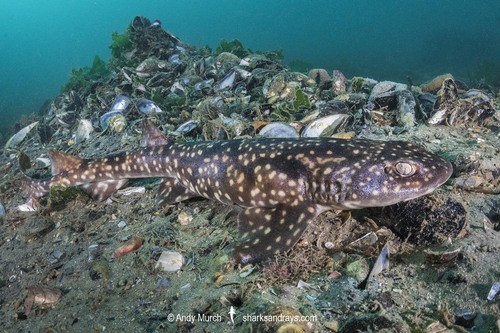
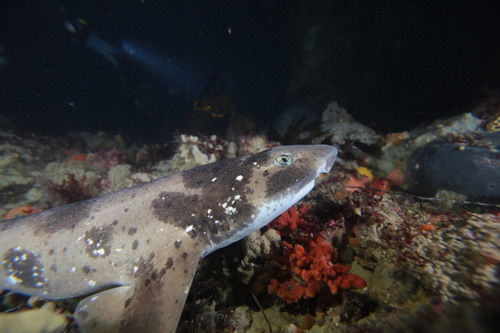
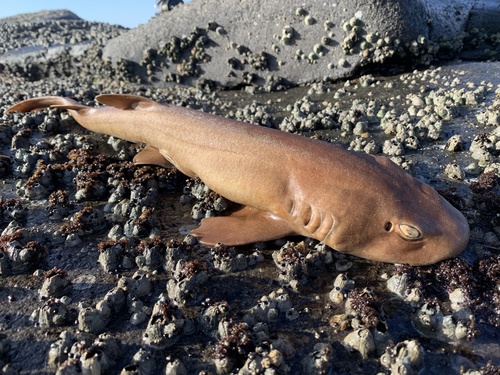
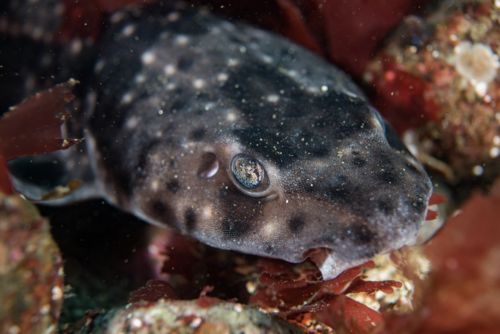
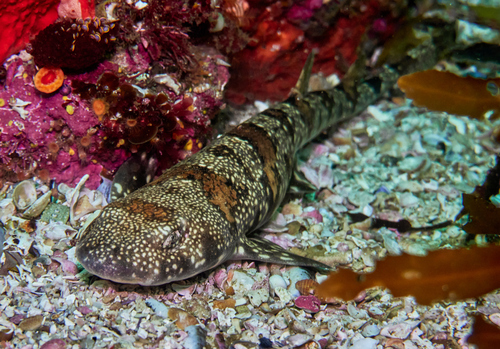
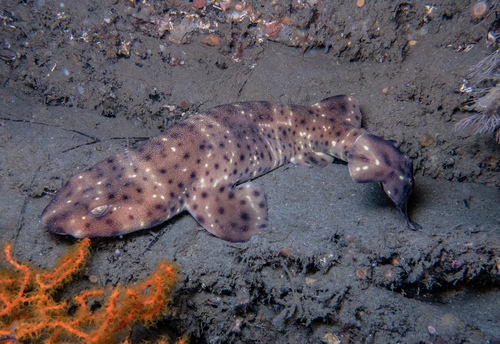
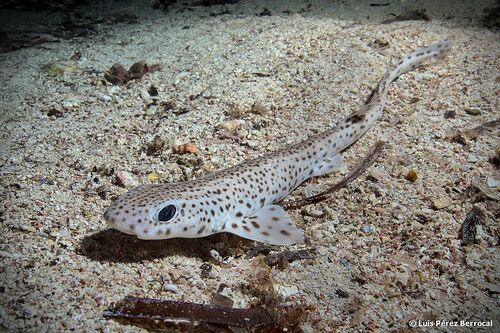
Scyliorhinus canicula, the small spotted catshark, is a small species of shallow-water shark with a slender body and blunt head. Its two dorsal fins are positioned toward the tail end of its body, and its skin has a rough texture similar to sandpaper. Its nostrils sit on the underside of its snout, connected to its mouth by a curved groove. The upper surface of its body is greyish brown with dark brown spots, while its underside is pale greyish white. Male S. canicula have larger teeth than females; additionally, males from West African waters have stronger, larger jaws with more calcium deposition. Variation in mouth size and tooth length between males and females, and between immature and adult males, may be caused by differing feeding habits or adaptations related to reproductive behavior. S. canicula is an oviparous species. Females lay egg cases enclosed in a protective horny capsule that has long tendrils. Most egg cases are deposited on macroalgae in shallow coastal waters, while those laid farther from shore are attached to sessile erect invertebrates. Egg cases typically measure 4 cm by 2 cm, and never grow larger than 6 cm (2.4 in). These egg cases can be found along the coasts of Europe. Embryos develop for 5 to 11 months, depending on water temperature, and newly hatched young measure 9–10 cm (3.5–3.9 in) long. Spawning can occur almost year-round, though seasonal spawning patterns are seen in different populations: females off the Mediterranean coast of France lay eggs from March to June and in December; populations around Great Britain lay eggs in spring, with no egg-laying between August and October; on the Tunisian coast, egg-laying begins in spring, peaks in summer, and declines slightly in autumn. Males reach sexual maturity at a total length of around 37.1–48.8 cm (14.6–19.2 in), while females reach sexual maturity at 36.4–46.7 cm (14.3–18.4 in). Currently, S. canicula has low commercial value. In the recent past, it was commonly sold as "rock salmon", "rock eel", "huss", or "sweet william" in fish and chip shops in England and Scotland. In other parts of the species' range, it is occasionally baked or added to fish soup. Its rough hard skin has been used as a substitute for pumice. However, the requirement to skin this shark before filleting it discourages commercial fishermen from targeting the species.