About Scrobipalpa ocellatella (Boyd, 1858)
Scrobipalpa ocellatella, commonly known as the beet moth, is a species of moth in the Gelechiidae family. It was first described by Boyd in 1858. This species can be found on Madeira and the Canary Islands, across North Africa, most of Europe, the Middle East, Iran, from southern European Russia to the Caucasus, and also in Ukraine, Moldova, Georgia, and Turkmenistan.
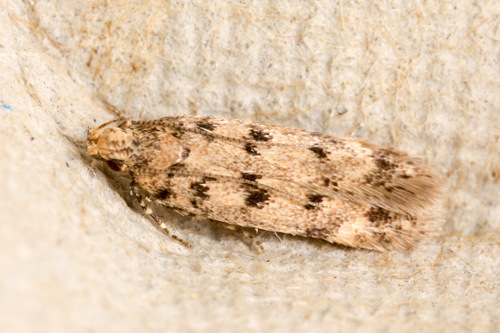
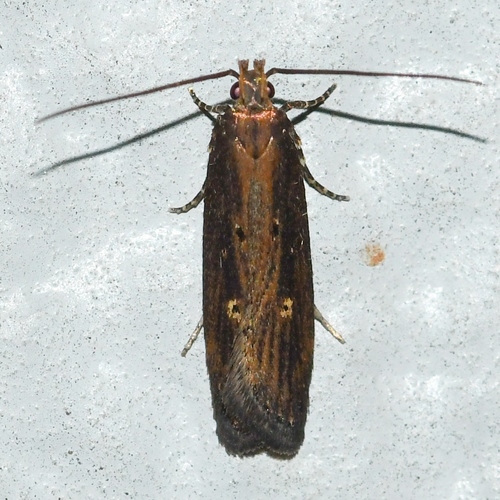
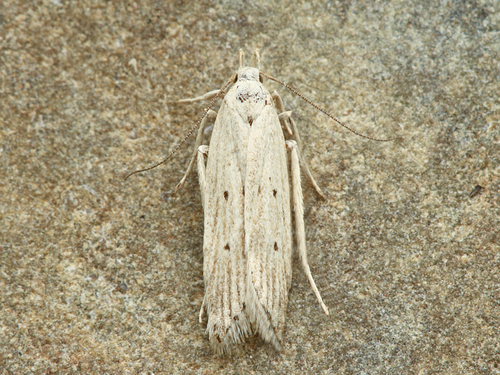
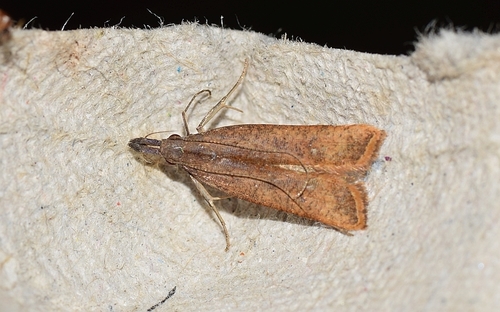
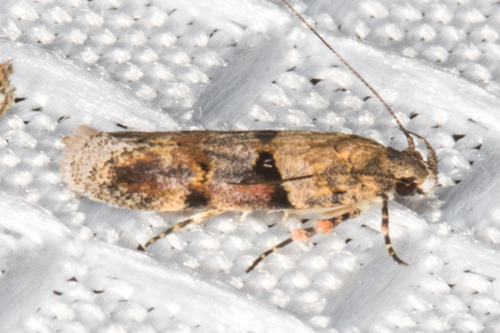
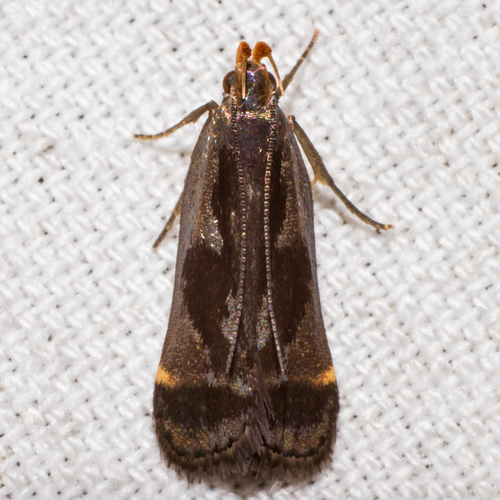
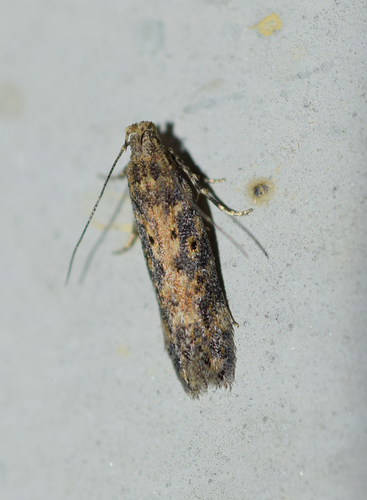
The wingspan of adult beet moths ranges from 12 to 14 millimeters (0.47 to 0.55 inches). The head is rosy-whitish, and the crown is sometimes greyish. The terminal segment of the palpi is shorter than the second segment. The forewings are ochreous, sometimes with a greyish tinge or rosy suffusion, with diffuse dark grey-black speckling on the disc, four costal patches, and an apical patch. The stigmata are black, sometimes outlined with a pale ring, with the first discal stigma located beyond the plical stigma. An ill-defined, nearly straight pale fascia is present at three-quarters of the forewing length, and black terminal dots are visible along the edge.
Mature larvae are pale yellowish-green, with a transverse row of irregular crimson blotches on each segment, blackish spots, and a pale brown head. Younger larvae have a grey-green body with faint reddish-brown longitudinal lines and a light brown head. The larvae feed on Beta maritima (sea beet) and Beta vulgaris (cultivated beet). Young larvae bore into the midrib of host leaves. Older larvae create a protective web across the leaf surface and mine the leaf tissue from within.
Overwintering survival depends on where larvae reside: caterpillars in leaf tops usually do not survive the winter, while those in the heads of root crops left in the field survive. Moth emergence from overwintered pupae coincides with the pupation of fifth-instar caterpillars and the sprouting of sugar beet.
Adult moths do not require extra nutrition, but will drink dew droplets during dry periods. They are active during the evening, night, and early morning, and have a lifespan of 12 to 18 days. Females lay between two and three eggs at a time on the undersides of leaves, the aerial parts of root crops, plant debris, and soil clumps, with a total fecundity of 100 to 150 eggs per female.
Larvae hatch 5 to 8 days after eggs are laid. They first scrape leaf parenchyma tissue, then weave webs around the central leaves and create holes along the leaf midrib and grooves on petioles. On mature beet plants, larvae feed under curled leaf edges, inside cuttings, or within tunnels in root crop heads. Damage can occur throughout the growing season, from when plants develop two to three pairs of true leaves until harvest. Larvae go through five instars over 25 to 30 days of development. They require high humidity, so mass mortality occurs during hot, dry weather. When development is complete, larvae pupate inside oval silken cocoons in soil, 2 to 5 centimeters (0.79 to 1.97 inches) deep.
Heavy infestation stops new leaf growth, and a loose black mass of webbed leaves forms in place of the central leaf crown. Damage to beet roots is especially dangerous, as damaged roots become unfit for winter storage. Larvae also damage flowering shoots, causing them to curve and dry out. This triggers the growth of additional shoots that produce small, low-quality seeds. The threat of damage increases in the second half of summer, as pest populations grow in the second and subsequent generations.
More than 50 species of predators and parasites naturally keep beet moth populations in check. Larvae are commonly parasitized by wasps in the Eulophidae family. In fields with significant moth infestation, timely harvesting and processing is needed, since damaged root crops rot quickly. Established economic damage thresholds for this pest are: one caterpillar per two plants when plants have six to eight leaves; 0.8 to 1 caterpillar per plant at the start of root formation; and two caterpillars per plant when leaves begin to senesce.