About Scrobicularia plana (da Costa, 1778)
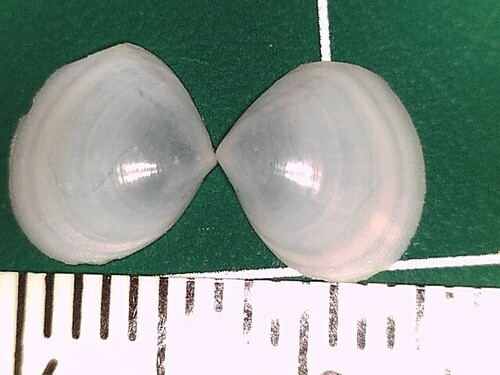
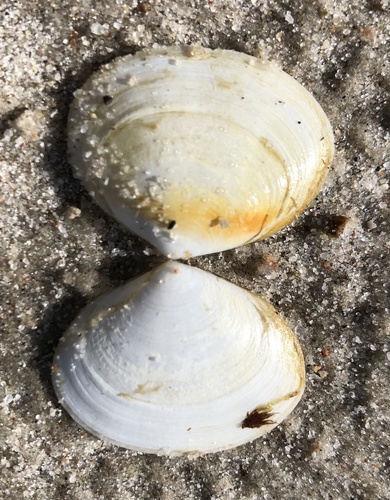
Scientific name: Scrobicularia plana (da Costa, 1778). The shell of this species ranges in color from white, through yellowish tones, to pale brownish-grey, and can reach up to 6.5 cm in diameter. The interior of the shell is nacreous, colored either white or yellowish. The shell itself is thin but quite deep, marked with circular, closely packed growth ridges. Scrobicularia plana is a filter feeder that has long siphons, and buries itself up to 20 cm deep in sand or mud. While buried, it leaves distinct star-shaped markings on the sediment surface, which can be used to locate buried specimens. If fish or other predators eat the siphons, they will fully regenerate in just a few days. This species is commonly found at fairly high densities on sandy or muddy coasts and in estuaries across northern Europe, the Mediterranean, and West Africa. This edible species, commonly called the peppery furrow shell, is sold in some fish shops in France, where it is known locally as lavignons.