About Scomberomorus regalis (Bloch, 1793)
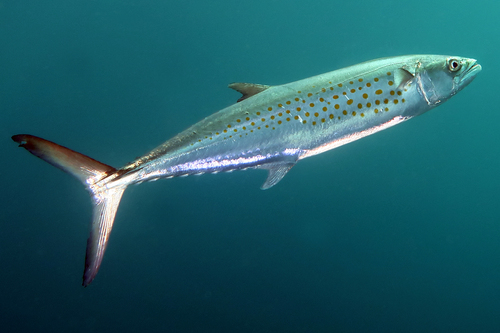
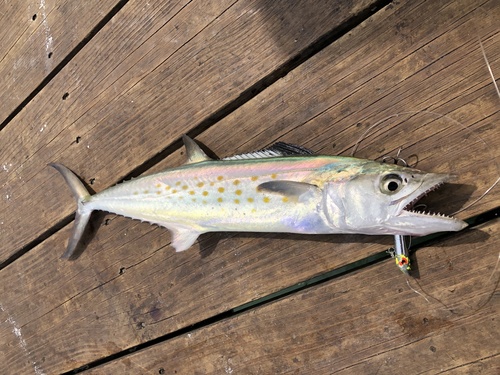
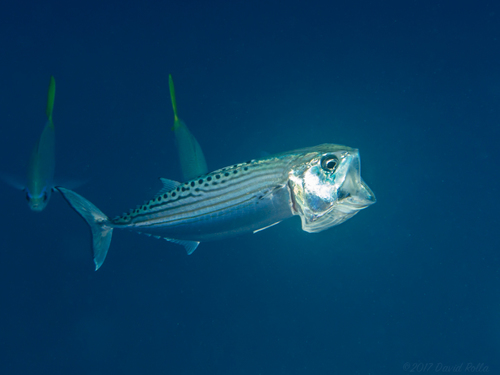
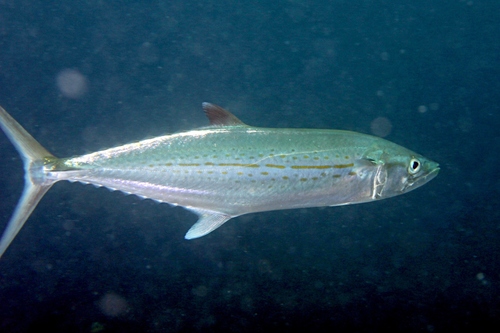
The cero, with the scientific name Scomberomorus regalis, has several other common names: pintado, kingfish, cero mackerel, cerite, and painted mackerel. It is a ray-finned bony fish that belongs to Scombridae, the mackerel family. More specifically, it is part of the tribe Scomberomorini, the group known as Spanish mackerels, and it is the type species of the genus Scomberomorus. It resembles the Atlantic Spanish mackerel, Scomberomorus maculatus, in both appearance and coloration. The key difference is that the cero has both a longitudinal stripe, in addition to the spots that mark the Atlantic Spanish mackerel. The cero also grows to a larger size than the Atlantic Spanish mackerel, often reaching 10 lb (4.5 kg) or more, though individuals over 30 lb (14 kg) are extremely rare. Distinctive physical features of the cero include a first dorsal fin that is black on its anterior portion, and a lateral line that descends slowly starting from the shoulder. This slow descent lacks the sharp break seen in the lateral line of the king mackerel, Scomberomorus cavalla. The cero occurs in the western Atlantic Ocean, ranging from Cape Cod, through the Caribbean Sea and the Gulf of Mexico, down to Rio de Janeiro, Brazil.