About Scomber australasicus Cuvier, 1832
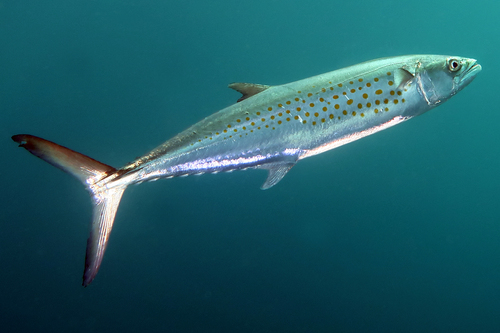
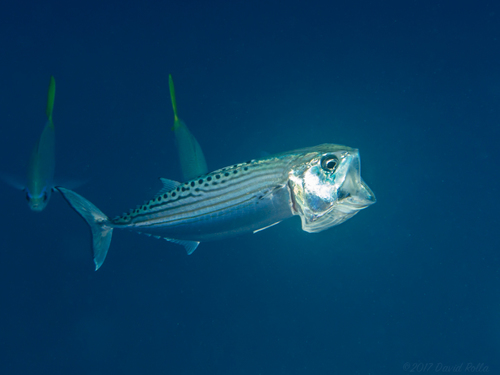
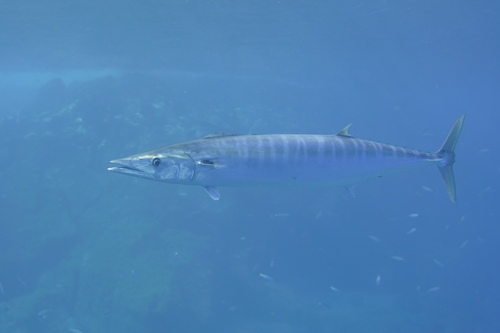
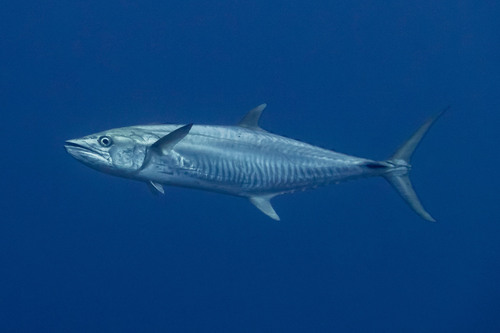
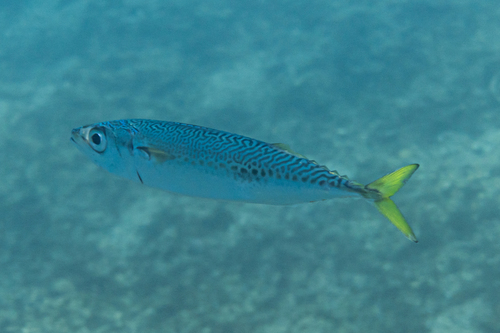
Blue mackerel, whose scientific name is Scomber australasicus Cuvier, 1832, typically reaches 30 cm (12 in) in fork length. Its maximum recorded fork length is 44 cm (17 in), and it can reach a maximum weight of 1.4 kg (3.1 lb). Like other mackerels, it has a round body that tapers toward the tail after the second dorsal fin, a shape similar to that of tuna. Blue mackerel are frequently confused with chub mackerel; in fact, blue mackerel were classified as a subspecies of chub mackerel until the late 1980s. While both species belong to the same genus Scomber, blue mackerel differ from chub mackerel in their genetic structure. They also have clear, visible physical differences: blue mackerel have a longer anal spine and a different number of spines on the first dorsal fin than chub mackerel. Blue mackerel inhabit tropical to subtropical waters of the Indian and Pacific Oceans. Within the Indo-West Pacific, separate populations live in the Red Sea and western Arabian Sea, the Northwest Pacific (including Japan, China, and Taiwan), and the Southwest Pacific (including Australia and New Zealand). This species also occurs in the eastern Pacific around Hawaii and Mexico’s Revillagigedo Islands. It can be found from surface waters down to a depth of 300 m (980 ft). Blue mackerel are voracious, indiscriminate carnivores. They eat microscopic plankton, krill, anchovies, and dead cut bait, and will bite readily at lures and other flies. When schooling and in a feeding frenzy, they will even strike at non-food items including cigarette butts and bare hooks. They most commonly feed on smaller pelagic fish. Blue mackerel are diurnal, and their feeding habits and daily activity patterns have led them to evolve large eyes with increased retinal sensitivity.