About Scolymia cubensis (Milne Edwards & Haime, 1848)
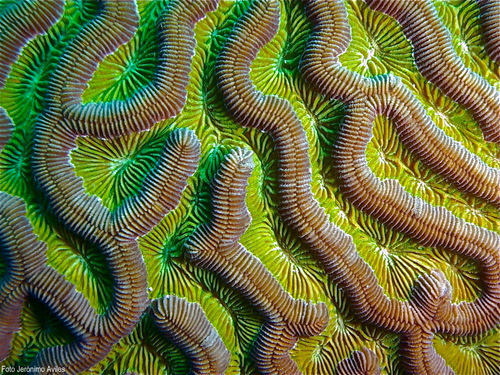
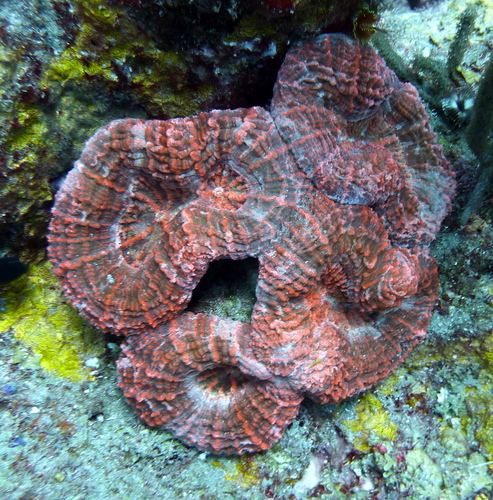
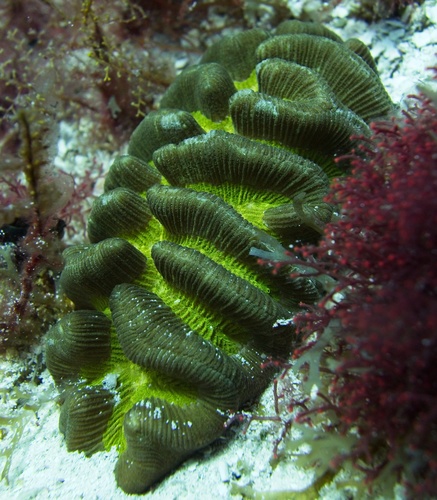
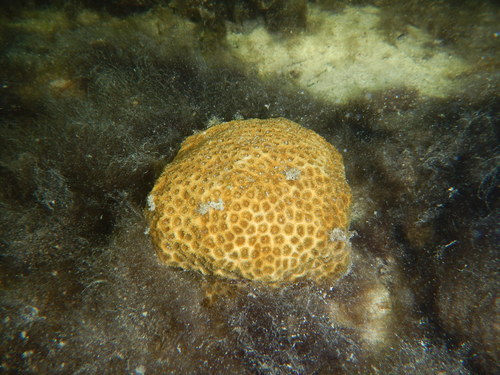
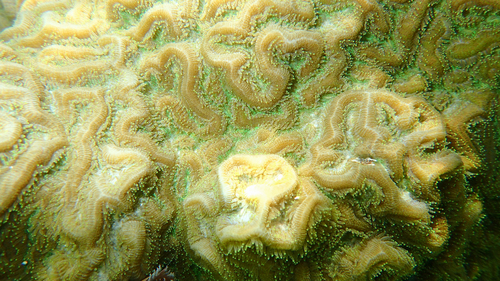
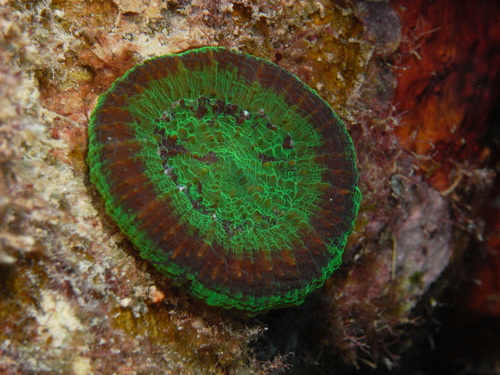
The skeletal structure of Scolymia cubensis is built from layers of septa that surround the organism’s core. The first layer surrounding the core contains 6 thick septa plates in total. The second layer around the coral is thinner than the first layer, and has 7 or more septa that lie over the first layer. Septa from the third layer onward vary in thickness as the coral continues growing. In total, S. cubensis can have 104 to 112 septa surrounding its core. This species has rough costae covered in spines, and a spongy trabecular columellae. Its polyps are non-aggressive, which leaves the coral vulnerable to more aggressive coral species. S. cubensis also tends to grow more horizontally than vertically. Scolymia cubensis lives along the coasts of Bermuda and Jamaica. In Bermuda, it is typically found on reefs and platforms 6 meters to 62 meters below the water surface. In Jamaica, it occurs in sandy channels between reefs and on muddy slopes near river mouths. This species prefers areas that do not receive sunlight. It grows more abundantly at low latitudes, on hard substrates, and is most active in warm tropical waters during the warm summer months. This species reproduces sexually via broadcast spawning. S. cubensis lacks a strong intraspecific immune-recognition system, which allows it to fuse with other individuals of its own species. After fertilization, the new larva floats in open water before eventually settling on a reef deposit. If a larva settles close enough to an adult S. cubensis, it has a high probability of fusing to the adult as it grows. When two S. cubensis fuse, they form a common calcareous deposit between them. This produces di- or tri-corallites: corals made of two or three fused S. cubensis individuals. The fused subunits are genetically distinct from one another due to sexual reproduction, but can still fuse together as though they were a single individual.