About Scolopendra subspinipes Leach, 1815
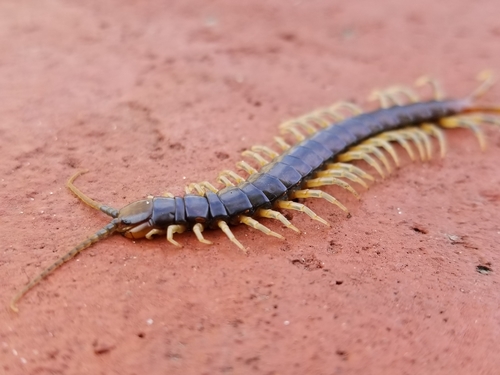
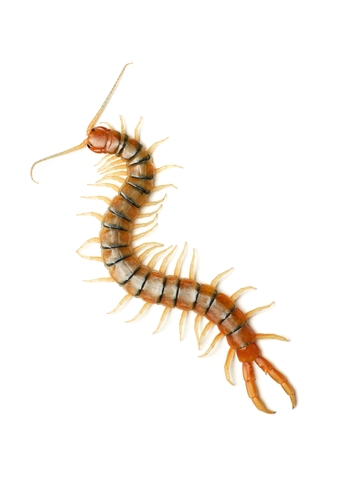
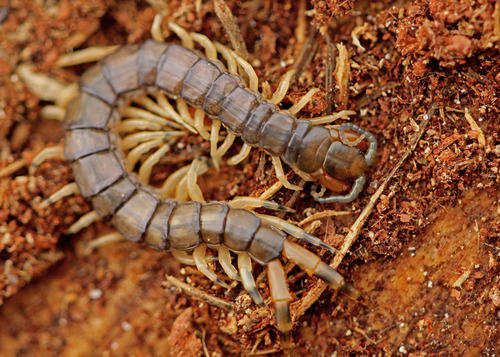
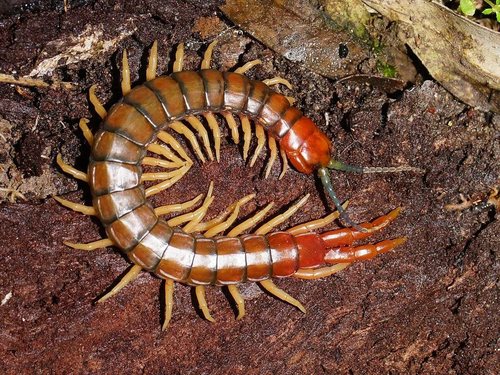
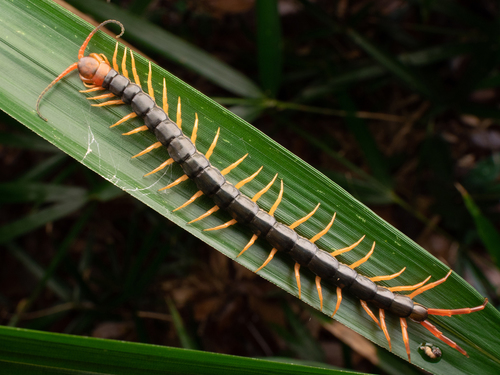
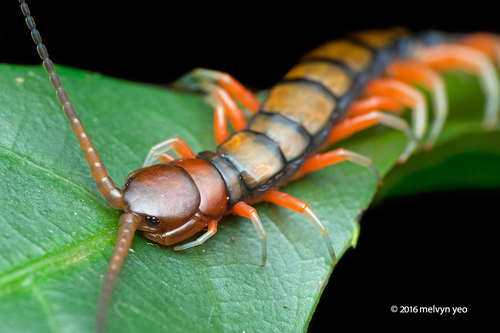
This species, Scolopendra subspinipes, is typically said to reach a maximum body length of 20 cm. However, a far larger individual, identified as Scolopendra subspinipes and measuring 36.6 cm long, was captured in Hawaii by Clayton Cambra in 2018. The species displays color variation: its body is most often red or reddish brown, with yellow or yellow-orange legs. Like other species in the genus Scolopendra, it has 22 body segments, and each segment bears one pair of legs. A pair of modified legs called forcipules, also known as toxicognaths, is located on its head. The head itself is covered by a flat shield and carries a pair of antennae. Toxicognaths are the main tools this centipede uses to kill prey or defend itself, because their sharp claws connect to venom glands. For reproduction, males produce sperm-containing capsules called spermatophores. During mating, these spermatophores are deposited into the female’s sperm storage reservoir, the spermatheca. The female then fertilizes her immature eggs, called oocytes, and deposits the eggs in a dark, protected location. She lays between 50 and 80 eggs, which she guards closely until they hatch and the newly hatched centipedes complete their first molt. If she detects danger, she wraps her body around her offspring to protect them. Young centipedes molt once per year, and take 3 to 4 years to reach full adult size. Adult centipedes molt once every year, and may live for 10 years or longer. For human use, Scolopendra subspinipes is a popular pet with arthropod hobbyists, and it was historically a traditional food source for Aboriginal Australians.